
Many parents feel confused when a child who seems bright, curious, or capable avoids difficult school work. A child may understand things quickly in one subject, but then freeze, complain, or walk away when a task feels harder than expected.
Why some smart children avoid challenging tasks often comes down to confidence, emotions, and fear of struggling, not lack of intelligence. Some smart children avoid hard tasks because the task feels like a risk to how they see themselves.
This can feel worrying because parents often hear that smart children should enjoy challenges. But in real homes and real classrooms, learning behaviour is not always that simple. A child can be intelligent and still feel unsure, sensitive, tired, embarrassed, or afraid of getting something wrong.
This article explains why some smart children avoid challenging tasks in a calm and realistic way. The goal is not to blame parents or children. The goal is to help families understand what may be happening underneath the behaviour, so learning can feel safer and more possible.
Real Family Learning Reality Check
In real homes, challenging tasks do not happen in a perfect learning bubble. They happen after school, around dinner, near siblings, beside devices, and during days when both children and parents may already feel tired.
A child may come home with a full brain after a long school day. They may have listened, sat still, followed rules, managed friendships, answered questions, and tried to keep up with classroom expectations. By the time homework or study begins, their emotional energy may already be low.
This is one reason a smart child may avoid a challenging task at home. The child may still be capable, but the timing, mood, pressure, or emotional load may make the task feel too big in that moment.
Some children also show their learning stress quietly. They may not cry or explain what is wrong. Instead, they may delay, distract themselves, say the task is boring, or suddenly become upset over something small.
What Most Parenting Advice Misses
Many parenting tips focus on encouraging children to try harder, keep going, or develop a growth mindset. These ideas can be helpful, but they sometimes miss the emotional part of the problem.
Some smart children already know they should try. The harder part is feeling safe enough to struggle. If a child connects being smart with getting things right quickly, a difficult task can feel uncomfortable. It may feel like proof that they are not as smart as people think.
In busy households, confidence cannot always be built through long talks or perfect routines. Sometimes it grows through small, calm learning moments where the child feels allowed to be unsure without feeling judged.
When Being Smart Feels Like Something to Protect
Many smart children are praised for learning quickly. They may hear comments like “You are so clever,” “You are the smart one,” or “This should be easy for you.” These comments are usually meant kindly.
But some children begin to believe that being smart means not struggling. When they meet a harder task, they may feel confused or embarrassed. The task does not only feel difficult. It feels like a threat to their identity.
This can lead to avoidance. The child may choose not to try because not trying feels safer than trying and possibly getting it wrong.
This does not mean praise is bad. It simply means some children need to know that effort, confusion, and mistakes can belong to smart people too.
Why Challenging Tasks Can Feel Emotionally Risky
Adults often see a worksheet, a reading passage, a maths problem, or a school project. Children may see something much bigger.
They may see the chance of making a mistake. They may imagine being corrected. They may worry that a parent, teacher, or sibling will notice they do not know what to do. Even if nobody says anything unkind, the child may still feel exposed.
This is especially common for children who are thoughtful, sensitive, or very aware of how others see them. For these children, avoiding the task can become a way to avoid uncomfortable feelings.
If your child often worries about mistakes, you may also find Signs a Child Is Afraid of Getting Answers Wrong helpful, because it explains how fear of mistakes can quietly affect learning behaviour.
Why Smart Children Sometimes Avoid Challenges
A simple diagram can help parents see that avoidance is often about protecting confidence, not avoiding learning.
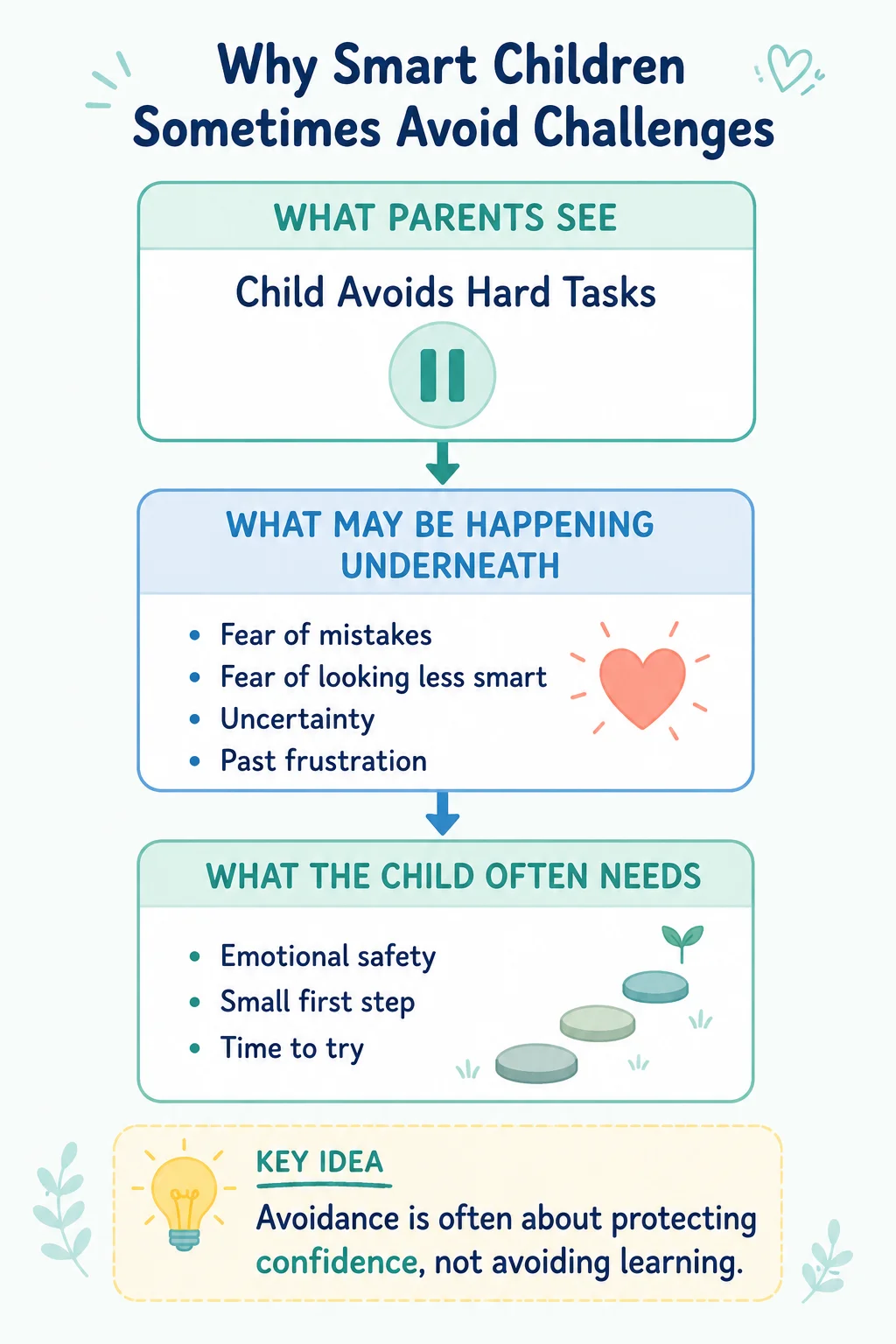
This visual shows what parents may see, what may be happening underneath, and what the child often needs. It keeps the message simple: avoidance can come from fear, uncertainty, or past frustration rather than lack of ability.
Some Children Prefer Certainty Over Challenge
Some children feel calmer when they know what will happen. They like familiar tasks, clear steps, and predictable results. A challenging task can feel uncomfortable because it brings uncertainty.
The child may wonder, “What if I cannot do it?” or “What if I am slower than everyone else?” These thoughts may happen quickly and silently, before the child even touches the task.
For these children, avoiding challenging work can be a way of staying in a safe and familiar space. It does not mean they cannot grow. It may mean they need smaller, safer experiences with challenge before they are ready for bigger ones.
Past Learning Experiences Can Stay With Children
Children often remember how learning felt, not only what they learned. A difficult classroom moment, a public correction, a test that went badly, or a time they felt embarrassed can shape how they respond later.
Adults may see the new task as separate from the old experience. But the child may feel the same worry returning. This is why a task that looks simple to a parent can feel much heavier to a child.
This can also explain why two smart children may respond differently to the same challenge. One child may feel curious. Another may feel tense because the task reminds them of a time they struggled.
Quiet Confidence vs Visible Confidence
Some children show confidence loudly. Others build confidence quietly. Both forms of confidence can be real, but they do not look the same from the outside.
| Quiet Confidence | Visible Confidence |
|---|---|
| Watches first before trying | Joins in quickly |
| Thinks carefully before answering | Answers out loud more easily |
| May need time before attempting a hard task | May attempt the task straight away |
| Confidence grows slowly inside | Confidence is easier for others to see |
| May appear hesitant even when capable | May appear brave even when unsure |
A quiet child is not automatically less confident. Some children need more time to feel ready, especially when the task feels difficult or unfamiliar.
This connects naturally with Why Quiet Children Sometimes Doubt Their Learning Ability, which looks more closely at how quiet learners may process confidence differently.
Learning Under Pressure Can Change Behaviour
A child may seem confident during relaxed learning but avoid the same type of task when they feel watched, rushed, or judged. This can confuse parents because the child’s ability seems to change from one moment to another.
The child’s ability may not have changed. The emotional pressure around the task may have changed.
When a child feels under pressure, the brain can become busy with worry. The child may spend more energy thinking about failure than thinking about the task itself. This can make even a familiar activity feel harder.
For some families, reducing pressure helps the child return to learning more calmly. Our article How to Help Children Stay Focused Without Pressure explores this idea in a gentle, practical way.
How Confidence Usually Grows Around Difficult Tasks
Confidence often grows through small, safe attempts. A child may not move from avoidance to courage all at once. The progress may be quiet and gradual.
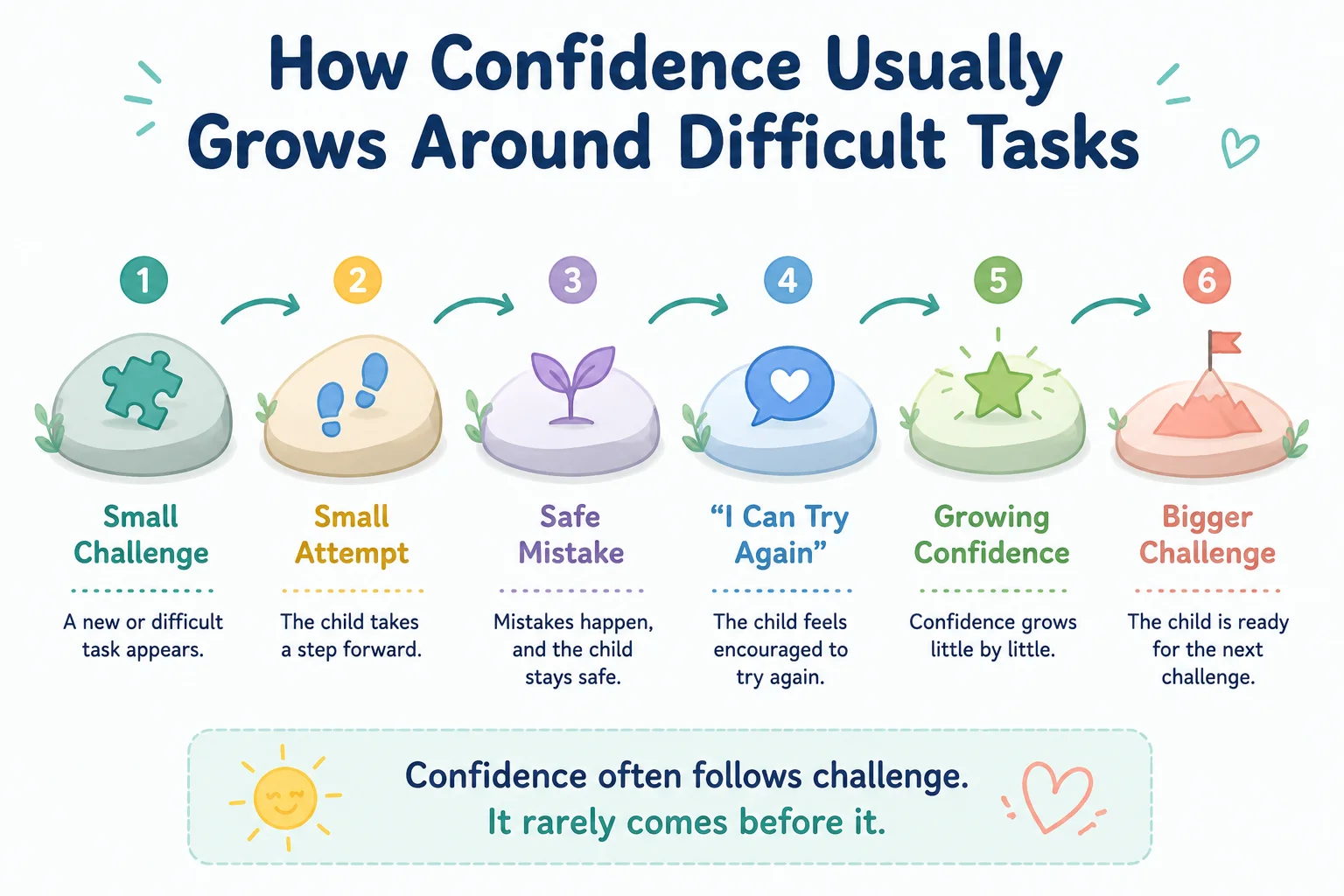
This visual can show a simple pathway: small challenge, small attempt, safe mistake, “I can try again,” growing confidence, and bigger challenge. It reminds parents that confidence often follows challenge. It rarely comes before it.
Practical Insights That Can Help
Understanding the behaviour is often the first helpful step. Some children become more willing to try when challenge feels safer and less tied to proving themselves.
- Some children respond better when the first step is very small.
- Many children need reassurance that struggle does not mean failure.
- A calm start can make a hard task feel less threatening.
- Short attempts may build more confidence than long pressured sessions.
- Children often try more when mistakes feel less embarrassing.
- Small completed tasks can help children trust themselves again.
These are not strict rules. They are gentle ideas that families can adjust depending on the child, the task, and the day.
Common Misunderstandings
When smart children avoid hard tasks, it can be easy to misunderstand what the behaviour means. These misunderstandings are common, especially when parents are tired or worried.
- Avoidance does not always mean laziness.
- Being smart does not mean a child always feels confident.
- Hesitation does not always mean low ability.
- Emotional sensitivity is not weakness.
- Slow confidence growth is still confidence growth.
- School performance is not the whole child.
Seeing the behaviour with more understanding can reduce tension. It can also help parents respond with more calm and less fear.
Family and School-Term Context
There are seasons when challenging tasks feel harder for children. Near the end of a school term, during assessment weeks, after holidays, or during family changes, children may have less emotional energy available.
A smart child who usually manages difficult work may suddenly avoid it more often during these times. This does not always mean something serious has gone wrong. It may simply mean the child’s learning energy is stretched.
In busy family periods, smaller learning expectations can sometimes keep confidence steady. One small attempt may be more realistic than pushing for a full study session when the child is already overwhelmed.
Different Ways Children Respond to Challenge
Children do not all respond to challenge in the same way. Some become quiet. Some argue. Some make jokes. Some delay. Some say the work is boring. Others act as if they do not care.
These responses can look different on the outside, but many of them can come from the same inner feeling: “This feels too hard, and I do not know if I can handle it.”
| What Parents May See | What Might Be Happening Underneath |
|---|---|
| The child says, “This is boring.” | The task may feel too hard or too uncertain. |
| The child delays starting. | They may be trying to avoid uncomfortable feelings. |
| The child gets upset after one mistake. | The mistake may feel bigger than it looks. |
| The child asks for help immediately. | They may not trust themselves yet. |
| The child refuses the task. | Avoidance may feel safer than trying and failing. |
This table does not explain every child. It simply shows that behaviour can have emotional layers beneath it.
Confidence and Challenge Cycle
A final visual can help parents see that confidence and challenge often support each other over time. The goal is not one perfect brave moment. It is a repeating cycle of small attempts and safer learning experiences.
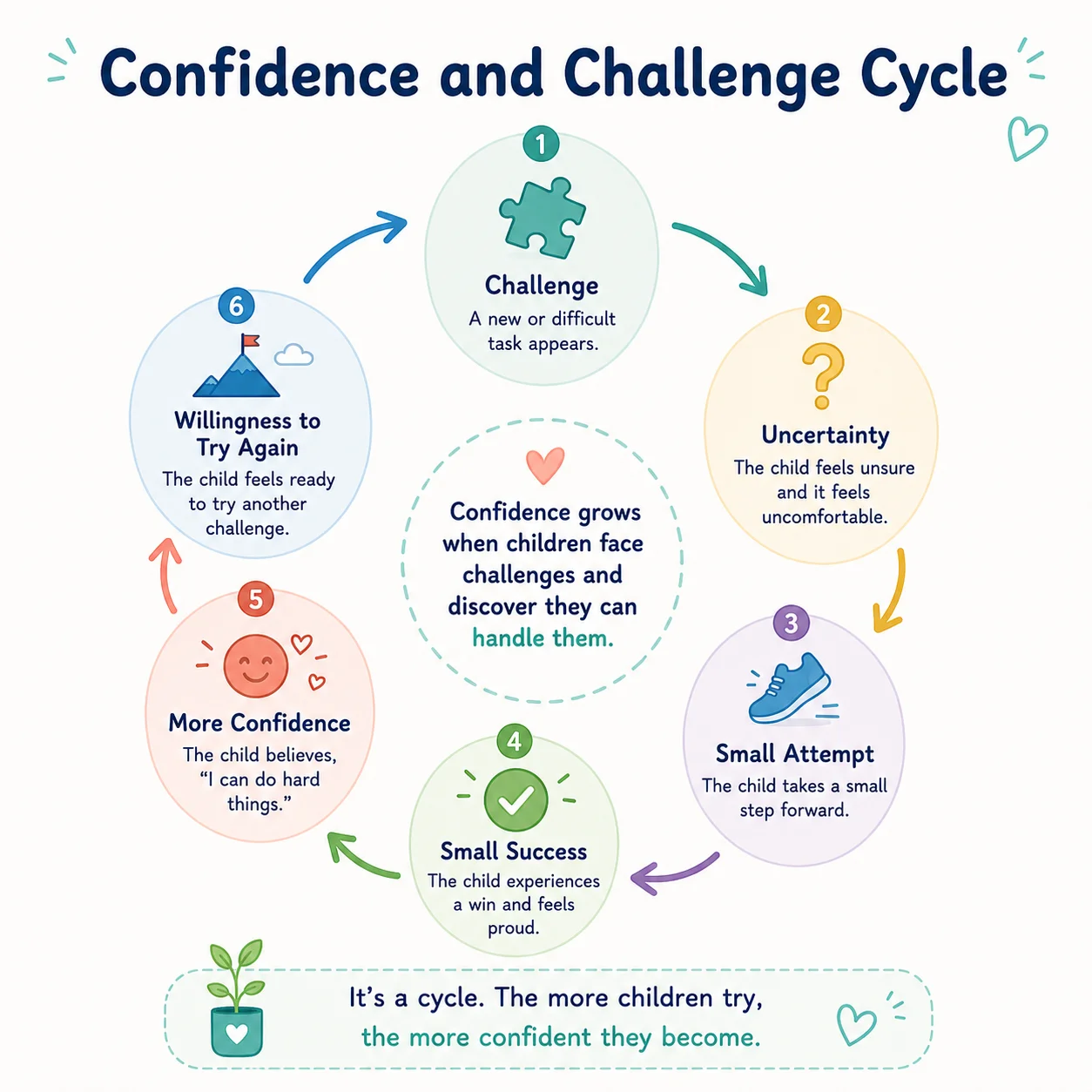
This cycle can show challenge, uncertainty, small attempt, small success, more confidence, and willingness to try again. It helps parents remember that confidence grows when children experience challenge and discover they can handle it.
Jolyti Note: I’ve noticed that some of the most capable children are not always the first to choose difficult tasks. Some children seem to build confidence quietly, especially when they feel safe enough to struggle without being judged.
Every child responds differently to challenge. For some children, the first sign of growing confidence may simply be staying with a hard task a little longer than before.
Frequently Asked Questions
Is it normal for smart children to avoid challenging tasks?
Yes, it can be normal. Some smart children avoid challenging tasks because difficult work brings up worry, pressure, or fear of mistakes. This does not mean they are not capable.
Does avoiding hard work mean my child is lazy?
Not always. Avoidance can look like laziness from the outside, but it may come from worry, tiredness, embarrassment, or low confidence with that specific task.
Why does my child only avoid some subjects?
Children often feel confident in some areas and unsure in others. A child may enjoy reading but avoid maths, or enjoy science but feel nervous about writing. Confidence is not always equal across every subject.
Should I push my child to do harder tasks?
Some encouragement can help, but too much pressure may make avoidance stronger. Many children respond better when challenging tasks are broken into smaller, safer first steps.
Can a child become more confident with challenging tasks over time?
Yes. Confidence can grow gradually when children experience small attempts, safe mistakes, calm support, and repeated chances to try again.
Final Thoughts
Why some smart children avoid challenging tasks is often less about ability and more about confidence, emotions, and self-protection. A child may be capable and still feel unsure when a task feels difficult, public, or unfamiliar.
In real families, learning confidence grows slowly. It may grow through a small attempt, a calm response after a mistake, or a child choosing to try again after first wanting to stop.
If your child avoids challenging tasks, it does not mean they are failing as a learner. It may mean they are still learning how to feel safe with struggle. With time, patience, and small moments of support, many children can begin to see challenge as something they can approach, not something they need to escape.
Featured image is AI-generated and intended for illustrative purposes only
Leave a Reply