
Getting children to start homework can feel like the hardest part of the whole afternoon. The homework may not even be very long, but the delay before starting can turn into repeated reminders, frustration, and a tired parent wondering why such a small task feels so big.
Children often start homework more easily when the first step feels small, the home atmosphere feels calm, and they have a short transition after school. Many children delay because they feel tired, unsure, overwhelmed, or not emotionally ready to focus again.
This can be difficult in real family life. Parents may be cooking dinner, answering messages, helping another child, or feeling tired after work or study. A child may ask for snacks, wander around, look for missing pencils, or suddenly become interested in anything except homework.
This article looks at how to help children start homework without delaying in a calm and realistic way. The goal is not to create a perfect routine. The goal is to make starting feel easier, safer, and more manageable for your child.
Real Family Homework Reality Check
In many homes, homework does not begin in a quiet room with a calm child and a clear desk. It often begins after a long school day, while dinner is being prepared, siblings are talking, bags are still unpacked, and everyone is trying to settle into the evening.
Children also carry the school day home with them. They may have spent hours listening, sitting, sharing, waiting, thinking, and trying to behave. By the time they get home, they may not feel ready to focus again straight away.
This does not mean your child is lazy. It also does not mean you are doing anything wrong as a parent. Homework delays are often a sign that the child needs a softer way to move from school mode into homework mode.
Some afternoons will be easier than others. A routine that works well on Monday may feel harder on Thursday. This is normal in real homes, especially when children are tired, hungry, emotional, or overstimulated.
Why Traditional Homework Advice Sometimes Fails
Many homework tips tell parents to make children start immediately, remove all distractions, or keep a strict homework time every day. These ideas may help some families, but they do not work for every child.
For some children, being pushed to start too quickly can create more resistance. If homework already feels difficult, a strict instruction may make the task feel even heavier.
Sometimes children delay because they do not know where to begin. Sometimes they worry about making mistakes. Sometimes they want control after a day where adults told them what to do for many hours.
This is why helping children start homework without delaying often begins with understanding what the delay is protecting them from. The delay may be protecting them from pressure, confusion, tiredness, or a task that feels too big.
What’s Happening Beneath the Delay?
Homework delays can look like avoidance, but they often have an emotional reason underneath. A child may sharpen pencils, ask for food, walk around, complain, or start talking about something unrelated because starting feels uncomfortable.
When parents understand the hidden reason, they can respond more calmly. The goal is not to let homework disappear. The goal is to help the child move toward homework without turning the beginning into a battle.
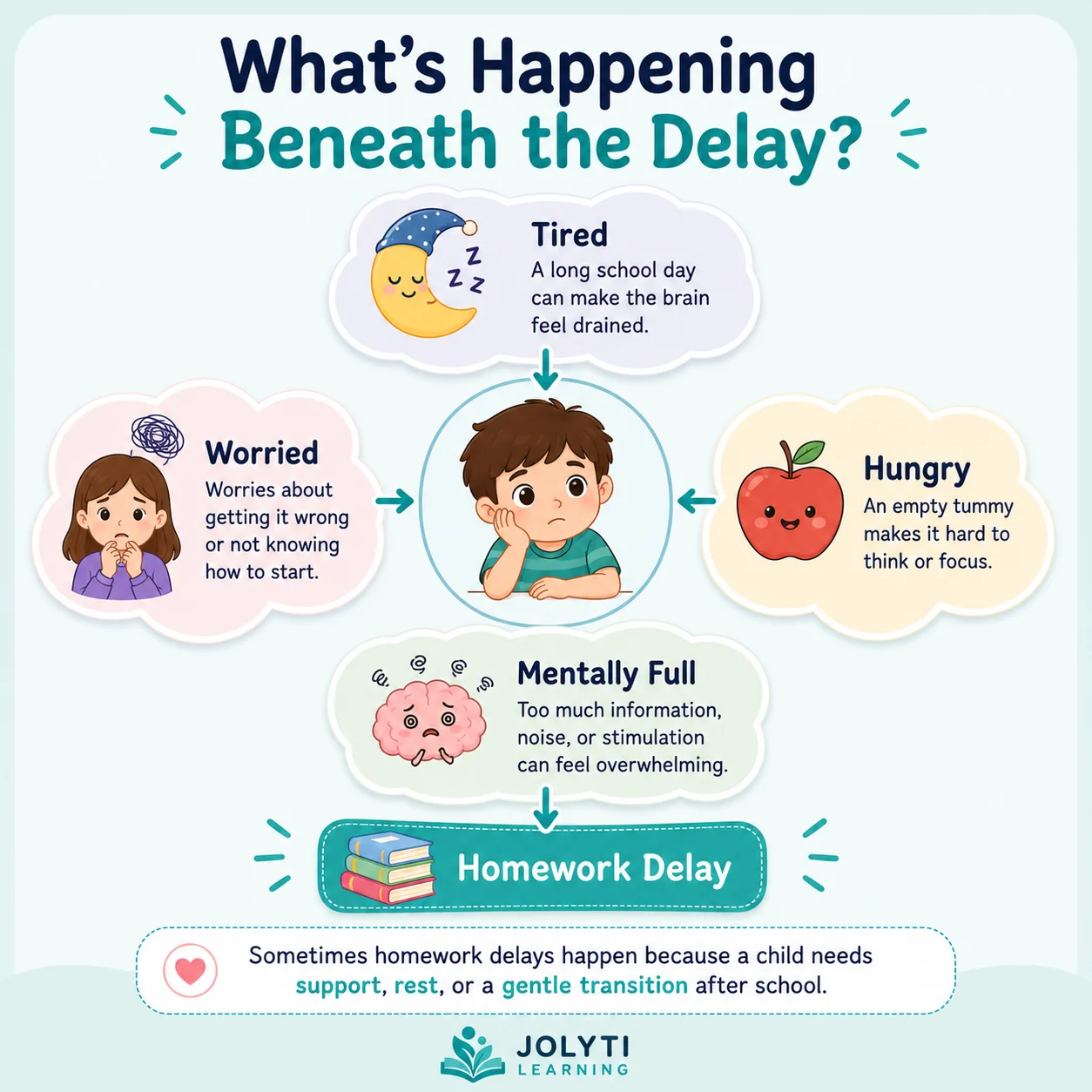
This diagram highlights some of the feelings that can sit underneath homework delays. A child may feel tired, worried, hungry, or mentally full after a long day. Understanding these possible reasons can help parents respond with more patience and support.
Give the Brain a Short Transition
Many children need a short transition before homework. This does not mean a long break that turns into the whole evening. It means a small pause that helps the child move from school energy into home learning energy.
A transition can be simple. It might be a snack, a drink of water, ten minutes of quiet time, a short walk outside, or a few minutes talking about the day.
For some children, this short reset makes homework feel less sudden. It also gives parents a calmer starting point instead of beginning with pressure.
If your child often feels tense before homework begins, you may find How to Calm a Child Before Starting Homework helpful, because it looks more closely at emotional readiness before learning begins.
Make the First Step Very Clear
Children often delay when the task feels too big or unclear. “Do your homework” may sound simple to an adult, but to a child it can feel like many tasks at once.
A clearer first step can make starting easier. Instead of asking the child to finish everything, help them begin with one small action.
Small first steps might include:
- Open your homework folder.
- Find the page for today.
- Read the first question.
- Write your name at the top.
- Choose the easiest question first.
These steps may look small, but they matter. Many children feel more confident once they have already begun.
How Small Starts Build Learning Confidence
Starting homework in a small way can do more than reduce delay. It can also help children feel more capable. When a child begins with one clear step and succeeds, they get a quiet message: “I can start.”
This kind of confidence often grows slowly. A child may not suddenly love homework, but they may become less afraid of beginning. Over time, repeated small starts can help homework feel less like a problem and more like something they can handle.
For many children, confidence does not come from finishing everything perfectly. It comes from starting, trying, making small progress, and seeing that learning at home can feel safe.
Delaying vs Starting Support
When children delay, parents often feel they need stronger reminders. Sometimes a softer and clearer response works better. The table below shows how the same moment can be handled in a way that lowers pressure.
| When a Child Delays | What May Be Happening | A Calmer Starting Support |
|---|---|---|
| “I’ll do it later.” | The task may feel too big. | “Let’s just open the page first.” |
| Walking around the room | The child may need movement or a reset. | “Take two minutes, then we’ll start with one question.” |
| Complaining before starting | The child may expect homework to feel hard. | “We’ll begin with the easiest part.” |
| Asking many unrelated questions | The child may be avoiding pressure. | “I’ll listen after we do the first small step.” |
| Saying “I can’t do it” | The child may feel unsure or worried. | “You do not need to know it all yet. Let’s try the first part together.” |
This does not mean parents must always be perfectly calm. It simply gives families a gentler way to begin when homework delays keep happening.
Homework Readiness Checklist
Before children can start homework, they may need more than a pencil and a desk. They may need emotional readiness.
Some children need food. Some need quiet. Some need connection with a parent. Some need movement. Some need to know exactly what the first step is.
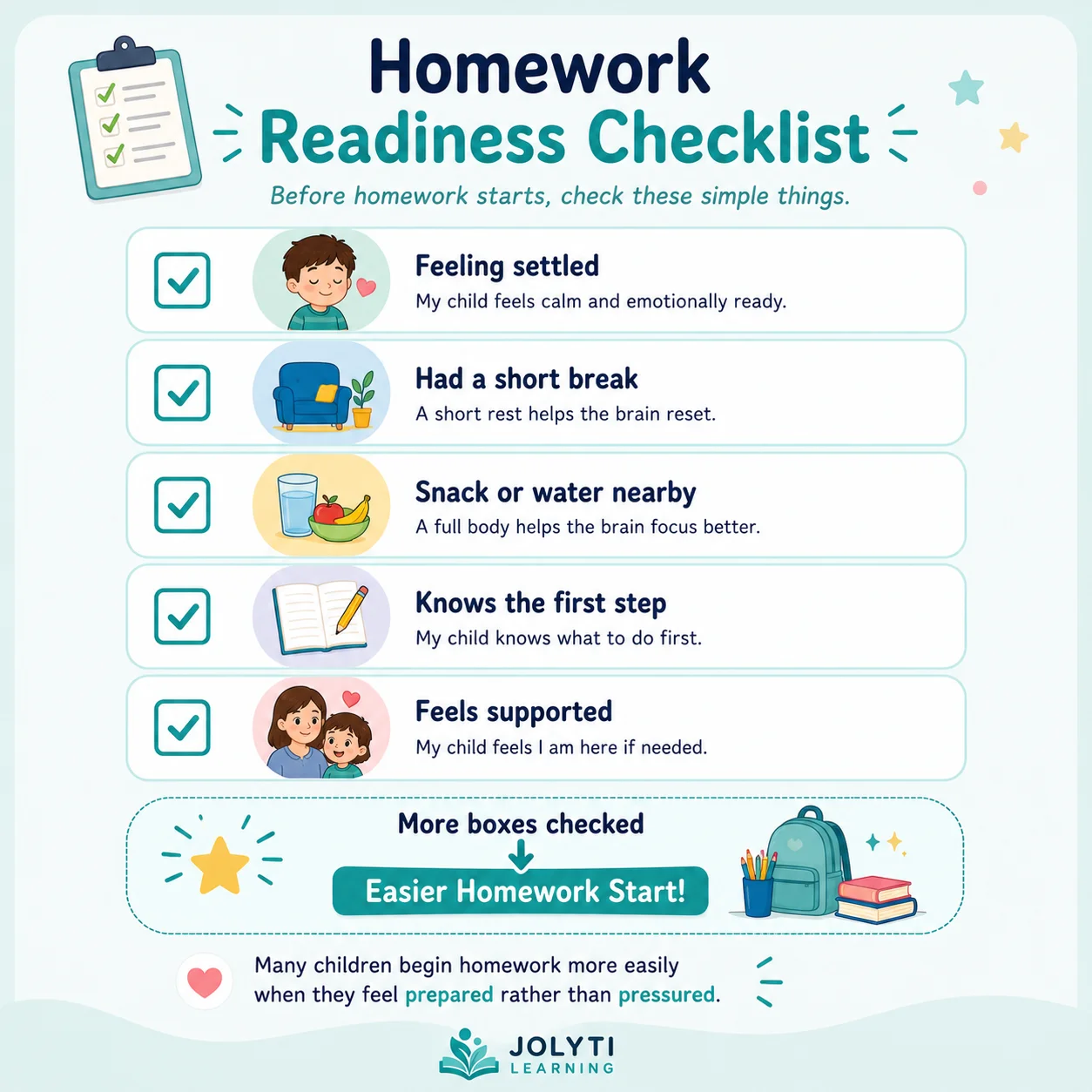
This checklist shows a few simple things that can make starting homework feel easier. Children often begin more willingly when they feel settled, have had a short break, know the first step, and feel supported.
Reduce the Pressure Around Starting
Some children delay because starting homework feels like entering a place where they might be corrected, rushed, or judged.
This can be especially true for children who worry about mistakes. They may delay because not starting feels safer than trying and getting something wrong.
Parents can reduce this pressure by making the beginning feel lighter. For example, the first few minutes can be about getting ready and trying, not proving anything.
Gentle phrases can help:
- “We are only starting, not finishing everything right now.”
- “Let’s find the easiest part first.”
- “Mistakes are allowed while you are learning.”
- “I’ll stay nearby if you need help.”
- “You only need to try the first step.”
If homework often turns into emotional conflict, How to Stop Homework from Turning into Arguments may help you think about the emotional pattern around homework time.
A Typical Calm Afternoon
A calm afternoon flow gives the child a simple path to follow. It does not need to control the whole afternoon. It only helps homework feel less sudden and less confusing.
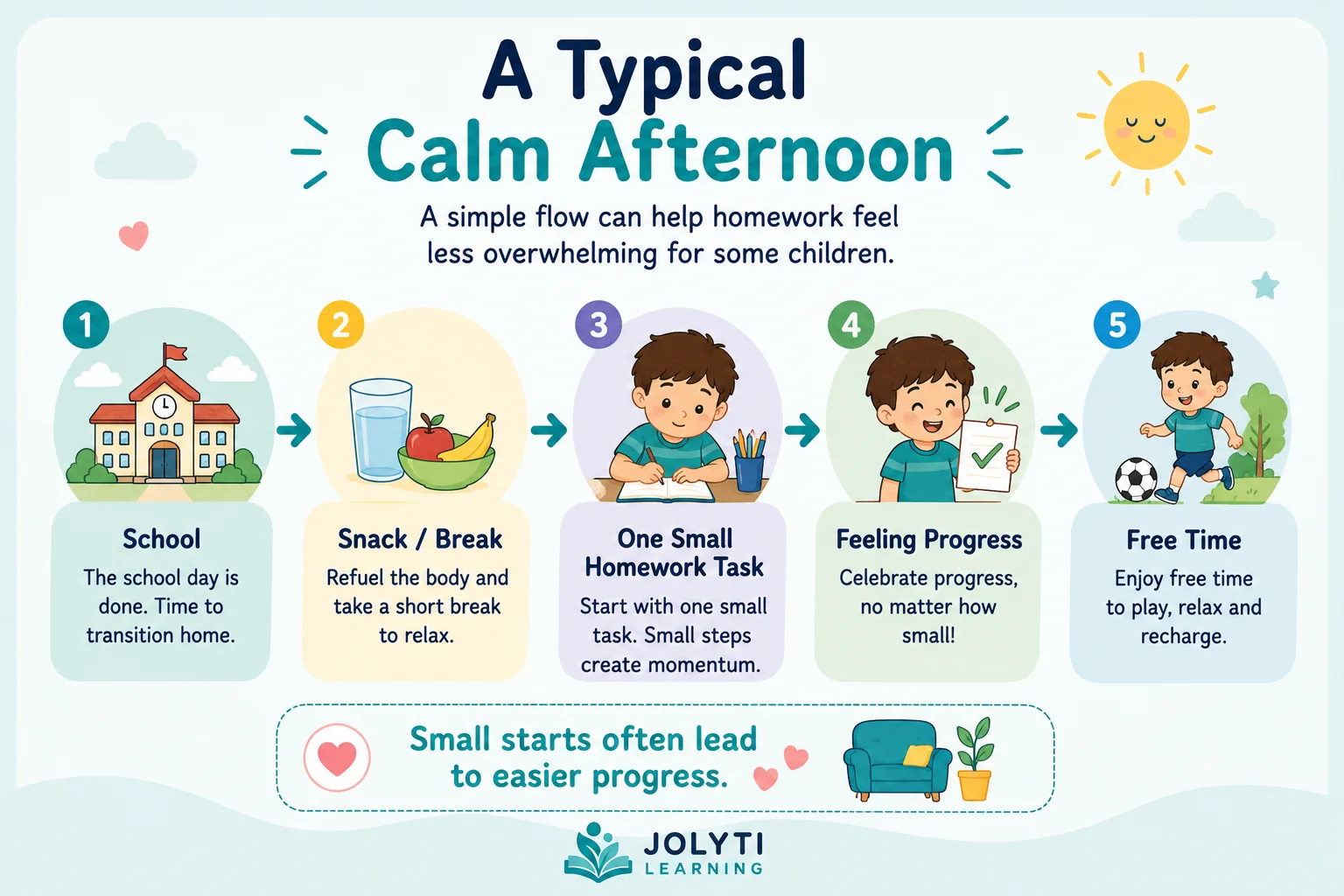
This visual shows a realistic after-school flow rather than a strict schedule. Small steps, short breaks, and predictable routines can help homework feel less overwhelming for some children.
Some children respond better when they can see the order of events. Knowing what comes next can reduce arguments because the routine feels less like a surprise.
Practical Ideas That Can Help
Every child is different, but many families find that small changes make starting homework easier. These ideas are not rules. They are options to test gently.
- Allow a short transition after school before homework begins.
- Keep homework supplies in one easy-to-find place.
- Start with the easiest task instead of the hardest one.
- Use one calm reminder instead of many repeated reminders.
- Let your child choose between two homework tasks.
- Break homework into smaller parts.
- Notice the child for starting, not only for finishing.
- End homework time calmly when possible.
Many children build better learning habits when starting feels possible. A small beginning can slowly become a stronger routine.
This connects naturally with Why Short Study Sessions Work Better for Some Children, because short and manageable learning moments can help children begin without feeling trapped.
Common Mistakes That Can Make Delaying Worse
Most parents have done some of these before. That is normal. Parenting during homework time can be tiring, especially after a long day.
- Repeating reminders every few minutes
- Starting with the hardest task first
- Turning delay into a character issue
- Comparing one child with another
- Expecting the same energy every afternoon
- Making homework feel like a test of obedience
- Talking too much before the child has started
Small changes in the beginning of homework time can make a big emotional difference. Sometimes the child does not need a long lecture. They may only need a clearer and calmer first step.
Different Children Start Differently
Some children start better after quiet time. Others need movement first. Some need a parent nearby. Others feel more confident when they can try alone before asking for help.
Quiet children may delay because they are worried but do not know how to say it. Energetic children may delay because sitting again feels hard after school. Highly emotional children may need reassurance before their thinking brain feels ready.
Independent children may resist if homework feels too controlled. Children who worry about mistakes may need the first task to feel safe and low pressure.
This is why one homework routine will not work for every child. A helpful routine is one that respects your child’s energy, emotions, and learning style.
During Busy School Weeks
Homework delays may become stronger during exam periods, end-of-term tiredness, sports seasons, family events, or weeks when children have had less sleep.
During these times, parents may need to make the starting step even smaller. Instead of expecting a full homework session immediately, it may help to begin with one page, one question, or five minutes of setup.
This does not mean lowering expectations forever. It means adjusting the entry point so the child can still begin.
Jolyti Note: I’ve noticed that many children do not begin homework better after more reminders. They often begin better when the first step feels smaller, the room feels calmer, and they feel less afraid of getting it wrong.
Frequently Asked Questions
Why does my child delay homework every day?
Daily homework delays can happen when homework feels too big, too boring, too stressful, or too sudden after school. Some children also delay because they are tired, hungry, distracted, or worried about making mistakes.
Should children start homework immediately after school?
Not always. Some children can start quickly, but many need a short transition first. A snack, short rest, or quiet reset can help the child feel more ready to focus.
What is the best first step when a child keeps delaying?
The best first step is usually very small. Opening the homework folder, reading the first question, or choosing the easiest task can help the child begin without feeling overwhelmed.
Is homework delay the same as laziness?
Not always. Homework delay is often connected to tiredness, worry, confusion, or emotional overload. Looking for the reason behind the delay can help parents respond more calmly.
Why does my child do homework better some days than others?
Children do not bring the same energy home every day. Sleep, hunger, school pressure, friendships, noise, and emotional tiredness can all affect how easily a child starts homework. A harder day does not mean the routine has failed.
How can I help without turning homework into an argument?
Try to lower the pressure at the beginning. Use one calm reminder, offer a small first step, and avoid turning the delay into a bigger lecture. A calm start often matters more than a perfect routine.
Final Thoughts
Helping children start homework without delaying does not require a perfect routine, a silent home, or a child who feels motivated every afternoon.
Children do not always need bigger reminders. Sometimes they need a smaller first step, a calmer beginning, and a little more confidence that they can handle what comes next.
If homework starts slowly in your home, that does not mean you are failing. It means your child may need support with the beginning. Small, calm changes can help children feel more confident starting homework one day at a time.
Featured image is AI-generated and intended for illustrative purposes only.
Leave a Reply