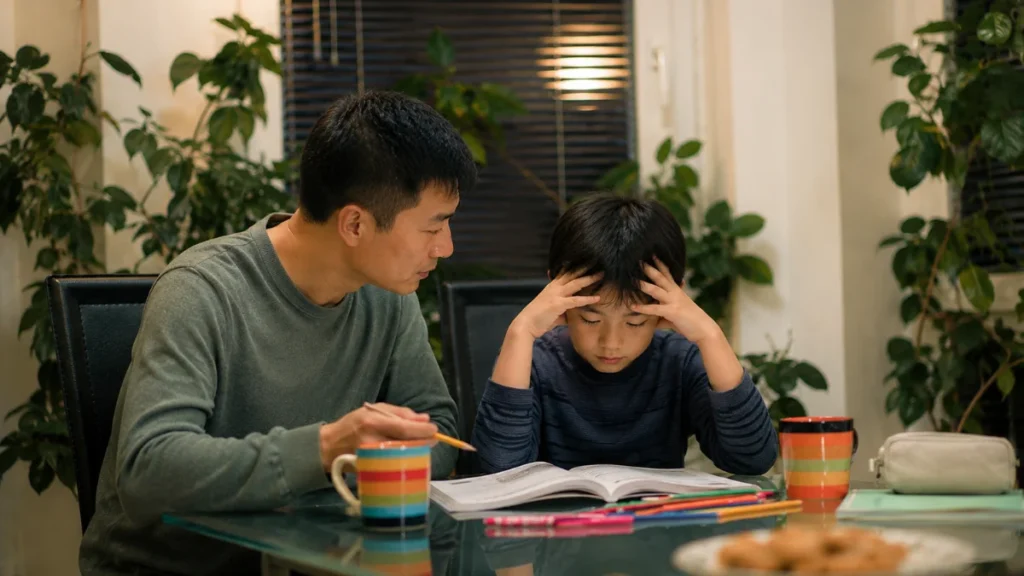
Many parents search for this after another difficult evening at home. Dinner is finished, the table is being cleared, and then homework suddenly becomes the hardest part of the night. A child who seemed fine a few minutes earlier may complain, avoid the task, cry, argue, or shut down completely.
Some children refuse homework immediately after dinner because their emotional and mental energy is already low by the evening. This behaviour is often connected to tiredness, overstimulation, transition difficulty, fear of mistakes, or needing a calmer reset after a long school day.
This can feel confusing because many children seem capable during the day. They may behave well at school, talk normally at dinner, and then suddenly resist homework as soon as it appears. In real homes, this moment can feel frustrating for parents and heavy for children.
This article will help explain why some children refuse homework immediately after dinner, what may be happening underneath the behaviour, and how parents can understand the pattern in a calmer, more supportive way.
Why Homework Feels Harder in Real Homes
Many parenting articles make homework sound like a simple evening routine. In real homes, it is often much messier. Parents may be tired from work, younger siblings may need attention, dinner dishes may still be on the table, and everyone may already be emotionally stretched.
Children also arrive at this moment with their own tiredness. They may have spent the day listening, sitting still, managing friendships, handling noise, changing subjects, and trying not to make mistakes. By the time dinner ends, their brain may not feel ready for another structured task.
This is why homework refusal after dinner does not always mean the child does not care. Sometimes it means the child has reached the end of what they can manage calmly that day.
If homework often feels emotionally heavy before it even begins, you may also find How to Make Homework Feel Less Stressful After School helpful because it looks more closely at the after-school pressure that can build before evening routines begin.
What Most Homework Advice Misses
Common homework advice often focuses on routine, discipline, and consistency. These things can help some families, but they do not always explain what is happening emotionally inside the child.
A child may understand that homework matters and still feel unable to begin. Their refusal may be less about the homework itself and more about the emotional feeling around starting again after a long day.
Some children need more than a schedule. They need the transition into homework to feel calm enough, safe enough, and small enough to try.
Why Evenings Feel Harder for Some Children
Many children look physically awake in the evening while still being mentally and emotionally tired. They may talk, move around, or play, but that does not always mean their learning energy is still strong.
Dinner can feel like a break, but it may not fully refill a child’s emotional energy. When homework appears immediately after dinner, the child may feel as if another demand has landed before they have recovered from the day.
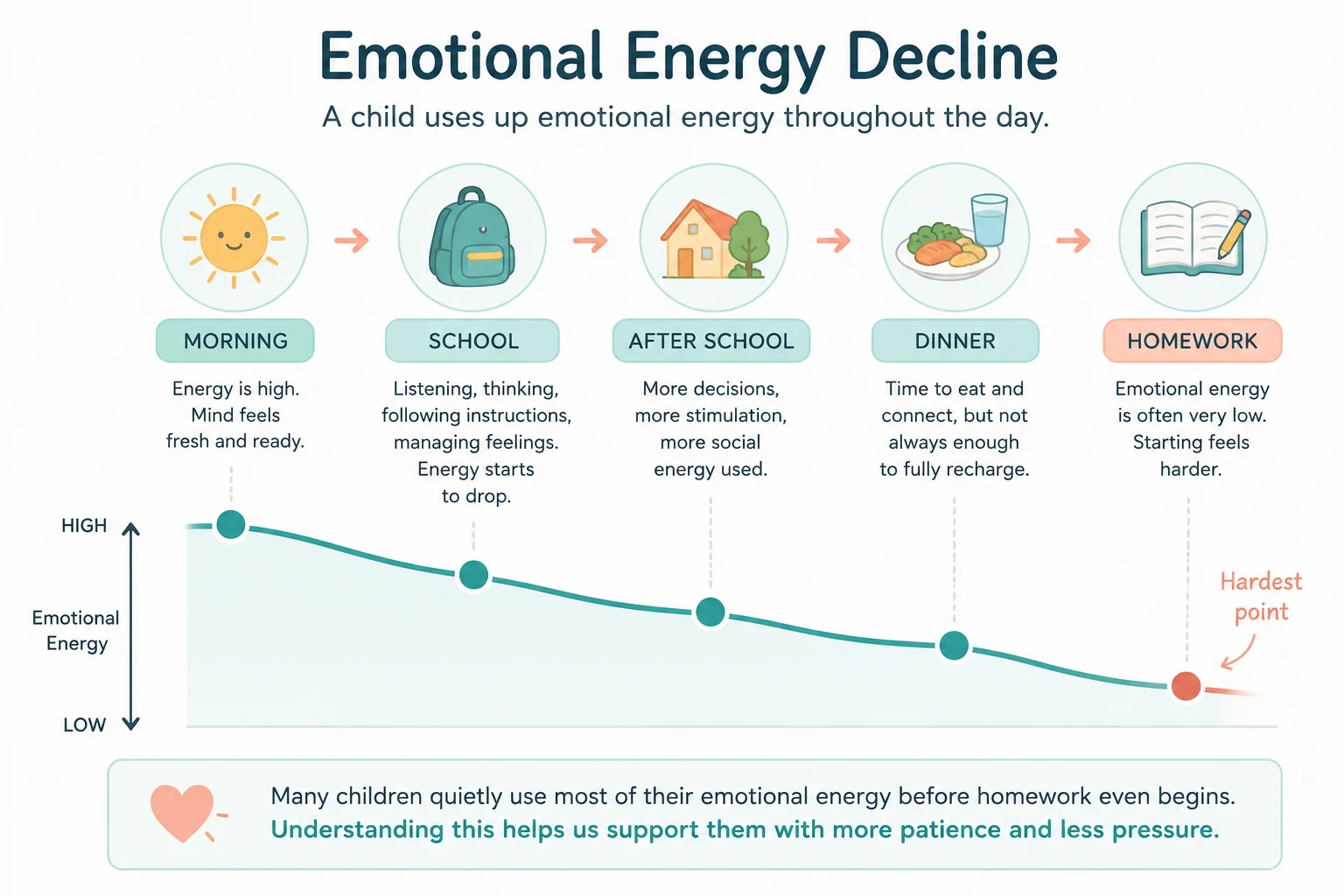
This simple pattern helps explain why some children refuse homework immediately after dinner even when the task is not very difficult. The timing can matter just as much as the task itself.
Some Children Struggle With Sudden Transitions
For some children, the hardest part is not the homework. It is the sudden move from dinner mode into learning mode. One moment they are eating, talking, or relaxing. The next moment they are expected to focus, remember instructions, and produce answers.
This kind of quick switch can feel too sharp for children who need more emotional predictability. They may resist, delay, or become upset because their brain has not caught up with the change yet.
In many homes, this gets mistaken for laziness. But for some children, it is really transition stress.
Why Homework Can Feel Bigger at Night
Homework can feel different at night than it does in the classroom. At school, children are surrounded by structure, teachers, classmates, and routines. At home, homework can feel more personal and emotionally exposed.
A small worksheet may suddenly carry many hidden feelings. A child may worry about being wrong, being corrected, disappointing a parent, or not finishing quickly enough. These feelings can become stronger when the child is already tired.
This is why a simple task can sometimes trigger a big reaction. The child may not only be reacting to the homework. They may be reacting to the pressure they feel around the homework.
For children who become upset when they make small errors, homework refusal may sometimes be connected to fear of mistakes. In that case, How to Help a Child Who Gets Upset After Small Mistakes may support this topic naturally.
Emotional Shutdown vs Emotional Readiness
Children do not always say, “I am overwhelmed.” Instead, their behaviour may show it. Some children avoid the work, some become irritable, and some stare at the page without starting.
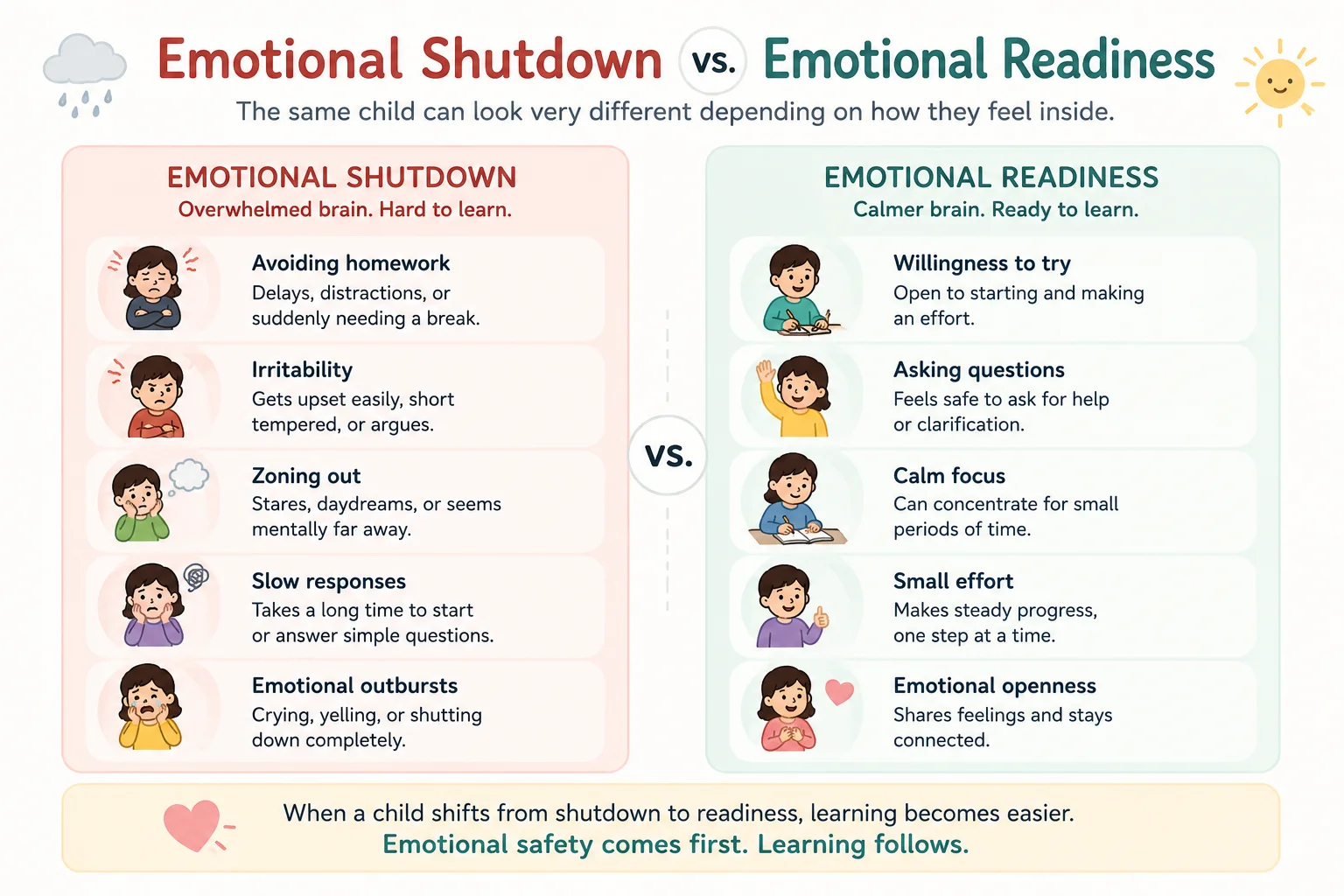
This visual can help parents see the behaviour differently. A child who refuses homework may not be trying to make the evening difficult. They may be showing that their brain is not ready to learn calmly yet.
Different Children Show Stress Differently
Some children show homework stress loudly. They complain, cry, argue, or push the book away. Other children show it quietly. They move slowly, avoid eye contact, ask unrelated questions, or pretend they forgot what to do.
Quiet children can be especially easy to misunderstand because their stress may not look dramatic. They may simply freeze, delay, or become distant.
More expressive children may seem defiant when they are actually overwhelmed. Both children may be struggling with the same feeling, but showing it in different ways.
Children Who Need Emotional Safety Before Focus
Some children learn better when they feel emotionally safe first. If the evening already feels rushed or tense, homework can feel like another place where they might fail.
This does not mean parents are doing anything wrong. Real evenings are naturally busy. But small differences in emotional atmosphere can change how a child responds to learning.
| Emotionally Rushed Evening | Emotionally Calm Evening |
|---|---|
| Homework starts immediately after dinner | There is a short reset before homework begins |
| The focus is mainly on finishing quickly | The focus is on small steady progress |
| Mistakes feel urgent or frustrating | Mistakes are handled calmly |
| The child may become defensive | The child may feel safer asking for help |
| The evening feels like pressure | The evening feels more manageable |
This table is not about perfect parenting. It simply shows how the emotional feeling around homework can change how a child responds.
Why Homework Refusal Is Not Always Laziness
It is easy to think a child is being lazy when they refuse homework. But many children who resist homework still care about school. Some care so much that mistakes feel scary.
A child may avoid homework because they are afraid of getting it wrong, tired of being corrected, worried about disappointing adults, or unsure how to start. Avoidance can sometimes be a child’s way of protecting themselves from a feeling they cannot explain.
This does not mean homework should be ignored. It means the emotional reason behind the refusal matters.
Practical Insights for Busy Families
Many families do not need a perfect homework system. Small emotional adjustments can sometimes make evenings feel more manageable.
Some children respond better when there is a small pause between dinner and homework. Others feel calmer when only one task is visible at a time. Some children need a parent nearby without too much correction. Others need a few quiet minutes before they can begin.
For many children, the first goal is not instant motivation. It is helping the homework moment feel safe enough to start.
Some children also cope better when homework is broken into smaller blocks instead of one long evening task. If your child seems to lose energy quickly, Why Short Study Sessions Work Better for Some Children may connect well with this pattern.
Common Misunderstandings
Homework refusal after dinner can easily be misunderstood, especially when parents are tired too. These misunderstandings are common and do not mean parents are failing.
Emotional exhaustion can look like laziness. Slow starts can look like disobedience. Quiet shutdown can look like not caring. Fear of mistakes can look like avoiding responsibility.
When parents understand these patterns, the evening can feel less personal and less tense. The child’s behaviour still matters, but it becomes easier to respond with calm support instead of frustration.
Family and Seasonal Context
Homework resistance can become stronger during busy school terms, exam periods, colder evenings, poor sleep, or weeks with too many activities. A child who usually manages homework well may struggle more when their emotional load is heavier than usual.
Sometimes the issue is not only dinner or homework. It may be the whole day building up quietly in the background.
Jolyti Note: I’ve noticed some children become more cooperative with learning when the evening feels less rushed and less performance-focused. Every child is different, but many seem to need a small emotional landing space before they can try again with schoolwork at home.
Frequently Asked Questions
Why does my child refuse homework straight after dinner?
Your child may be tired, overstimulated, or struggling to switch from dinner mode into learning mode. Refusing homework immediately after dinner does not always mean they are lazy or careless.
Is it better to do homework before dinner?
Some children focus better before dinner because their emotional energy is not as low yet. Other children need food and rest first. The best timing often depends on the child’s energy pattern and the family’s evening routine.
Why does homework cause arguments at night?
Homework can bring up tiredness, pressure, fear of mistakes, and frustration. At night, both parents and children may have less patience left, so small problems can feel bigger.
Does homework refusal mean my child is falling behind?
Not always. Homework refusal can be emotional, not academic. A child may understand the work but still struggle to begin when they feel tired, overwhelmed, or pressured.
How can I make homework feel calmer?
Many children respond better when the task feels smaller, the tone is calm, and there is a short reset before beginning. A calm start can sometimes matter more than a perfect routine.
Final Thoughts
Some children refuse homework immediately after dinner because the evening asks for more focus than they have left. What looks like resistance may sometimes be tiredness, transition stress, emotional overload, or fear of mistakes.
This does not mean parents need to create a perfect homework routine. Real families are busy, and evenings are rarely calm from start to finish. Small moments of emotional safety can still make a difference.
Children build learning confidence in different ways. For some, homework becomes easier when the evening feels less rushed, the pressure feels smaller, and the child feels safe enough to try again.
Featured image is AI-generated and intended for illustrative purposes only.
Leave a Reply