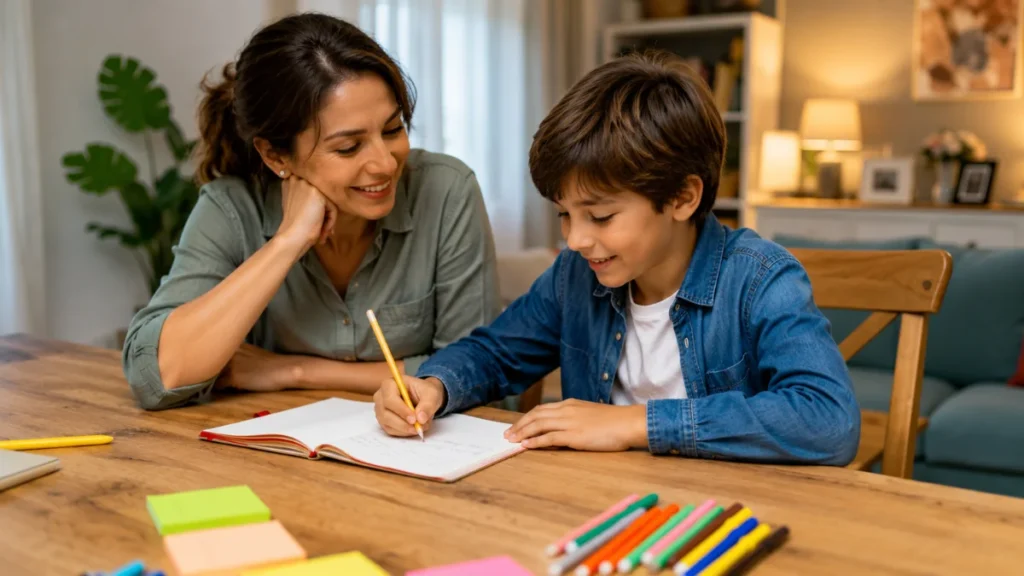
After school can feel emotionally heavy for many families. Children often come home tired, hungry, overstimulated, or frustrated after trying to focus all day at school. Parents may also already feel mentally exhausted from work, errands, dinner preparation, younger siblings, or simply trying to keep the evening calm.
Making homework feel less stressful after school often starts with reducing emotional pressure instead of increasing control. Many children respond better when homework feels calmer, smaller, and emotionally safer rather than rushed or heavily corrected. Even small changes to timing, atmosphere, and expectations can sometimes help learning feel more manageable.
Many parents struggle with this because real home life rarely looks like the routines shown online. Some children need quiet after school while others need movement. Some become emotional quickly while others quietly avoid homework altogether.
This article focuses on realistic ways to reduce homework stress without creating rigid systems that feel impossible to maintain. The goal is not perfect homework sessions every evening. It is helping children slowly feel safer, calmer, and more confident while learning at home.
Real Homes Often Feel Different From Parenting Advice
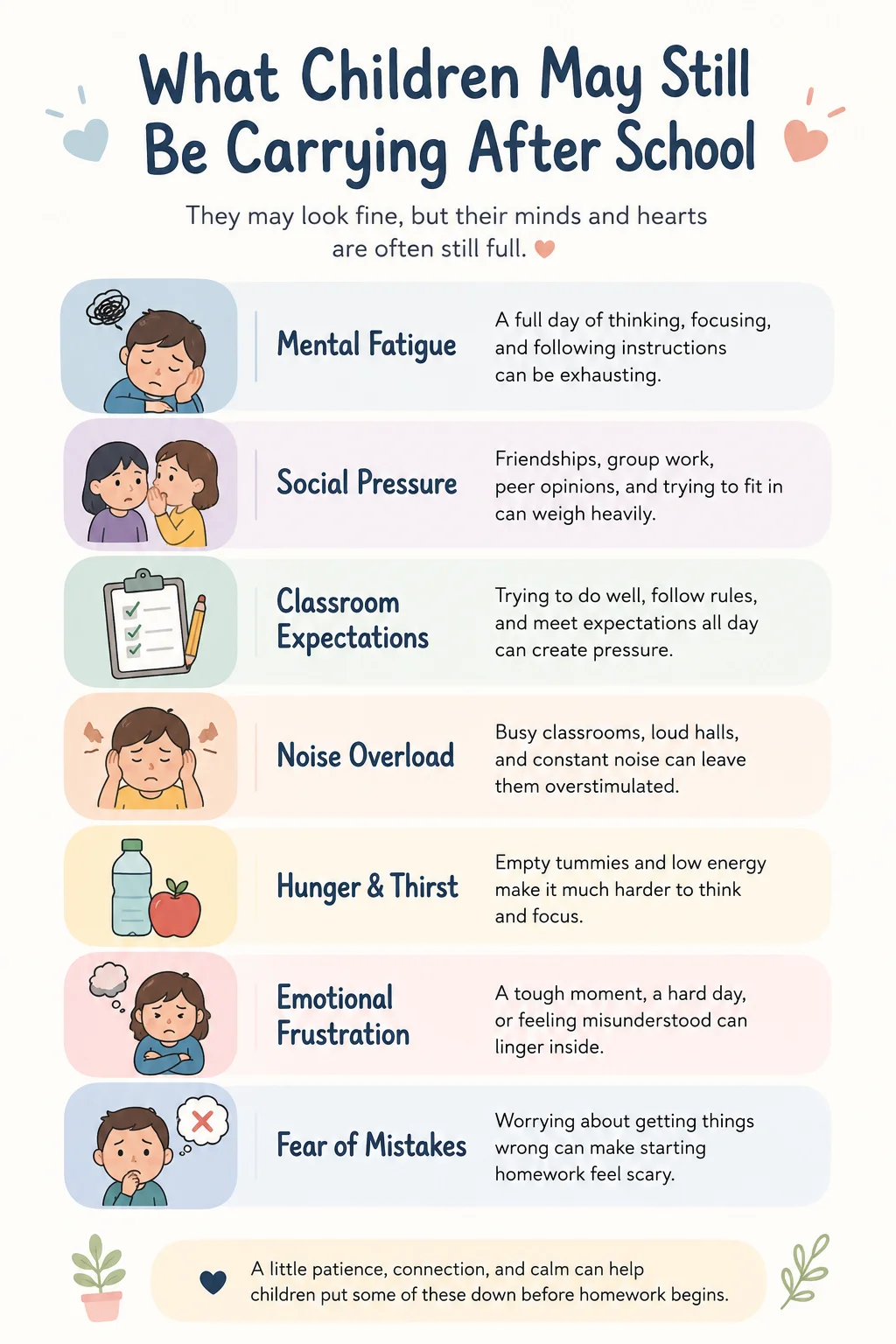
A lot of homework advice sounds easier on paper than it feels in real family life. Children do not arrive home from school as emotionally empty slates. Some are still carrying social stress, classroom pressure, sensory overload, or disappointment from earlier in the day.
At the same time, many parents are trying to manage several things at once. Homework may happen while dinner cooks, while siblings move around the house, or while parents are mentally drained themselves. Even finding a quiet moment can sometimes feel difficult.
Some children also struggle with the emotional shift between school and home. They may want comfort, movement, food, connection, or rest before their brain feels ready for more learning again. This does not mean they are lazy or unmotivated. Often, they simply need help transitioning out of “school mode” first.
Why Homework Pressure Can Quietly Backfire
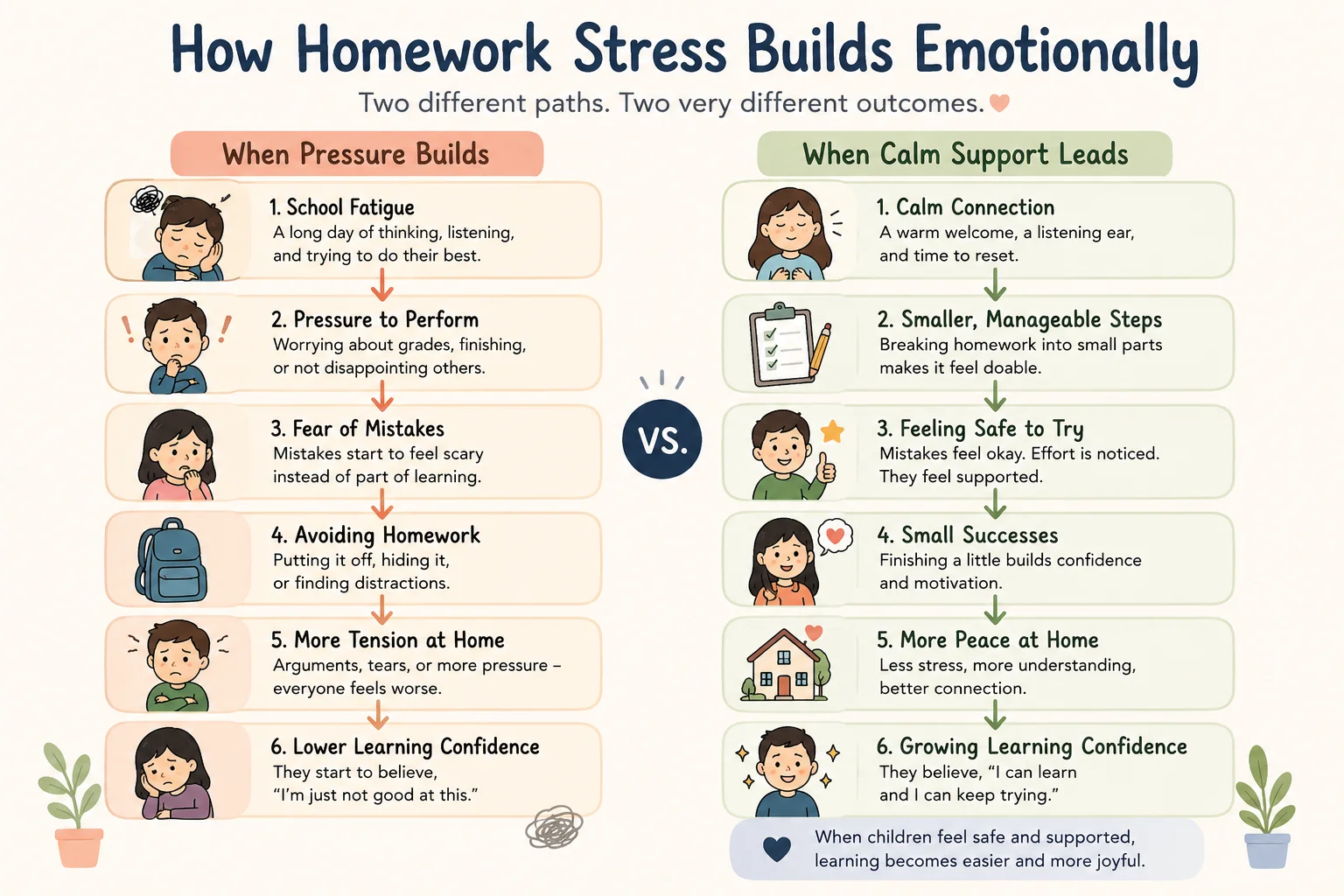
Many traditional homework systems focus heavily on control, schedules, or correction. While structure can help some children, too much pressure can sometimes make learning feel emotionally unsafe.
Children who feel constantly monitored may become more focused on avoiding mistakes than actually learning. Others begin delaying homework because starting feels emotionally overwhelming. Some children even appear careless when they are actually worried about getting things wrong.
This is one reason homework stress can become confusing for parents. The behaviour often looks like resistance on the surface, but underneath there may be anxiety, mental fatigue, low confidence, or emotional overload.
When homework begins feeling like a daily emotional battle, children can slowly start associating learning with stress rather than growth. If your child often hides worksheets, avoids showing school papers, or becomes quiet about school tasks, you may also find Why Some Children Hide Their School Work from Parents helpful because it connects closely with this emotional pattern.
Give Children Time to Mentally Arrive Home
Some children move into homework more easily after having a small emotional break first. After spending hours following instructions, concentrating, sitting still, and managing social situations, many children need a chance to mentally settle before beginning more work.
For one child, this may mean having a snack and sitting quietly. For another, it may mean outdoor movement, music, drawing, or a short conversation about the day. The important part is not creating a perfect after-school routine. It is helping children feel like home and school are emotionally different spaces.
Children often learn better when their nervous system feels calmer first. A short pause before homework can sometimes reduce arguments, frustration, and emotional shutdown later in the evening.
Make Homework Feel Smaller and More Manageable
Large homework tasks can sometimes feel emotionally bigger than adults realise. Even a single worksheet may feel overwhelming to a child who already feels mentally drained from the school day.
Some children cope better when homework feels divided into smaller pieces rather than one large expectation. Starting with one question, one page, or ten calm minutes can feel emotionally safer than focusing on everything left to complete.
A Gentle Homework Timer Idea: Some children feel less overwhelmed when homework feels smaller and easier to manage after a long school day. Shorter timed sessions can sometimes make learning feel calmer instead of emotionally heavy.
For families who want a simple option, the free StudentTimer website includes calm study sessions with built-in breaks designed for shorter, more manageable homework periods.
Children who fear mistakes often struggle most with beginning. Once they experience one small success, the emotional pressure around the task may slowly reduce.
Parents sometimes notice that children become more cooperative when the focus shifts from “finishing everything perfectly” to simply “starting calmly.”
For children who become tired or frustrated quickly, shorter learning blocks can sometimes make homework feel less overwhelming. This connects naturally with Why Short Study Sessions Work Better for Some Children, especially when long homework sessions seem to create more stress than progress.
Create a Homework Atmosphere That Feels Calm Rather Than Intense
Children do not need perfectly designed study rooms to learn successfully. In many homes, emotional atmosphere matters more than appearance.
Some children focus better when the space feels quieter and less stimulating. Others feel calmer simply knowing a parent is nearby without being heavily supervised. Certain children prefer softer lighting, small movement breaks, or less background noise while working.
A calm environment can also come from emotional tone rather than physical setup. Children often notice rushed voices, frustration, tension, constant correction, and pressure to hurry.
When the atmosphere feels calmer, homework may begin feeling less emotionally threatening. Even small things like lowering voices, slowing the pace slightly, or removing unnecessary pressure can sometimes help children stay more emotionally regulated while learning.
If your home feels busy or noisy during study time, How to Create a Calm Study Space in a Busy Home may give you more realistic ideas for creating a softer learning environment without needing a perfect room.
Confidence Often Grows Through Small Wins
Children usually build homework confidence gradually, not suddenly. Repeated small positive experiences often matter more than one perfect evening.
Some children become more willing to try when adults notice persistence, effort, problem-solving, consistency, and emotional recovery after frustration rather than focusing only on correct answers.
When children constantly feel evaluated, they may begin protecting themselves emotionally by avoiding homework, rushing, or giving up quickly. But when learning feels emotionally safer, many children slowly become more open to trying again.
Let Homework Be Imperfect Sometimes
Many parents quietly feel pressure to fix every mistake or ensure homework is completed perfectly every night. But in real homes, perfection often creates more emotional strain than learning itself.
Sometimes protecting the learning relationship matters more than perfectly completed homework.
Children often remember how learning felt long after they forget the worksheet itself. If homework constantly becomes stressful, children may begin emotionally associating learning with disappointment or pressure.
This does not mean lowering expectations completely. It means recognising that confidence and emotional safety are also important parts of learning development.
Small Practical Changes That May Help
Some families notice homework feels calmer when evenings become slightly softer and more flexible. A child who struggles immediately after school may cope better after eating first. Another may feel more capable once tasks are broken into smaller parts.
Certain children respond well when parents sit nearby quietly without correcting every answer. Others feel more relaxed when they begin with easier work before harder subjects. Even short movement breaks between tasks can sometimes reduce emotional frustration.
Not every idea works for every child. Children experience stress differently, and their emotional energy can change from day to day. Calm experimentation is often more realistic than trying to force one perfect routine.
| What Parents May See | What May Help the Child Feel Safer |
|---|---|
| Avoiding homework | Starting with one small task instead of the whole assignment. |
| Becoming upset quickly | Taking a short break before frustration becomes too big. |
| Rushing through answers | Slowing the pace and reducing pressure to finish perfectly. |
| Saying “I can’t do it” | Offering reassurance and focusing on the first manageable step. |
| Getting distracted | Checking whether the child is tired, hungry, overloaded, or needing movement. |
Common Mistakes That Can Accidentally Increase Homework Stress
Parents usually make these mistakes out of concern, tiredness, or pressure themselves. Still, some habits can unintentionally make homework feel emotionally heavier for children.
Constant correction can sometimes make children afraid to try. Comparing siblings may quietly reduce confidence, even when the comparison seems harmless. Long homework sessions without breaks can also leave emotionally tired children feeling trapped or overwhelmed.
Some children also struggle when every learning moment feels performance-focused. When praise only appears after perfect results, children may begin believing mistakes are something to hide rather than part of learning.
Children often respond more positively when support feels emotionally safe instead of constantly evaluative.
Different Children Experience Homework Stress Differently
Some children become emotional very quickly during homework while others quietly avoid starting at all. Introverted children may internalise frustration silently, while energetic children may physically struggle to sit still after school.
Certain children need reassurance before they can focus properly. Others prefer independence and become stressed when adults hover too closely. Some children appear distracted when they are actually mentally exhausted.
This is why one-size-fits-all homework advice often feels incomplete. Two children may show similar homework struggles while needing completely different emotional support underneath.
Understanding how a child experiences learning emotionally can sometimes change homework more than changing the homework itself.
Family and Seasonal Changes Matter Too
Homework stress often increases during emotionally busy seasons. Toward the end of school terms, many children experience mental fatigue even if they cannot explain it clearly. Darker winter evenings can sometimes affect motivation and energy levels too.
Busy family periods also change children’s emotional capacity for learning. Illness, poor sleep, school events, friendship stress, or disrupted routines can all quietly influence homework behaviour.
Some weeks simply require gentler expectations than others. Children usually build confidence more sustainably when support adjusts realistically to life rather than expecting perfect consistency all year.
Jolyti Note: I’ve noticed some children become more open to homework once the emotional atmosphere changes rather than the homework itself. In many homes, learning seems to feel easier when children no longer feel constantly judged while doing it. Small changes like shorter sessions, a calmer study space, or giving children time to settle after school can sometimes make homework feel less emotionally heavy.
Frequently Asked Questions
Should children do homework immediately after school?
Some children handle this well, but many benefit from a short emotional and mental break first. Even a small transition period can sometimes reduce frustration later.
What if my child keeps avoiding homework?
Avoidance is not always laziness. Some children avoid homework because they feel overwhelmed, mentally tired, or worried about getting things wrong.
Is it okay if homework is not perfect?
In many situations, yes. Emotional safety and confidence are important parts of long-term learning development. Constant perfection pressure can sometimes reduce motivation.
How long should homework sessions last?
Many children manage shorter focused sessions better than long uninterrupted study periods, especially after mentally demanding school days.
What if different methods work on different days?
That is very normal. Children’s emotional energy changes depending on sleep, school experiences, stress, and personality. Flexibility is often more realistic than rigid systems.
Final Thoughts
Homework often feels most stressful when children are emotionally overwhelmed rather than unwilling to learn. Many children are carrying mental fatigue, social pressure, frustration, or fear of mistakes long before homework even begins.
Small calm changes can sometimes make a bigger difference than strict systems. Children usually build learning confidence gradually through repeated experiences of feeling emotionally safe, supported, and capable while learning.
Parents do not need perfect routines to help children succeed. In many homes, patience, flexibility, and emotional understanding quietly become the things children remember most over time.
Featured image is AI-generated and intended for illustrative purposes only.
Leave a Reply