
Children becoming emotional after small mistakes is more common than many parents realise. Some children cry after spelling a word wrong, become frustrated when homework feels difficult, or completely shut down after making a small error during learning.
Helping a child who gets upset after small mistakes often starts with reducing emotional pressure and making mistakes feel safer. Many children calm down more easily when learning feels supportive, manageable, and less focused on getting everything perfect the first time.
For many parents, this can feel confusing because the reaction often seems much bigger than the mistake itself. A simple maths error, forgotten answer, or messy handwriting moment can suddenly lead to tears, anger, frustration, or withdrawal.
This article will help you understand why small mistakes can feel so big for some children, and how to support learning confidence in calm, realistic ways at home.
Why Mistakes Feel Harder in Real Homes
Many parenting articles make learning support sound calm and organised. Real homes usually feel very different. Children often come home from school already tired, hungry, overstimulated, or emotionally full.
Parents may be cooking dinner, answering messages, helping siblings, cleaning up, or trying to get through the evening routine. In that kind of household, even a small homework mistake can become the moment where a child’s emotions finally spill over.
Some children also hold themselves together all day at school and only release their feelings once they feel safe at home. What looks like “overreacting” after one small mistake may actually be the result of a whole day of pressure, effort, and tiredness.
If mistakes often become bigger during homework time, the wider after-school atmosphere may also be part of the picture. You may find How to Make Homework Feel Less Stressful After School helpful because it looks at how tiredness, pressure, and emotional transition can affect learning at home.
Why Traditional Advice Sometimes Fails
Traditional advice often tells parents to correct mistakes quickly, encourage more practice, or remind children to keep trying. These ideas can help some children, but they may not work well when the child is already emotionally overwhelmed.
Some children are very sensitive to disappointment. Others worry quietly about letting adults down. Some compare themselves to classmates or siblings even when nobody has asked them to.
When children start connecting mistakes with embarrassment, failure, or pressure, learning can begin to feel emotionally unsafe. This is why simply saying “mistakes are okay” does not always work straight away. Children usually believe mistakes are safe after experiencing calm support many times.
Make Mistakes Feel Smaller and Safer
For emotionally sensitive children, a tiny mistake can feel much bigger inside their mind. A wrong answer may quickly turn into thoughts like “I’m not good at this” or “I always get things wrong.”
One helpful approach is to reduce the emotional weight around mistakes before correcting the actual work. Children often calm down more easily when the adult stays steady and does not make the mistake feel urgent.
A calm sentence can sometimes help more than a long explanation. Phrases like “your brain is still figuring this out” or “this part looks frustrating today” can make the child feel understood without feeling judged.
The goal is not to remove mistakes from learning. The goal is to help mistakes feel survivable.
Build Confidence Through Small Wins
Children who get upset after small mistakes often need more learning experiences that feel reachable. Large tasks can feel heavy before they even begin, especially after a long school day.
Confidence usually grows through repeated small successes. A child may cope better reading one short page calmly than struggling through a full chapter while upset. They may feel more capable solving two maths questions successfully than forcing through twenty while anxious.
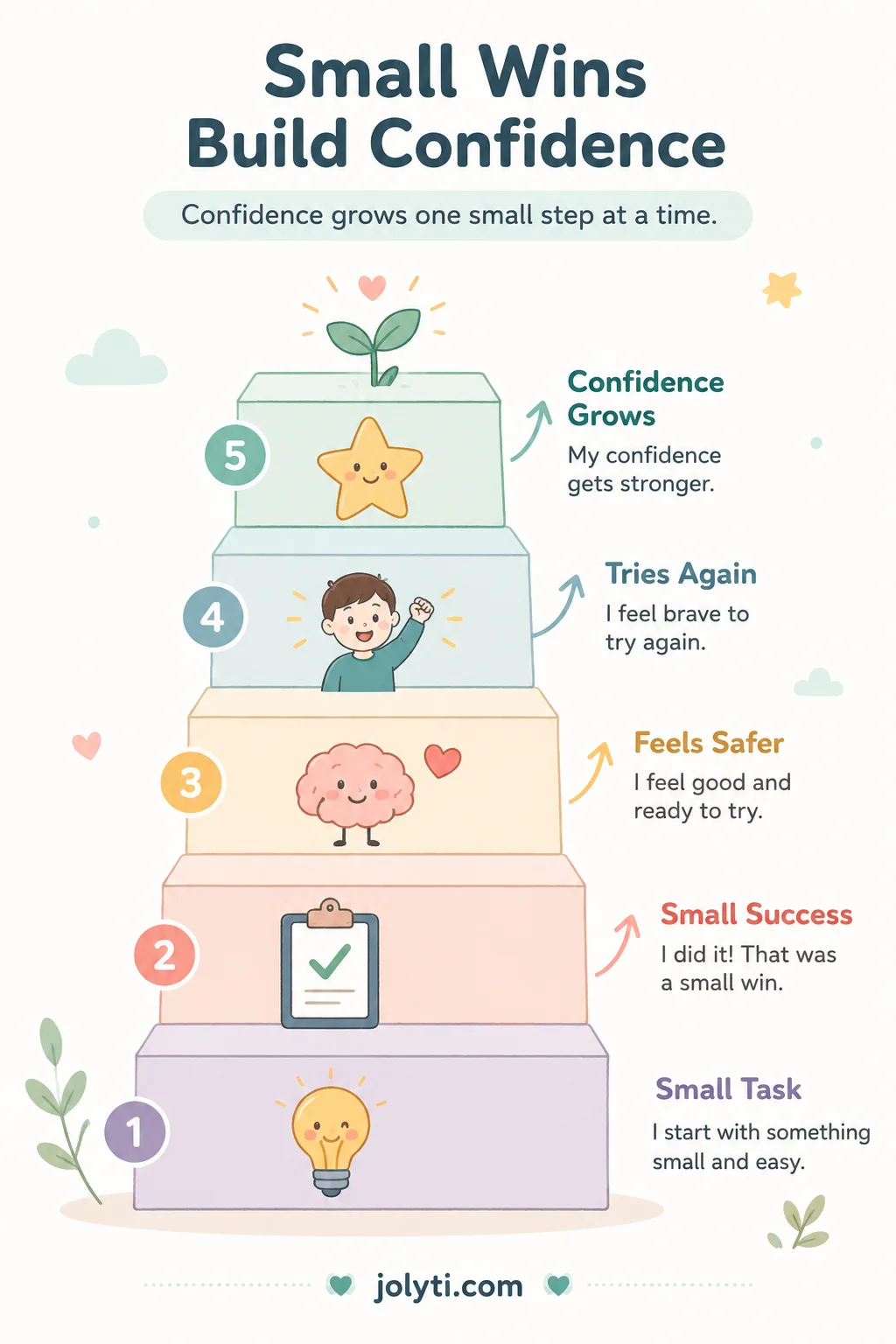
Small wins do not mean lowering expectations forever. They simply help children experience progress in a way their emotions can manage. Over time, those small moments can make learning feel safer and more possible.
Some children also need smaller learning moments because long sessions make mistakes feel heavier. If your child becomes discouraged during longer homework periods, Why Short Study Sessions Work Better for Some Children connects naturally with this idea.
Separate Learning From Performance
Some children become upset after mistakes because learning starts to feel like a test of who they are. They may feel that being wrong means they are not smart, not good enough, or disappointing someone.
This can happen even in loving homes. Children can be very aware of adult tone, facial expressions, and small signs of frustration. When learning feels like performance, mistakes can feel emotionally risky.
Low-pressure learning moments can help rebuild confidence. Reading together without correcting every small error, learning through games, drawing ideas, or talking through a problem casually can all help learning feel less like a test.
Children often become more willing to try difficult things when they no longer feel watched closely for mistakes.
Help the Child Recover Emotionally First
When a child becomes upset after a mistake, it is natural for parents to want to fix the learning problem immediately. But emotional recovery often needs to happen before useful learning can continue.
Trying to push through homework while a child is overwhelmed can sometimes make the whole experience feel heavier. Some children need a quiet pause before their brain can think clearly again.
A calmer voice, fewer words, and a short break can help more than a long motivational speech. Sometimes the most supportive thing is to sit nearby calmly and let the child feel that the mistake has not changed how they are seen.
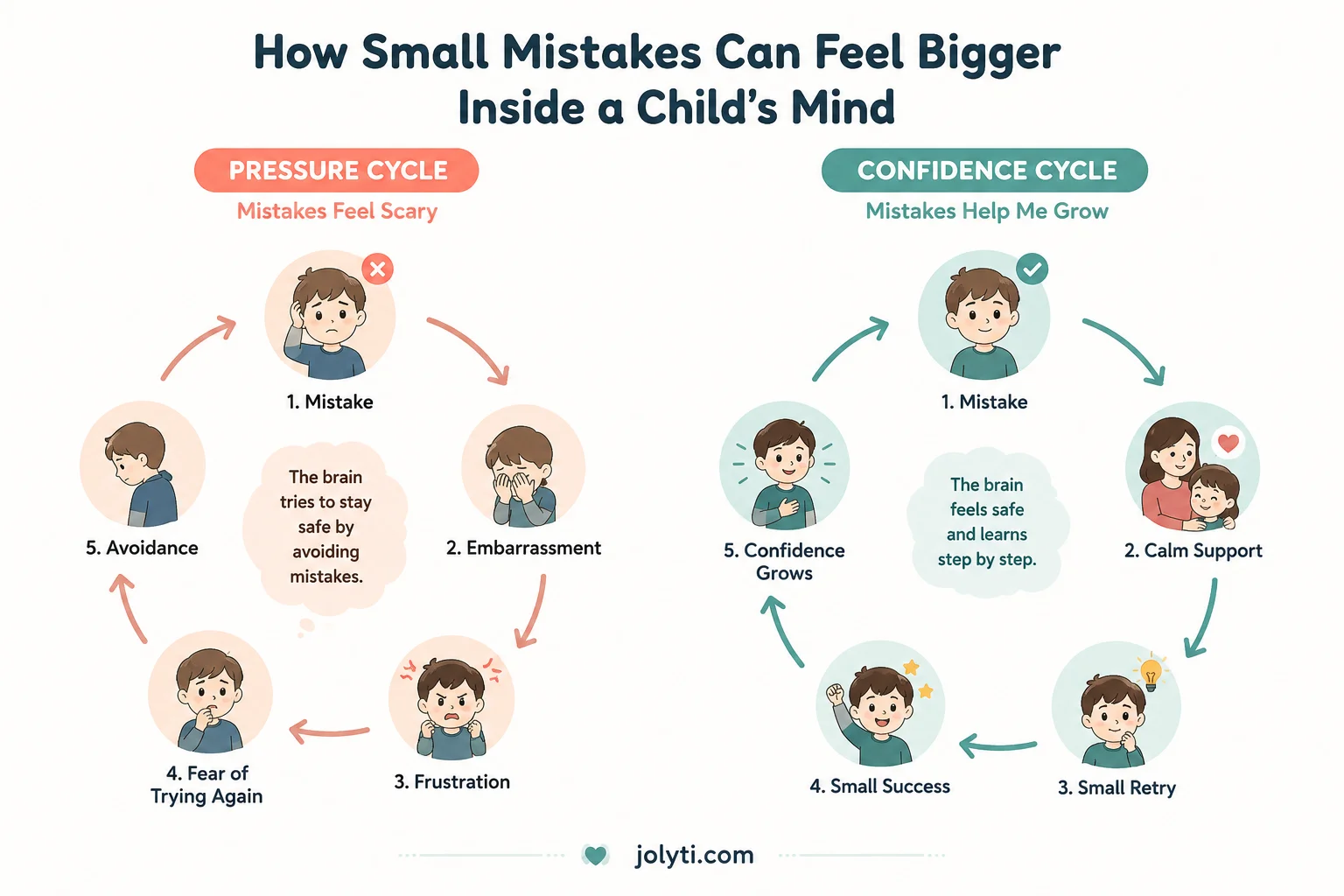
In many moments, helping the child feel emotionally safe matters more than finishing every question perfectly.
Avoid Turning Every Mistake Into a Lesson
Children sometimes need comfort more than correction. When every emotional moment becomes a teaching moment, children may start expecting stress whenever they struggle.
Not every mistake needs a long explanation, extra practice, or immediate problem-solving. Some mistakes can be gently noticed, accepted, and returned to later when the child is calmer.
This does not mean ignoring learning. It means choosing the right emotional moment for learning to continue. A child who feels safe is usually more willing to try again later.
Practical Ideas That May Help at Home
Many families find that small changes work better than strict systems. A child may feel calmer when only one task is visible at a time, when hard homework is done before deep tiredness sets in, or when mistakes are made on scrap paper first.
Some children respond well to short learning blocks with calm pauses. Others feel more supported when a parent sits nearby without correcting every moment. Some children also relax when adults casually talk about their own everyday mistakes.
These small habits can quietly teach children that mistakes are normal parts of learning, not signs of failure.
Common Mistakes Parents Often Make Without Realising
Most parents make confidence-reducing mistakes sometimes while genuinely trying to help. This does not mean they are failing. It simply means that small patterns can add pressure without anyone noticing.
Correcting too quickly, comparing siblings, praising only high results, pushing through emotional overwhelm, or sounding frustrated during homework can all make mistakes feel bigger to a child.
Small awareness changes often help more than dramatic parenting changes. A calmer pause before correction can already make learning feel safer.
Different Children React to Mistakes Differently
Some children cry or become angry when they make mistakes. Others go quiet, avoid the task, or pretend they do not care. Emotional reactions do not always look the same.
Highly sensitive children may replay mistakes in their minds long after the moment ends. Independent children may hide frustration instead of asking for help. Energetic learners may become upset quickly because sitting still already feels difficult before the mistake happens.
Some children need reassurance. Others need space. Some need humour, while others need quiet. This is why one-size-fits-all parenting advice often feels unrealistic in real homes.
Quiet children may especially hide their worry after mistakes because they do not always show frustration clearly. If your child seems calm on the outside but often doubts themselves underneath, Why Quiet Children Sometimes Doubt Their Learning Ability may support this topic well.
Family and Seasonal Context Matters Too
Children can become more emotionally reactive during busy or tiring seasons. School-term fatigue, exam periods, poor sleep, family stress, and full schedules can all reduce emotional resilience.
A child who usually handles mistakes calmly may struggle more during these times. Sometimes the issue is not only the homework. It may be emotional overload quietly building in the background.
Jolyti Note: I’ve noticed some children become much more relaxed around learning once mistakes stop feeling like emotional emergencies. In many homes, confidence seems to grow more quietly through calm repetition and emotional safety than through pressure or perfect performance.
Pressure-Focused vs Confidence-Focused Responses
This table is not about judging parents. It simply shows how small changes in response can make mistakes feel safer for children.
| Situation | Pressure-Focused Response | Confidence-Focused Response |
|---|---|---|
| Child gets an answer wrong | Correcting immediately | Pausing calmly before correction |
| Child feels frustrated | Pushing them to continue | Helping them reset emotionally first |
| Child fears mistakes | Focusing mostly on accuracy | Focusing on safe retrying and effort |
| Child loses confidence | Giving more work straight away | Creating smaller achievable wins |
| Child shuts down | Trying to explain everything immediately | Using calm support before teaching again |
Frequently Asked Questions
Why does my child cry over small mistakes?
Some children experience mistakes very emotionally, especially when they fear disappointment, embarrassment, or failure. Tiredness, school pressure, and emotional sensitivity can also make small mistakes feel much bigger.
Should I correct every mistake during homework?
Not always. Constant correction can sometimes increase anxiety. Some moments are better handled with emotional reassurance first, then correction later when the child is calmer.
Can perfectionism start in young children?
Yes. Some children become very hard on themselves early, especially if they strongly value approval or worry about getting things wrong.
What if my child completely shuts down after mistakes?
A short emotional break can help more than pushing through immediately. Calm support, smaller steps, and a gentle retry later can slowly rebuild confidence.
Will my child eventually become more confident?
Many children become more confident over time when mistakes are handled with calm support and learning feels emotionally safe. Confidence usually grows gradually through repeated small experiences.
Final Thoughts
Helping a child who gets upset after small mistakes is not about finding the perfect parenting method. In many homes, it is about slowly helping learning feel emotionally safer and less overwhelming.
Children do not all build confidence in the same way. Some need reassurance, some need space, and some need smaller steps before they feel ready to try again.
Confidence often grows quietly. Calm support, emotional safety, and steady encouragement usually matter more than perfect routines or perfect results.
Featured image is AI-generated and intended for illustrative purposes only.
Leave a Reply