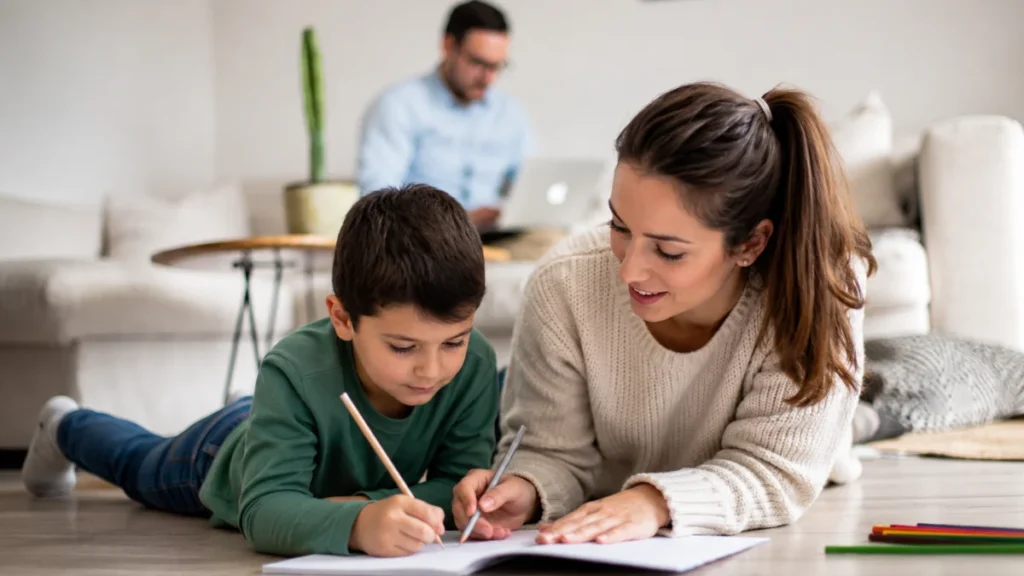
Creating a calm study space in a busy home can feel almost impossible when family life is already loud, busy, and emotionally tiring. Some children try to focus while siblings play nearby. Others become frustrated before homework even starts because the atmosphere already feels stressful.
A calm study space in a busy home works best when the area feels emotionally safe, manageable, and flexible rather than perfectly quiet. Many children focus better when they feel less pressure, fewer distractions, and more comfort around learning.
Many parents struggle with this because modern family life is full of interruptions, tired evenings, different personalities, and constant stimulation. Some children also carry school stress home with them, which can make even simple homework feel emotionally heavy.
This article will help you create a more peaceful and realistic study environment without needing a perfect routine or expensive setup. The goal is to help children feel calmer, safer, and more confident learning in the middle of real family life.
Why Calm Study Spaces Feel Harder in Real Homes
Many parenting articles make study routines sound easier than they really are. In real homes, children often come back from school tired, hungry, overstimulated, or emotionally full. Parents may also be juggling work, dinner, younger siblings, messages, housework, and bedtime routines.
This means learning rarely starts in a peaceful, picture-perfect moment. It often starts while the home is still busy and everyone is trying to reset from the day.
A child who struggles to focus in this environment is not necessarily lazy or careless. Sometimes the child’s brain is simply trying to settle after a long day of noise, rules, social pressure, and school expectations.
Many children also carry emotional stress home before homework even begins. If homework time already feels emotionally heavy in your home, you may also find How to Make Homework Feel Less Stressful After School helpful because it connects closely with the emotional atmosphere children experience after school.
Why Traditional Study Advice Sometimes Fails
Traditional study advice often focuses on strict routines, perfect silence, and long homework sessions. While this can work for some children, it can make other children feel more anxious or resistant.
Some children focus better with soft background sound. Others need movement, reassurance, or shorter learning blocks before they can settle. Children do not all learn emotionally in the same way.
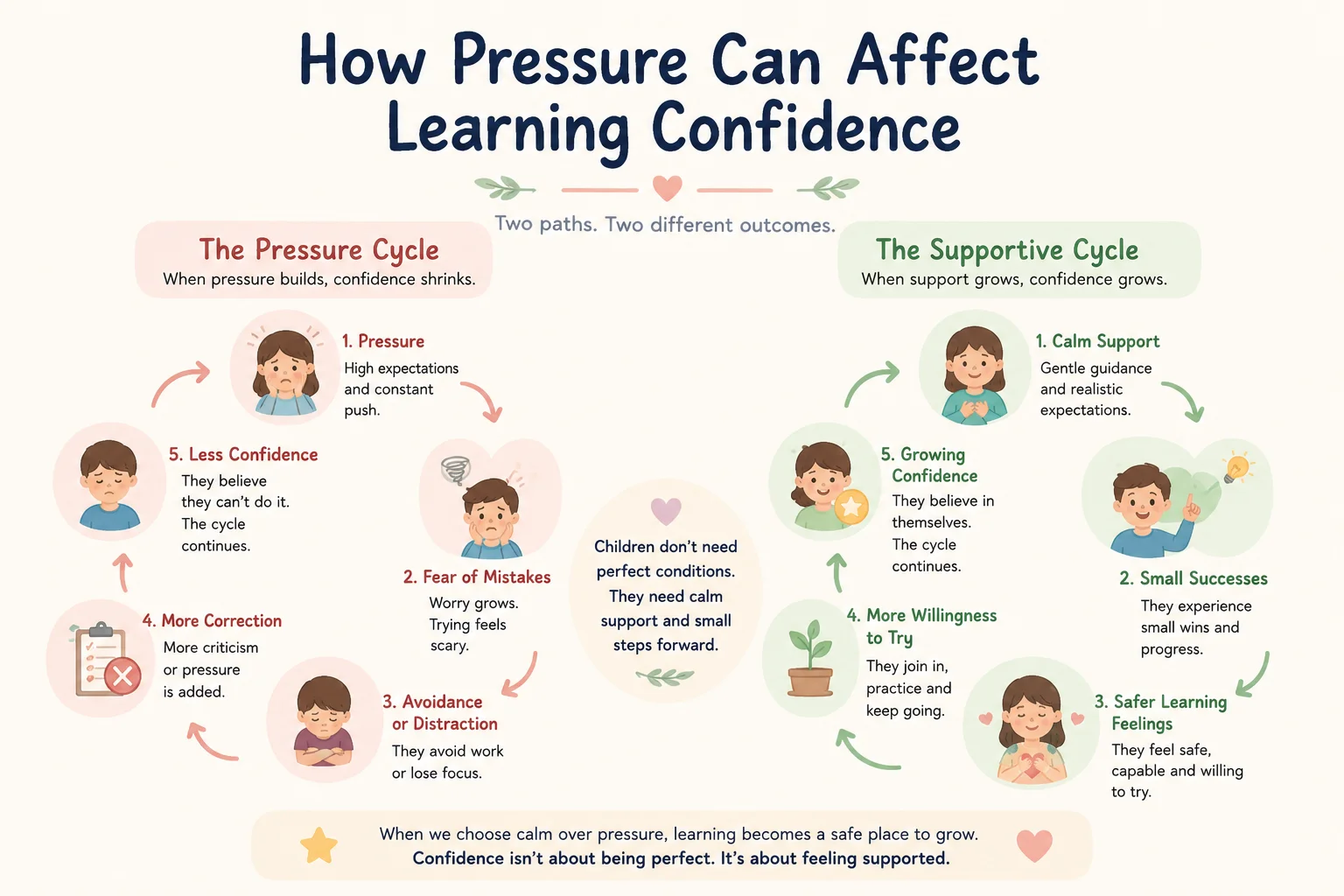
Pressure can also affect learning confidence. When children feel constantly corrected, rushed, or judged, their brain may shift into stress mode instead of learning mode.
Make the Learning Space Feel Emotionally Safe
Children usually settle into learning more easily when the space feels emotionally calm instead of performance-focused. This does not mean parents need to avoid helping. It simply means the environment should feel supportive rather than tense.
A calm learning space is not only about desks, chairs, or storage. It is also about tone of voice, the feeling in the room, and whether mistakes feel safe enough to make.
Some children become more cooperative when learning feels less formal. A child sitting comfortably at the kitchen table while normal family life happens nearby may feel safer than being sent alone to a silent room.
Children who feel emotionally safer while learning often become more willing to stay engaged and focused over time. This is one reason How to Help Children Stay Focused Without Pressure connects naturally with creating calmer learning spaces at home.
Reduce Overwhelm Before Learning Starts
Many children struggle to focus because their brain already feels overloaded before homework even begins. School can be emotionally tiring, especially for children who try hard socially, worry about mistakes, or spend the whole day following instructions.
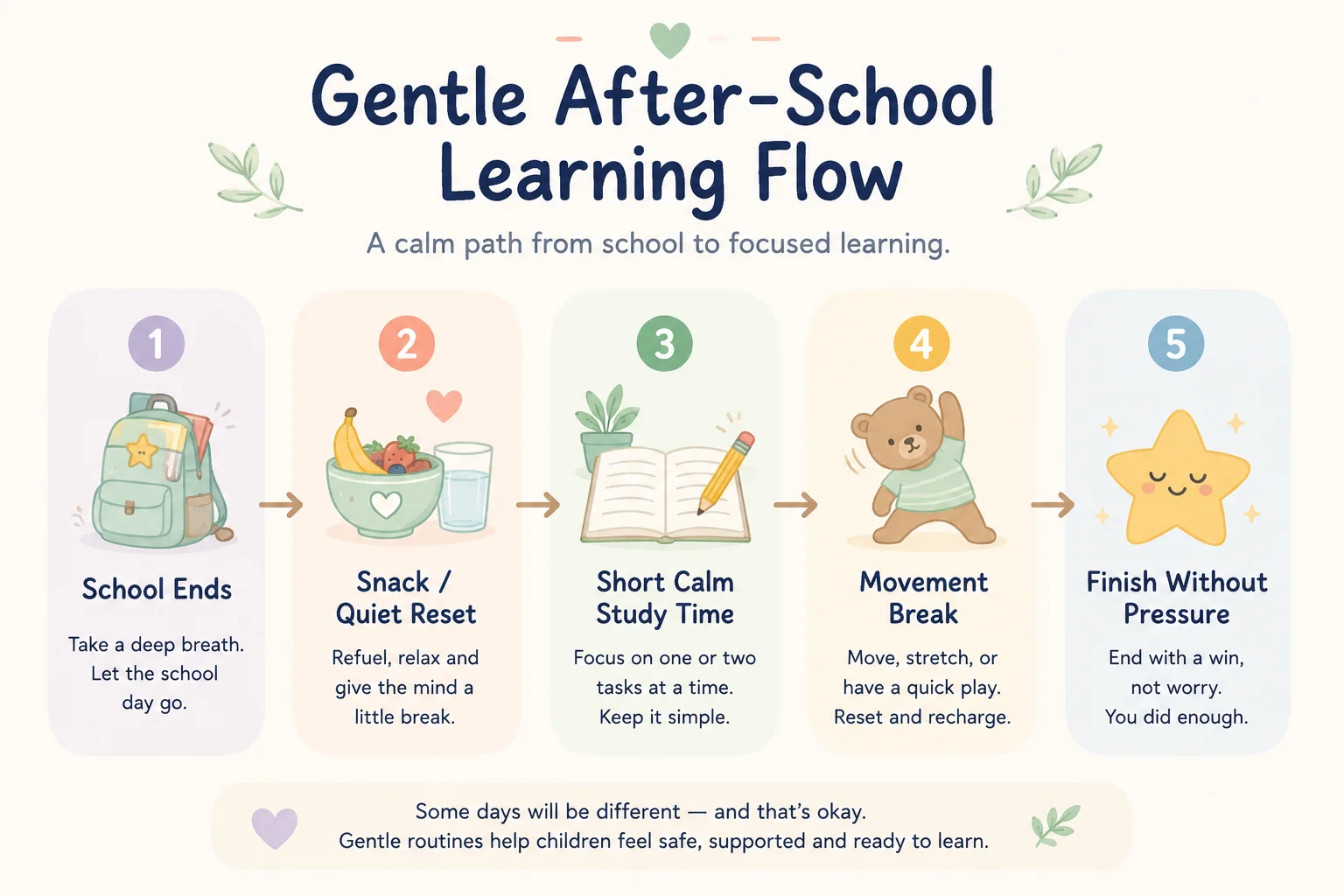
This is why immediate homework after school sometimes leads to frustration. Children often need a gentle transition between school pressure and home learning.
A quiet snack, a few minutes outside, soft music, or simple conversation without school pressure can help children reset before learning begins.
Keep the Study Area Flexible Instead of Perfect
Many parents imagine a calm study space as a beautifully organised desk in a quiet room. But in real homes, learning often needs to move depending on noise, siblings, tiredness, or the child’s mood that day.
Some children focus better near family activity because it feels comforting. Others need a quieter corner for difficult tasks. Flexibility can reduce resistance because the child feels less controlled and more supported.
| Less Helpful Approach | More Supportive Approach |
|---|---|
| Expecting perfect silence | Creating manageable calm with fewer distractions. |
| Using one strict study spot | Allowing flexible learning spaces that suit the child’s mood and task. |
| Forcing long homework sessions | Using shorter focused sessions with calm breaks. |
| Correcting every mistake quickly | Giving support while keeping mistakes emotionally safe. |
| Making study feel like performance | Making study feel like practice, progress, and small wins. |
Use Smaller Learning Sessions
Long homework periods can feel emotionally heavy for many children, especially after a full school day. Smaller sessions often feel more manageable because children can see the end clearly.
Short learning blocks can also build confidence. Children begin to experience small successful moments instead of connecting learning with tiredness, stress, or overwhelm.
For some children, fifteen calm minutes may be more useful than forty minutes of frustration. The goal is not to stretch learning until everyone is exhausted. The goal is to help learning feel possible.
This is also why some families notice better results with shorter homework blocks rather than long study periods. If this sounds familiar, Why Short Study Sessions Work Better for Some Children explores this idea more deeply.
Create Calm Signals Around Learning
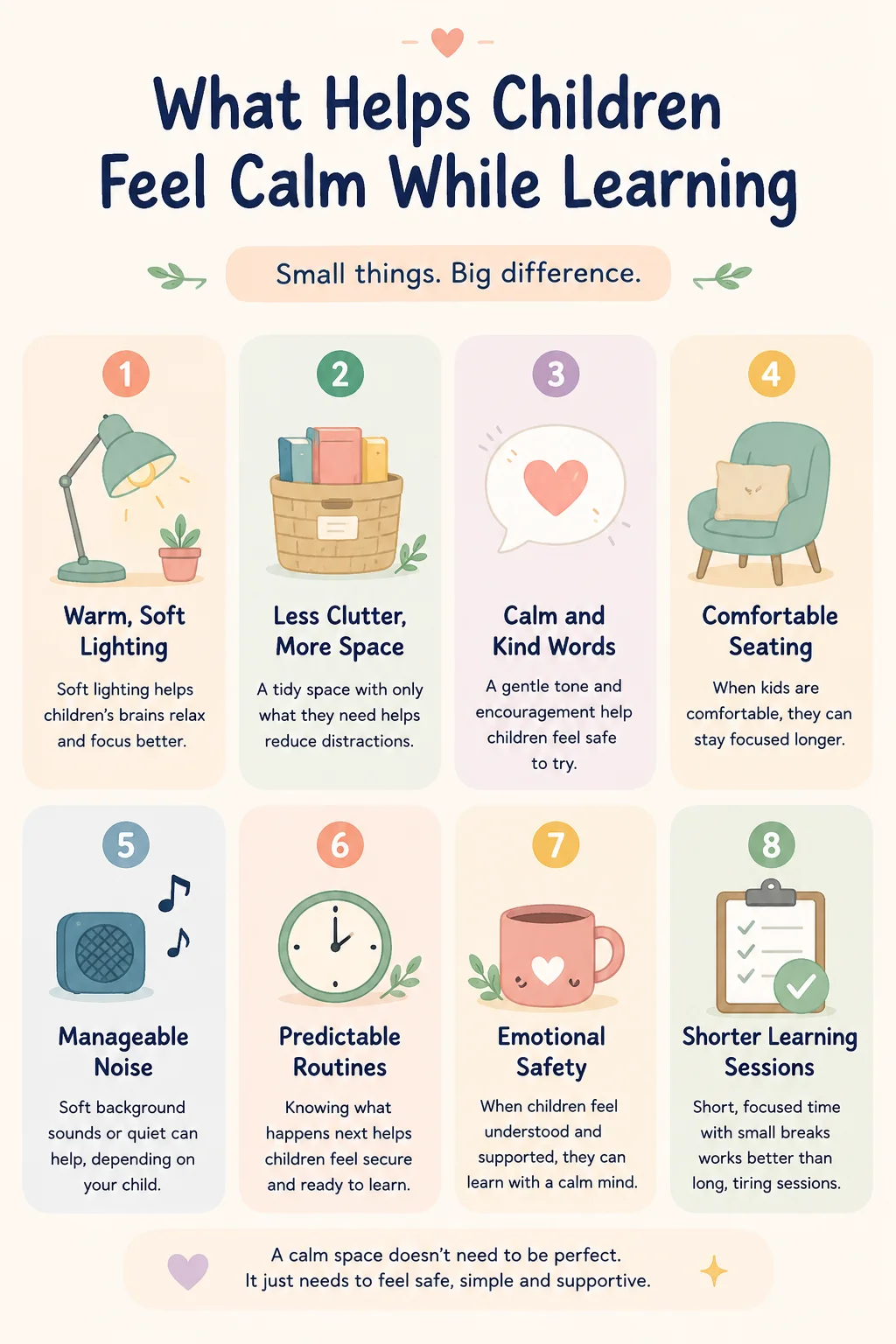
Children often respond to small repeated signals. A lamp turned on during homework, a quiet drink nearby, softer lighting, or a familiar starting routine can help the brain recognise that it is time to settle.
These signals are not about control. They are about helping learning feel predictable and emotionally safe inside a busy household.
Over time, calm signals can make study time feel less sudden. This can be especially helpful for children who struggle with transitions.
Practical Ideas That May Help
Not every strategy works for every child. Many families slowly discover small adjustments that fit naturally into their own home.
Some children respond well when only one task is visible at a time. Others feel calmer when they begin with easier homework first. Some need movement between tasks, while others need quiet reassurance before starting.
A calm study space in a busy home does not need to look impressive. It simply needs to lower stress and help the child feel safe enough to try.
Common Mistakes That Can Add Stress
Parents usually make these mistakes with good intentions. The problem is not that parents are doing something wrong. It is that small patterns can sometimes add emotional pressure without anyone noticing.
Constant correction, comparing siblings, expecting every child to focus the same way, or pushing long sessions after tiring school days can make learning feel heavier than it needs to be.
In many cases, distraction is not laziness. It may be emotional overload, tiredness, fear of mistakes, or difficulty settling after a busy day.
Different Children Need Different Learning Environments
Some children need emotional reassurance before they can focus. Others need independence and space. Energetic learners may struggle sitting still for long periods, while quieter children may become overwhelmed by noise more quickly.
Sensitive children may react strongly to emotional tension in the room, even when nobody is directly speaking to them. Social children may feel safer learning close to family activity. Introverted children may need a quieter area to recharge before concentrating.
This is why calm study spaces should support the child’s emotional style instead of forcing every child into the same routine.
Family and Seasonal Context Matters Too
Study environments often feel harder during certain seasons of family life. End-of-term tiredness, darker winter afternoons, busy sports schedules, exams, and school stress can all affect concentration at home.
Children also go through periods where learning feels emotionally heavier than usual. During these times, smaller goals and calmer expectations often protect confidence better than pushing harder.
Jolyti Note: I’ve noticed some children become calmer around homework when the atmosphere feels less rushed and less emotionally loaded. In busy homes, confidence sometimes grows quietly through small peaceful moments rather than dramatic routine changes.
Frequently Asked Questions
Can children still learn well in noisy homes?
Yes. Many children can still learn in busy homes when the emotional atmosphere feels supportive and manageable. Total silence is not always necessary for concentration.
What if my child refuses to use the study space?
Some children respond better when they help choose or personalise parts of their learning area. Flexibility often feels less stressful than strict control.
How long should homework sessions be?
This depends on the child’s age, attention level, and emotional energy. Shorter calm sessions are often more helpful than long exhausting ones.
Should screens be completely removed during study time?
Not always. Gradual boundaries and calm transitions often work better than sudden strict removal, especially for children who already feel overwhelmed.
What matters most in a calm study space?
Emotional safety usually matters most. Children often focus better when they feel calm, supported, and not constantly pressured.
Final Thoughts
Creating a calm study space in a busy home is not about building a perfect learning environment. It is about helping children feel emotionally safer while learning inside real family life.
Some days will still feel noisy, messy, or emotionally tiring. That does not mean children cannot build confidence or healthy learning habits over time.
Children grow differently, learn differently, and respond differently to pressure. When learning feels calmer and more manageable, many children slowly become more open, confident, and emotionally secure around learning itself.
Featured image is AI-generated and intended for illustrative purposes only.
Leave a Reply