
Many parents notice moments when a child quietly slips a worksheet into a bag, avoids showing a test result, or says “nothing happened at school today” even when something clearly did. This can feel confusing and emotional, especially when parents are trying to stay involved and supportive.
Some children hide their school work from parents because they are trying to protect themselves from embarrassment, pressure, disappointment, comparison, or uncomfortable emotions. In many cases, the behaviour is less about laziness or dishonesty and more about confidence, emotional safety, or fear of letting someone down.
Modern parenting can make this concern feel even heavier. Parents hear constant messages about staying involved in learning, checking progress, and helping children keep up. At the same time, many families are balancing work, school routines, siblings, tired evenings, and emotional overload.
The good news is that hidden school work is more common than many parents realise. Children develop confidence differently, and emotional learning behaviour is not always visible from the outside.
Real Family Learning Reality Check
In real homes, learning rarely happens in calm movie-style scenes with tidy desks and perfectly organised schedules. Many children come home already tired from school noise, classroom pressure, social rules, transitions, and instructions.
Parents are often tired too. Some families are rushing between work, dinner, younger siblings, appointments, and bedtime before anyone even asks about homework. This changes the emotional atmosphere around school work more than people realise.
A child may hide school work simply because they do not have the emotional energy to explain a hard day. Sometimes the paper itself becomes connected to stress, disappointment, or comparison rather than learning.
When school work already feels emotionally heavy, homework time can become harder before it even begins. If this pattern feels familiar in your home, you may also find How to Make Homework Feel Less Stressful After School helpful for creating a calmer after-school transition.
What Most Parenting Advice Misses
A lot of parenting advice treats hidden school work as a behaviour problem only. It often assumes the child is being careless, secretive, lazy, or difficult. But many children hide school work because they care deeply about how others see them.
Sometimes the child who hides the paper is not the child who cares the least. They may actually be the child worrying the most quietly.
Confidence is also more fragile than many adults remember. One small classroom correction, unfinished worksheet, or low mark can stay in a child’s mind for hours. Hiding school work can become a way to avoid facing those feelings again at home.
Some Children Hide School Work to Avoid Feeling “Less Smart”
Not all children separate mistakes from self-worth easily. Some children feel that a wrong answer means they are not smart. Others worry that unfinished work will make parents disappointed in them.
These children may not say, “I feel embarrassed.” Instead, they may avoid the topic, hide the paper, give short answers, or say everything is fine.
This can happen even with children who usually do well at school. Some high-achieving children hide school work because they feel pressure to stay “the smart one.” When a child’s confidence depends on always doing well, mistakes can feel much bigger than they really are.
For some children, even a small mistake can feel emotionally large. If your child becomes upset, shuts down, or avoids showing work after getting something wrong, How to Help a Child Who Gets Upset After Small Mistakes connects closely with this topic.
Quiet Children Often Process School Emotions Internally
Quiet children are sometimes misunderstood because they do not always show stress loudly. Instead of crying or arguing, they may withdraw, avoid eye contact, or quietly push school papers deep inside their bag.
These children often think for a long time before speaking. They may replay classroom moments in their head after school. By the time they get home, they may already feel emotionally full.
Parents may naturally think silence means everything is okay. But quiet children sometimes need emotional safety just as much as expressive children do.
Some quiet children also doubt their learning ability in ways parents may not notice straight away. If your child seems calm on the outside but unsure underneath, you may also find Why Quiet Children Sometimes Doubt Their Learning Ability helpful.
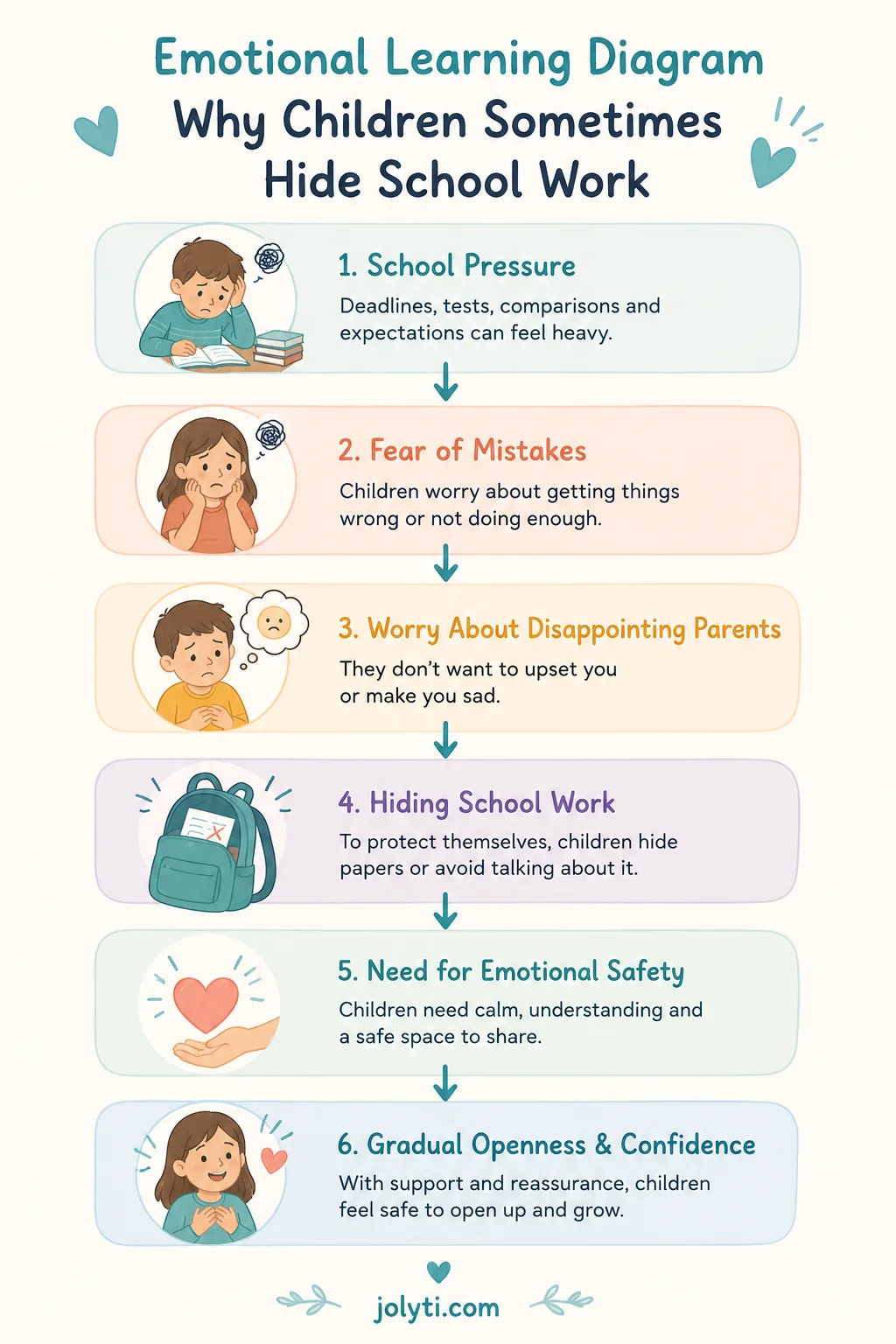
Learning Pressure Can Change How Children Behave at Home
Some children behave very differently at school and at home. A child who looks calm in the classroom may release stress quietly after school. Another child may hold everything together during the day and then avoid learning conversations once they are home.
Pressure is not always caused by strict parenting. Even supportive homes can accidentally create pressure when school results become emotionally important too often.
Children also notice small reactions. A worried face, a quiet sigh, or a comparison with a sibling can stay in a child’s mind longer than adults expect.
| What Parents May See | What the Child May Actually Feel |
|---|---|
| Avoiding homework | Fear of getting something wrong or feeling stuck again. |
| Hiding worksheets | Embarrassment, low confidence, or worry about disappointing someone. |
| Saying “nothing happened” | Emotional exhaustion after a long school day. |
| Rushing through work | Pressure to finish quickly so the uncomfortable feeling goes away. |
| Becoming quiet after school | Mental overload from learning, noise, social situations, and expectations. |
Some Children Hide Incomplete Work Because They Feel Overwhelmed
Not every child who hides unfinished work is avoiding responsibility. Some children genuinely feel stuck but do not know how to explain it clearly.
This is common in children who become overwhelmed easily, process information slowly, fear mistakes, or feel mentally exhausted after school. When children cannot organise their feelings, hiding the work may feel easier than explaining the problem.
This is also why some children seem fine until homework begins. The emotional load may already be there before the parent even sees it.
Practical Insights That May Help at Home
Many families notice that small emotional changes help more than large parenting systems. Children often become more open when learning feels less like a performance and more like a safe conversation.
- Some children respond better when school talk happens after a short break.
- Many children feel safer when effort is noticed alongside results.
- Mistakes can feel less scary when they are treated as part of learning.
- Quiet reassurance may help more than repeated checking.
- Children often share more when they feel accepted during difficult moments.
Common Misunderstandings About Hidden School Work
Children hiding school work is easy to misunderstand because adults naturally focus on the visible behaviour first. But the hidden feeling behind the behaviour often tells a bigger story.
- Quietness can look like confidence, even when a child feels anxious.
- Slow progress can be mistaken for lack of effort.
- Emotional sensitivity can be mistaken for laziness.
- Good grades do not always mean a child feels confident inside.
- Children may hide work because they care deeply, not because they do not care.
Family and School-Term Context
Many families notice hidden school work more during busy parts of the year. Near exams, report cards, transitions, or long school terms, children may become mentally tired before adults fully notice.
After-school exhaustion also plays a bigger role than many people realise. Some children use most of their emotional energy just getting through the school day. By evening, even a small question about school work can feel heavy.
Jolyti Note: I’ve noticed that some children become more open about school work when conversations feel calmer and less rushed. In many homes, confidence grows quietly through small safe moments rather than sudden academic changes. Different children also protect their emotions differently when they feel embarrassed or unsure.
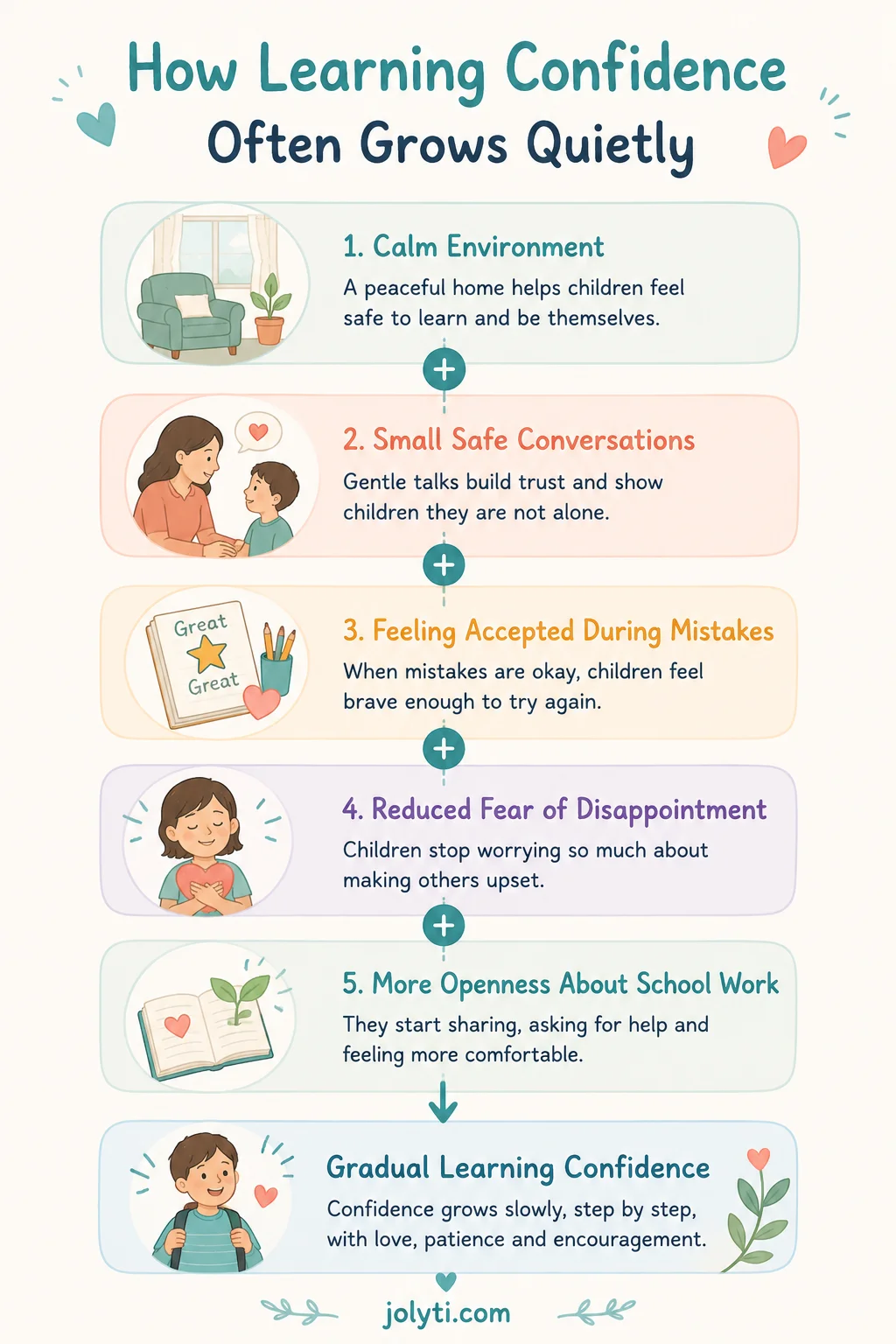
Frequently Asked Questions
Is hiding school work always a bad sign?
Not always. Sometimes it reflects embarrassment, emotional overload, or fear of disappointing someone. The feeling behind the behaviour often matters more than the paper itself.
Why does my child say “nothing happened” after school?
Some children need recovery time after school. Others process their experiences quietly before they are ready to talk. Silence does not always mean secrecy.
Can confident children still hide school work?
Yes. Some confident-looking children quietly fear losing approval or being seen differently after mistakes.
Should parents stop checking homework completely?
Most children still benefit from supportive involvement. The emotional tone around homework often matters more than how often it is checked.
Final Thoughts
Children do not always hide school work because they are trying to be difficult. Very often, they are trying to protect themselves emotionally in ways they do not fully understand yet.
Confidence in learning rarely grows in a straight line. Some children become open quickly, while others need more time, safety, and reassurance before sharing struggles comfortably.
Many parents worry they are doing something wrong when school work starts disappearing into bags or drawers. But children are not machines. Learning confidence is connected to emotions, personality, stress, and environment. Calm understanding can sometimes open doors that pressure never could.
Featured image is AI-generated and intended for illustrative purposes only.
Leave a Reply