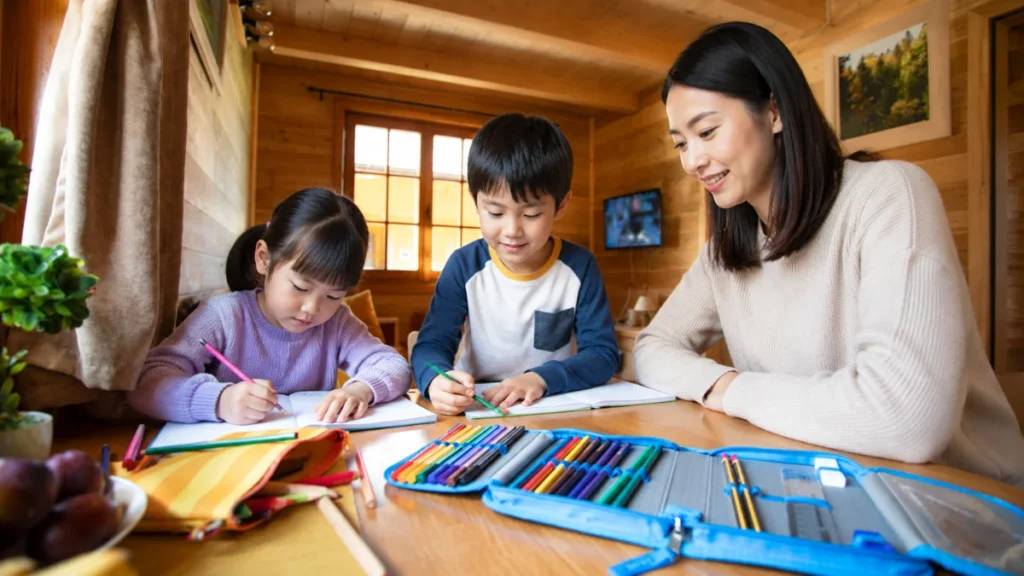
Building study habits for younger children can sound simple, but in real homes it often feels much harder. A child may come home tired, hungry, emotional, noisy, distracted, or full of energy after sitting still at school all day.
Knowing how to build simple study habits for younger children often starts with making learning feel small, safe, and repeatable. Many younger children respond better to short, calm learning moments than long study routines that feel strict or overwhelming.
This can feel difficult for parents because family life is rarely quiet or predictable. Dinner may need cooking, younger siblings may interrupt, devices may be nearby, and parents may already feel tired after work or study. A child may seem unmotivated, but sometimes they are simply not ready for another serious task yet.
This article looks at realistic ways to build simple study habits for younger children without pressure, guilt, or perfect routines. The goal is not to create a strict learning system. The goal is to help children feel more comfortable, capable, and confident with learning at home.
Real Family Study Habit Reality Check
In real homes, study habits do not usually grow in perfect silence. They often grow around dinner smells, siblings talking, school bags on the floor, tired parents, and children who still want time to play.
Younger children may also carry a full school day home with them. They may have spent hours listening, waiting, answering, sharing, managing friendships, and following instructions. By the time they arrive home, their learning energy may already feel low.
This does not mean your child is lazy. It also does not mean you are doing anything wrong as a parent. It simply means that learning at home needs to respect the child’s emotional energy, not only the homework or school task in front of them.
Some days a child may begin easily. Other days, the same child may resist, complain, move around, or shut down. Study habits for young children often need to be flexible because children are not the same every afternoon.
Why Traditional Study Advice Sometimes Fails
Many study tips focus on strict timetables, long study blocks, reward charts, or doing homework before anything else. These ideas may help some families, but they do not work well for every child.
For younger children, a strict routine can sometimes feel too heavy. If a child is already tired, worried about mistakes, or unsure where to begin, a big study expectation may make learning feel even harder.
Sometimes children avoid study not because they do not care, but because the task feels too big emotionally. A child may think, “I will get it wrong,” “This will take too long,” or “I do not know how to start.”
This is why simple study habits often work better than big study systems. A small habit gives the child a clear and gentle way into learning.
Make Learning Feel Like a Normal Part of the Day
One helpful way to build simple study habits for younger children is to make learning feel ordinary. It does not always need to feel like a serious school event.
For example, a child might read for ten minutes after a snack, practise spelling after dinner, or complete one small learning task before playtime. The habit does not need to be long to be useful.
When learning appears in small, familiar ways, children may slowly stop seeing it as something scary or special. It becomes part of the day, like brushing teeth, packing a bag, or putting shoes away.
This gentle approach can be especially helpful for children who become tense when learning feels too formal.
Simple Daily Learning Flow
A simple learning flow can help parents see where study fits into real family life. It does not need to control the whole afternoon. It only gives the child a soft pattern to follow.
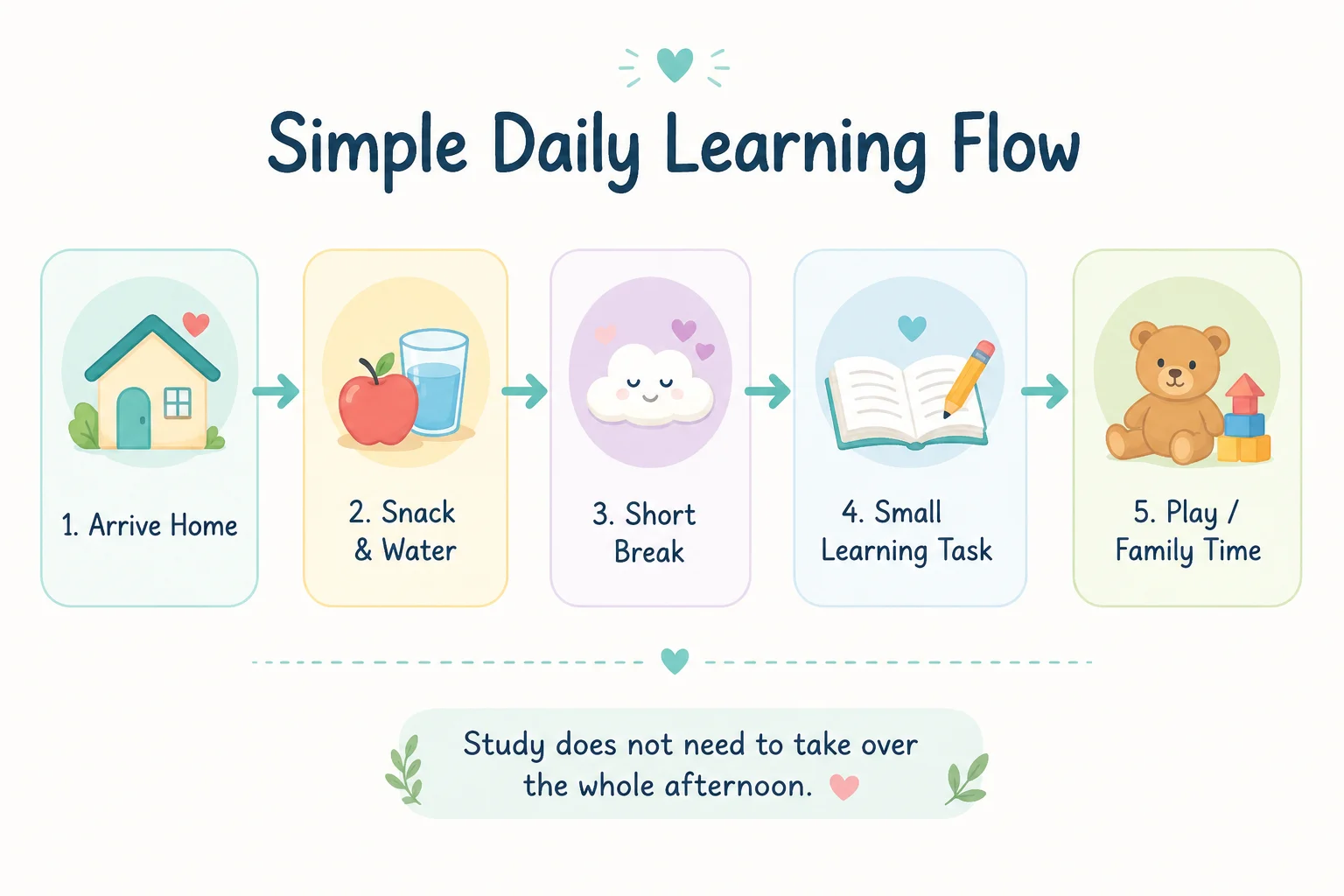
This simple daily learning flow diagram can show a calm pattern such as: arrive home, have a snack, take a short break, complete one small study task, then return to play or family time.
The goal is not to make every afternoon perfect. The goal is to help study feel less sudden and less emotionally heavy.
Start Smaller Than You Think You Need To
Parents sometimes feel that a study habit must be long enough to look serious. But for younger children, small study moments are often easier to repeat.
A child who reads for eight minutes most days may build a stronger habit than a child who is pushed into a long study session and starts to dislike it.
Small study habits can include:
- Reading one short page
- Practising five spelling words
- Doing three maths questions
- Reviewing one school worksheet
- Writing two sentences about the day
The first goal is not to finish everything. The first goal is to help the child begin without feeling overwhelmed.
This connects naturally with Why Short Study Sessions Work Better for Some Children, because shorter learning moments can sometimes help children focus without feeling trapped by the task.
Focus on Showing Up Rather Than Performance
Many children feel more willing to learn when the first goal is simply showing up. This means the child starts the learning moment, tries something small, and stays with it for a short time.
If every study habit becomes about correct answers, fast finishing, or perfect work, children may begin to feel judged. This can make study feel unsafe, especially for children who already worry about mistakes.
Parents can gently notice effort by saying things like:
- “You started even though it felt hard.”
- “You tried the first question.”
- “You came back after your break.”
- “You kept going for a few more minutes.”
- “You gave it a try before asking for help.”
These small comments help children see that learning is not only about results. It is also about trying, returning, and slowly building confidence.
Create Predictable Learning Signals
Younger children often respond well to small signals that show learning time is about to begin. A signal helps the child’s brain move from play mode or rest mode into learning mode.
These signals do not need to be strict or fancy. They only need to be familiar.
Some examples include:
- Sitting in the same study spot
- Using the same pencil or notebook
- Having water nearby
- Starting with the easiest task
- Using a simple timer
- Playing calm background music if it helps
Over time, the signal can make study feel more predictable. Predictability can reduce stress because the child knows what is coming next.
How Simple Study Habits Often Grow
Simple study habits usually grow through repeated small experiences, not one perfect routine. A child begins, completes something small, feels a little more capable, and becomes more willing to try again later.
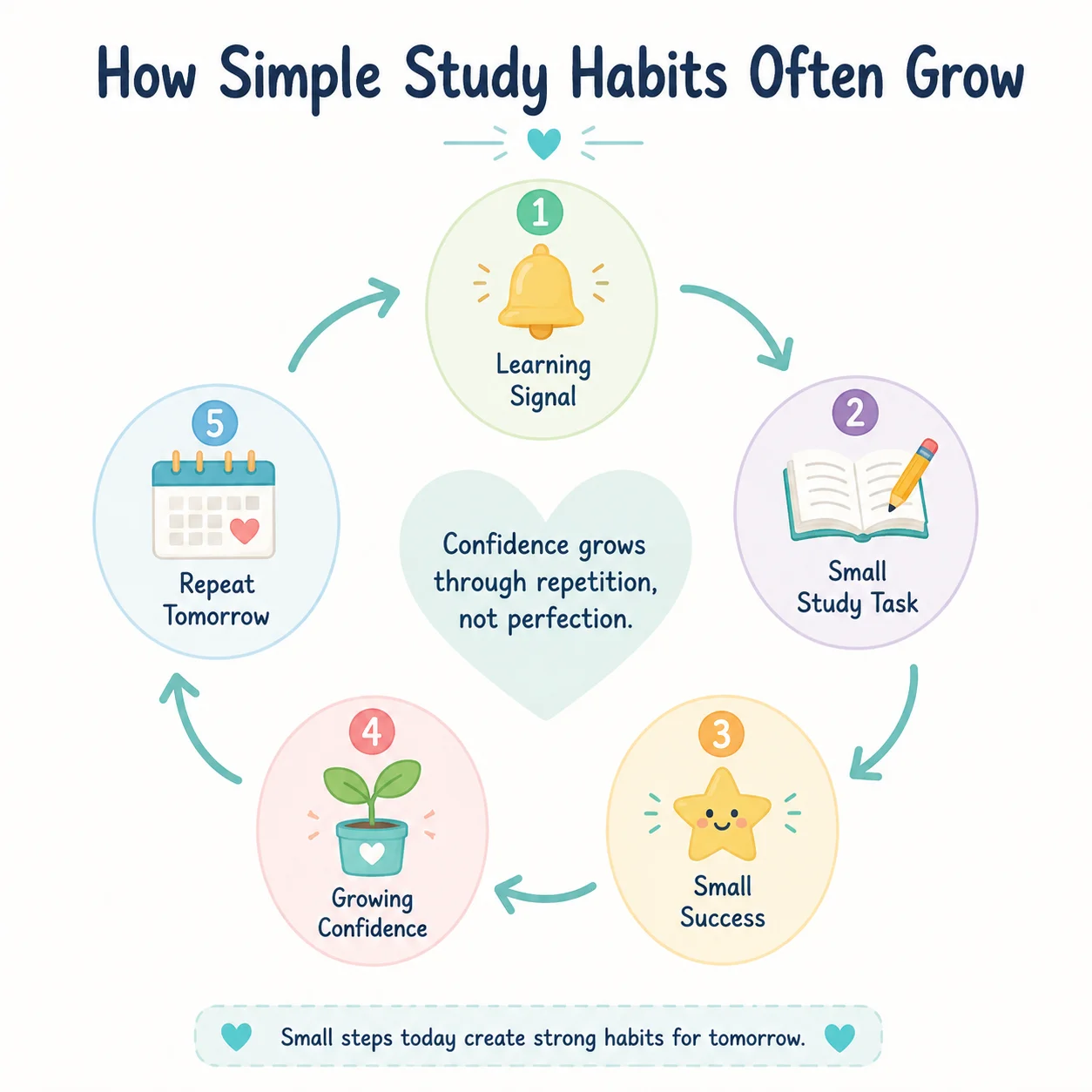
This study habit cycle diagram can show a simple pattern: learning signal, small study task, small success, calm ending, and repeat tomorrow.
For many children, the calm ending matters. If study always ends with arguments, tears, or criticism, the child may remember the stress more than the learning. A calm ending helps the habit feel safer to repeat.
Build Confidence Through Completion
Confidence often grows when children finish small things. A completed task gives the child a quiet feeling of “I did it.”
This does not need to be a big achievement. It may be one page read, one row of maths completed, one spelling list reviewed, or one sentence written.
When younger children complete small learning tasks regularly, they begin to build trust in themselves. This trust is important because study habits are not only about discipline. They are also about confidence.
If your child often depends on rewards to keep going, you may also find How to Build Learning Confidence Without Rewards helpful, because it explores confidence that grows from feeling capable rather than always needing a prize.
Small Habits vs Big Routines
Many families find it easier to begin with small habits instead of large routines. The table below shows the difference in a gentle and realistic way.
| Small Study Habits | Big Study Routines |
|---|---|
| Feels easier to start | May feel too serious or heavy |
| Can fit into busy family days | May break when schedules change |
| Helps children experience small wins | May focus too much on finishing everything |
| Can grow slowly over time | May feel difficult to maintain |
| Supports confidence through repetition | Can create pressure if expectations are too high |
This does not mean big routines are always bad. Some children enjoy them. But many younger children need smaller steps first before longer learning routines feel comfortable.
Practical Ideas That Can Help
Every child responds differently, but many families find that simple study habits work best when they are easy to repeat.
- Choose one small study time most days.
- Begin after food, water, or a short rest.
- Keep the first task easy to start.
- Use a calm voice when learning begins.
- Let the child choose between two tasks.
- Keep pencils, books, and paper in one simple place.
- Use short sessions before trying longer ones.
- Praise effort, starting, and returning after a break.
These ideas are not rules. They are options families can adjust depending on the child, the day, and the home environment.
Common Mistakes That Can Make Study Habits Harder
Most parents have done some of these at one time or another. They are common because parents are human too. The goal is not guilt. The goal is gentle awareness.
- Expecting the child to be motivated every day
- Starting with the hardest task first
- Making every mistake a long teaching moment
- Comparing siblings or classmates
- Increasing study time too quickly
- Praising only correct answers
- Turning study time into a test of character
Small adjustments can make study habits feel less tense and more possible. Sometimes the biggest change is not the task itself, but the emotional feeling around the task.
Different Children Build Habits Differently
Some children like clear routines. They feel calmer when learning happens in the same place at the same time. Other children need more flexibility because strict routines can make them feel trapped or pressured.
Quiet children may need gentle encouragement because they may hide their worry. Energetic children may need movement before study. Highly emotional children may need reassurance before they can think clearly. Independent children may prefer to try first before receiving help.
This is why there is no perfect study routine for every child. The most useful habit is often the one your child can return to without feeling defeated.
If your child seems worried about mistakes or avoids answering, Signs a Child Is Afraid of Getting Answers Wrong may help you understand the emotional side of learning resistance more clearly.
During Busy School Terms
Study habits can change during busy school terms, assessment weeks, sports seasons, family events, or after long weeks with less rest.
A child who usually manages a short study habit may suddenly resist more during these times. This does not always mean the habit has failed. It may simply mean the child has less emotional energy available.
During busy weeks, it can help to make the habit smaller instead of removing it completely. Reading one page, reviewing one word list, or doing one simple question can keep the pattern alive without adding too much pressure.
Confidence-Building Study Habit Visual
Study habits and confidence often grow together. When a child starts small, completes something, and feels safe enough to return, learning can slowly become less stressful.
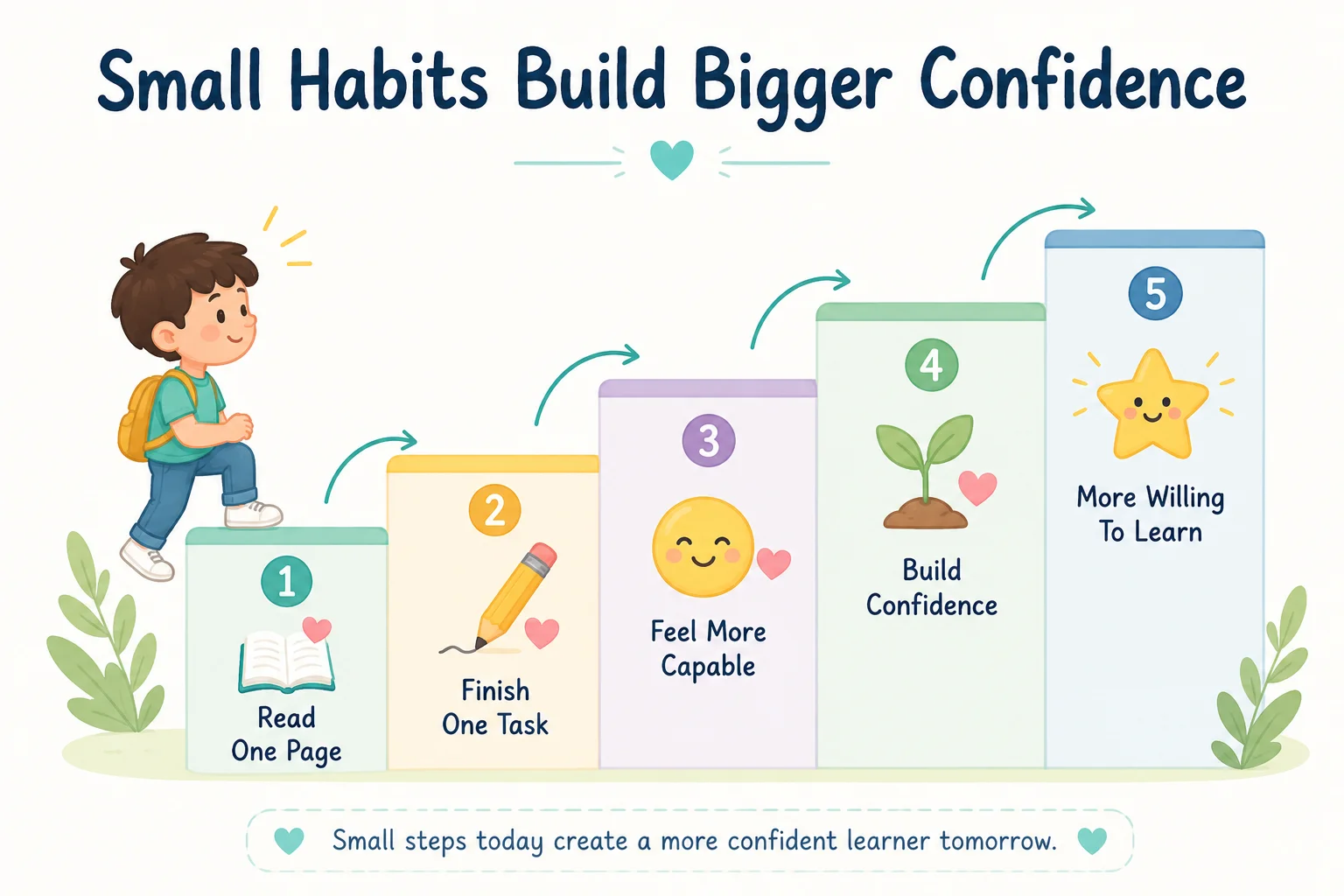
This confidence-building visual can show how small study habits support learning confidence: small start, small win, calmer feeling, more willingness to try again.
Jolyti Note: I’ve noticed that younger children often respond better when study habits feel ordinary rather than important. In many homes, confidence seems to grow quietly through small learning moments instead of big academic changes.
“`Sometimes a child does not need a perfect routine. They may simply need a calmer way to begin, a smaller task to finish, and a little more trust that learning can feel safe at home.
“`Frequently Asked Questions
How long should younger children study each day?
There is no perfect amount of time. Many younger children respond well to short study sessions that feel manageable. Even ten minutes can be useful if the child starts calmly and returns regularly.
What if my child refuses to study?
Refusal does not always mean a child dislikes learning. Sometimes children are tired, overwhelmed, hungry, distracted, or worried about getting things wrong. A smaller first step may help them begin.
Should study habits happen at the same time every day?
A regular pattern can help some children, but it does not need to be perfect. In busy homes, a flexible routine may work better than a strict timetable.
Do rewards help children build study habits?
Rewards can sometimes help children start, but long-term confidence often grows when children feel capable. Small wins, calm encouragement, and repeated success can help study feel more natural.
What is the most important part of a simple study habit?
For many younger children, the most important part is repeatability. A small habit that can happen often is usually more helpful than a big routine that quickly becomes stressful.
Final Thoughts
Building simple study habits for younger children does not require perfect afternoons, long study sessions, or a child who feels motivated every day.
Many children build stronger learning habits when study feels safe, small, and familiar. A calm start, a short task, and a positive ending can make learning feel easier to return to.
If your home routine feels messy sometimes, that is normal. Study habits grow slowly in real families. Small steps, repeated with patience, can help your child feel more confident learning at home.
Featured image is AI-generated and intended for illustrative purposes only
Leave a Reply