
Homework can sometimes begin long before a child opens a workbook. For many families, the hardest part is not the homework itself. It is the moment before homework starts, when a child comes home tired, distracted, emotional, hungry, or not ready to think again.
Knowing how to calm a child before starting homework often begins with reducing pressure and helping the child feel emotionally settled. Many children start homework more calmly when they have a short transition, a simple first step, and a learning atmosphere that feels safe rather than rushed or judged.
This can feel difficult for parents because real homes are busy. Dinner may need cooking, siblings may need attention, devices may be nearby, and parents may already feel tired after a long day. A child may seem unwilling to start, but sometimes the real issue is that their mind and body have not fully recovered from school yet.
This article looks at realistic ways to calm a child before starting homework without using pressure, guilt, or strict routines. The goal is not to create a perfect homework system. The goal is to help children feel calmer, safer, and more confident taking the first small step.
Real Family Homework Reality Check
In real homes, homework rarely begins in a quiet, perfect setting. It often happens after school, during dinner preparation, around younger siblings, after work, or between other family responsibilities.
A child may come home carrying more than school books. They may be tired from listening all day, following rules, managing friendships, dealing with noise, or trying to keep up in class. By the time homework starts, their brain may already feel full.
This does not mean parents are doing anything wrong. It simply means the home learning moment has its own emotional weight. A child who seems calm at school may still struggle to restart learning at home.
Some days homework may begin easily. Other days, the same child may resist, cry, move around, argue, or shut down. Children are not always consistent because their emotional energy is not always the same.
Why Traditional Homework Advice Sometimes Fails
Many homework tips focus on routines, rewards, consequences, or getting homework done before anything else. These ideas can help some families, but they do not always work for children who are emotionally overloaded.
When a child feels stressed, tired, worried about mistakes, or mentally drained, pushing harder can sometimes make homework feel even heavier. What looks like laziness may actually be a child trying to avoid an uncomfortable feeling.
This is why calming a child before homework often needs to come before motivation. A child who feels safer and more settled may become more willing to try, even if the homework itself has not changed.
Why a Child May Not Be Ready for Homework Yet
Many children need time to move from school mode into home learning mode. School asks children to listen, sit, answer, follow instructions, manage emotions, and keep trying even when they are tired.
By the time they get home, some children are not refusing homework because they dislike learning. They may simply have no calm space inside them yet to begin another task.
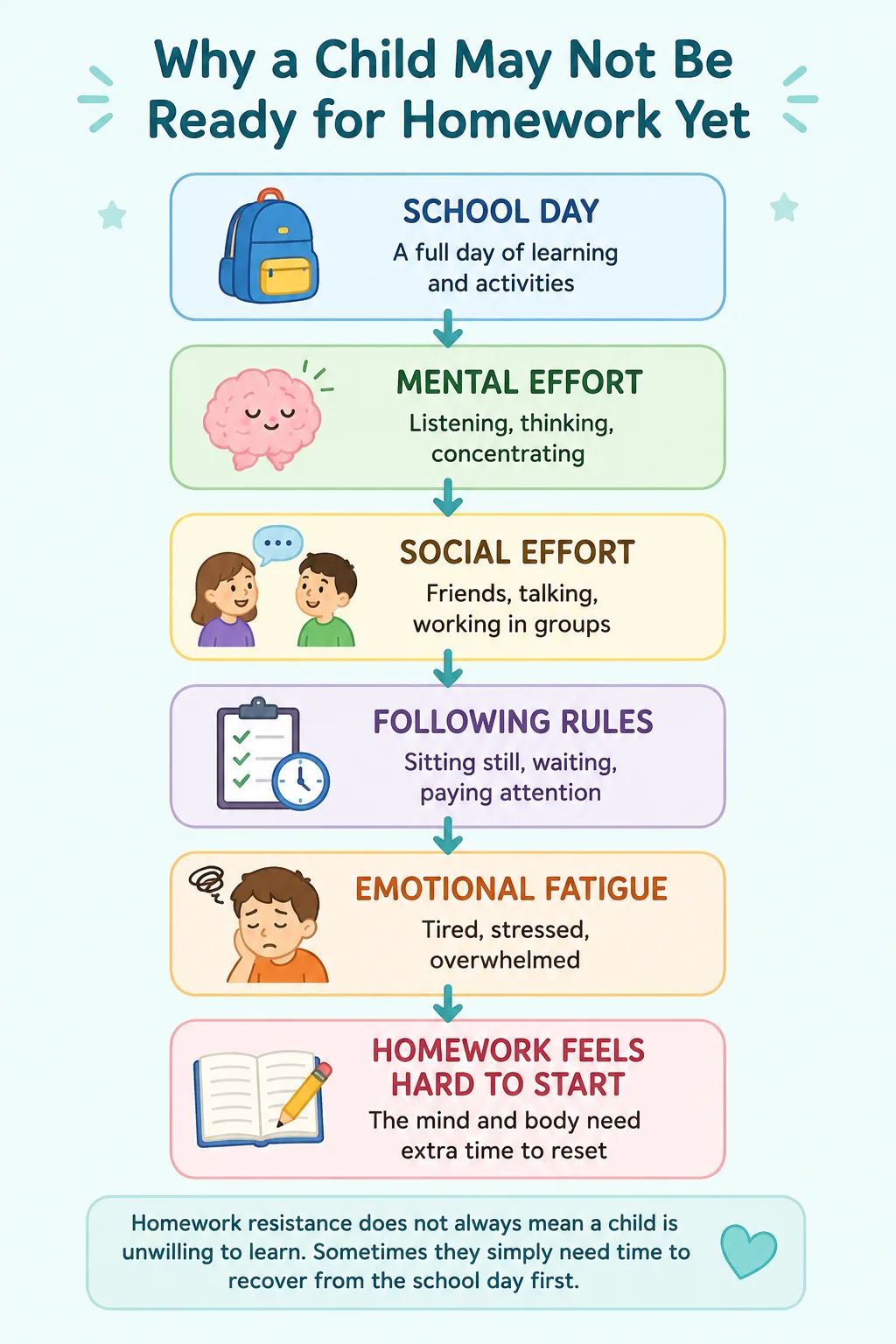
This emotional learning diagram can help parents see that homework resistance does not always begin with the homework. Sometimes it begins with mental effort, social effort, following rules, noise, hunger, or emotional fatigue from the school day.
Give Children a Transition Between School and Homework
One of the most helpful ways to calm a child before starting homework is to give them a short transition. Adults often need time to move from work mode to home mode. Children often need the same thing after school.
A transition does not need to be long or complicated. It may be a snack, a drink of water, a quiet activity, outdoor movement, or a few minutes to talk without being questioned about homework straight away.
The goal is not to delay homework forever. The goal is to help the child’s body and mind feel ready enough to begin.
Ready to Learn vs Needs More Recovery Time
Parents often wonder whether their child is avoiding homework or simply not ready yet. The table below can help families notice the difference gently, without labelling the child.
| Ready to Learn | Needs More Recovery Time |
|---|---|
| Responds calmly to simple questions | Gets frustrated by small questions |
| Can sit for a short time | Keeps moving, pacing, or leaving the area |
| Can talk about what needs to be done | Refuses every suggestion |
| Starts a small task with support | Says “I can’t” before looking at the work |
| Appears settled enough to try | Looks tired, tense, quiet, or emotionally overloaded |
Many children move between both columns depending on the day. A child who needs more recovery time today may be much more ready tomorrow.
Focus on Emotional Safety Before Academic Performance
Some children become calmer when they feel they do not need to prove themselves immediately. Homework can feel stressful for children who worry about mistakes, corrections, or disappointing someone.
Before asking about answers, it can help to notice the child’s emotional state first. A calm sentence can sometimes lower the pressure more than a long explanation.
Simple phrases may include:
- “You seem tired today.”
- “Let’s start small.”
- “We do not need to rush.”
- “You do not have to get everything perfect.”
- “We can try one question first.”
This connects naturally with Signs a Child Is Afraid of Getting Answers Wrong, because some children resist homework when the emotional risk of making a mistake feels too big.
Make the First Task Feel Easy
Sometimes the hardest part of homework is beginning. A child may look at the whole task and feel overwhelmed before they have even started.
Making the first task feel easy can reduce that emotional wall. Instead of saying, “Finish your homework,” parents can help children begin with one small step.
Small first steps may include:
- Opening the book
- Reading one instruction
- Doing one question
- Writing the date
- Choosing which task to start with
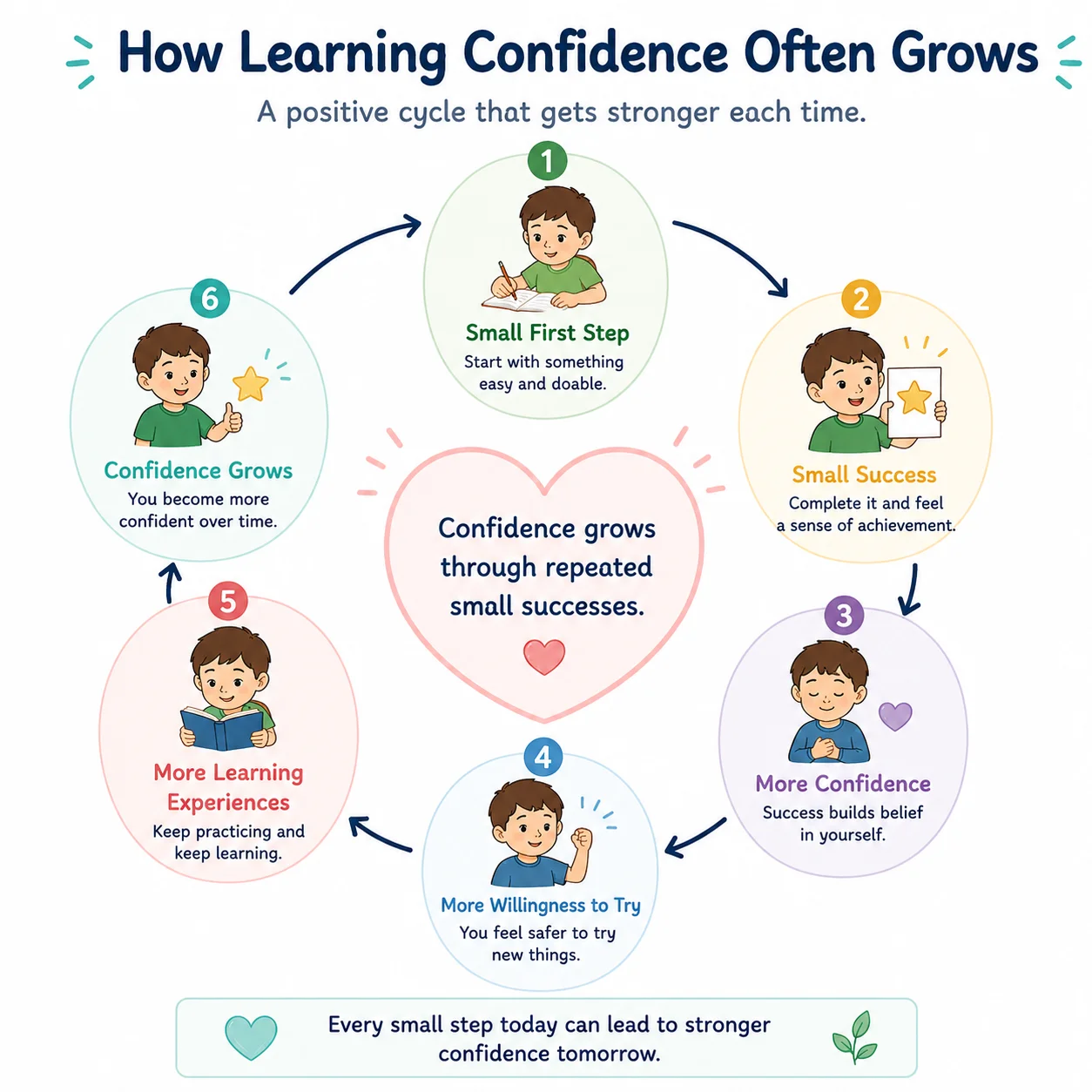
This confidence-building visual can help parents see why small starts matter. A small first step can lead to a small success. That small success can reduce worry and make the child more willing to continue.
Use Calm Physical Activities Before Sitting Down
Some children carry restlessness after school. Their bodies may still need movement before their minds are ready to focus.
This does not mean the child is being difficult. It may simply mean their body needs a release before sitting down again.
Calm movement before homework may include:
- A short walk outside
- Stretching
- Shooting a few basketballs
- Helping carry groceries
- Playing gently with a pet
- Dancing to one song
For some children, movement helps clear the after-school tension that would otherwise show up as homework resistance.
Create a Predictable Homework Starting Ritual
Children often feel calmer when they know what happens next. This does not need to be a strict routine. A simple pattern can still help.
A predictable homework starting ritual can make homework feel less sudden. It gives the child’s brain a gentle path into learning.
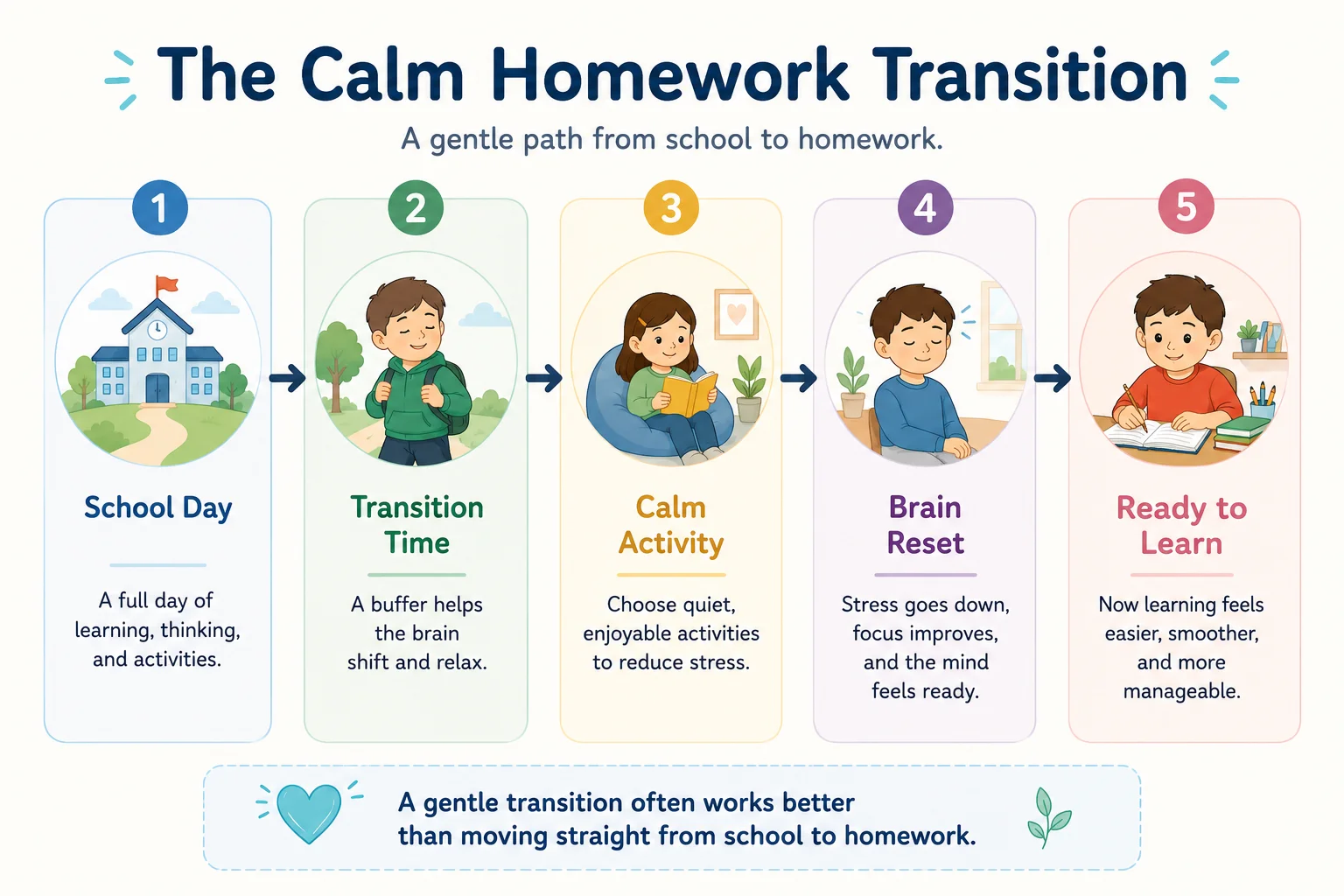
This calm routine diagram can show a simple flow: arrive home, have a snack or water, take a short break, do a calm activity, move to the homework space, and begin with the easiest task.
If homework often feels stressful in your home, you may also find How to Make Homework Feel Less Stressful After School helpful because it explores the after-school homework moment in more detail.
Practical Ideas That Can Help
Every child responds differently, but many families find that small changes before homework can make the start feel calmer.
- Offer food or water before discussing homework.
- Let the child have a short break after school.
- Start with the easiest task instead of the hardest one.
- Use a calm voice, even when time is limited.
- Keep the first goal small and clear.
- Let the child choose between two starting tasks.
- Use gentle background music if it helps the child settle.
- Give praise for starting, not only finishing.
These ideas are not rules. They are options families can adjust depending on the child, the day, and the home environment.
Common Mistakes That Can Increase Homework Stress
Most parents have done some of these at one time or another. They are common because parents are often tired too. The goal is not guilt. The goal is awareness.
- Expecting homework to start immediately after school.
- Turning every mistake into a long teaching moment.
- Comparing one child with a sibling or classmate.
- Assuming refusal always means laziness.
- Praising only correct answers instead of effort.
- Making homework feel like a test of character.
Small changes in these areas can help children feel less judged and more willing to try.
Different Children Need Different Types of Calm
Some children need quiet before homework. Others feel calmer with gentle background noise. Some want a parent nearby. Others prefer more independence once they know what to do.
Highly emotional children may need reassurance before starting. Energetic children may need movement first. Quiet children may need a softer invitation because they may hide stress instead of showing it openly.
There is no single perfect way to calm a child before homework. The most helpful approach is often to notice what helps this child feel safe enough to begin.
Families working with noise, distractions, and limited space may also enjoy How to Create a Calm Study Space in a Busy Home, especially when homework happens in a shared family area.
During Busy School Terms
Homework can feel harder during busy school terms, assessment weeks, report periods, or after long stretches without enough rest. A child who usually manages homework well may suddenly seem more emotional or resistant.
This does not always mean the child has lost motivation. Sometimes school-term fatigue makes the starting point feel heavier.
During these times, shorter starts, softer expectations, and more emotional patience can help. Even one calm homework session can support confidence during a difficult week.
Jolyti Note: I’ve noticed that children often become calmer when the goal changes from “finish everything quickly” to “feel safe enough to begin.” In many homes, the first few minutes before homework can shape the whole learning mood.
“`This is why calm spaces and gentle starts matter. Sometimes a small change in the environment can help a child feel less watched, less rushed, and more ready to try.
“`Frequently Asked Questions
How long should a child rest before starting homework?
There is no perfect time. Some children may only need ten minutes, while others may need longer. The best clue is often whether the child seems emotionally ready enough to begin a small task.
What if my child refuses homework every day?
Daily refusal may sometimes point to stress, tiredness, fear of mistakes, or feeling overwhelmed. It can help to look at the emotional pattern, not only the homework behaviour.
Is it okay for children to move around before homework?
Yes. Many children focus better after brief movement. A short walk, stretch, or simple physical activity can help some children release after-school energy before sitting down.
Should homework always happen at the same time?
A regular pattern can help some children, but rigid timing does not work for every family. A flexible routine may feel more realistic in busy households.
What if nothing seems to calm my child before homework?
Progress may be slow. Some children need repeated calm experiences before homework starts to feel safer. Small improvements, such as starting one task with less stress, still matter.
Final Thoughts
Learning does not begin only when a child writes the first answer. For many children, learning begins when they feel calm enough to try.
If homework has been difficult lately, it does not mean your child is failing or that you are doing something wrong. Children carry different emotions into learning, especially after a long school day.
The goal is not to create a perfect homework routine. The goal is to help your child feel safe, supported, and confident enough to take the next small step. Over time, those small steps can become the beginning of stronger learning confidence at home.
Featured image is AI-generated and intended for illustrative purposes only
Leave a Reply