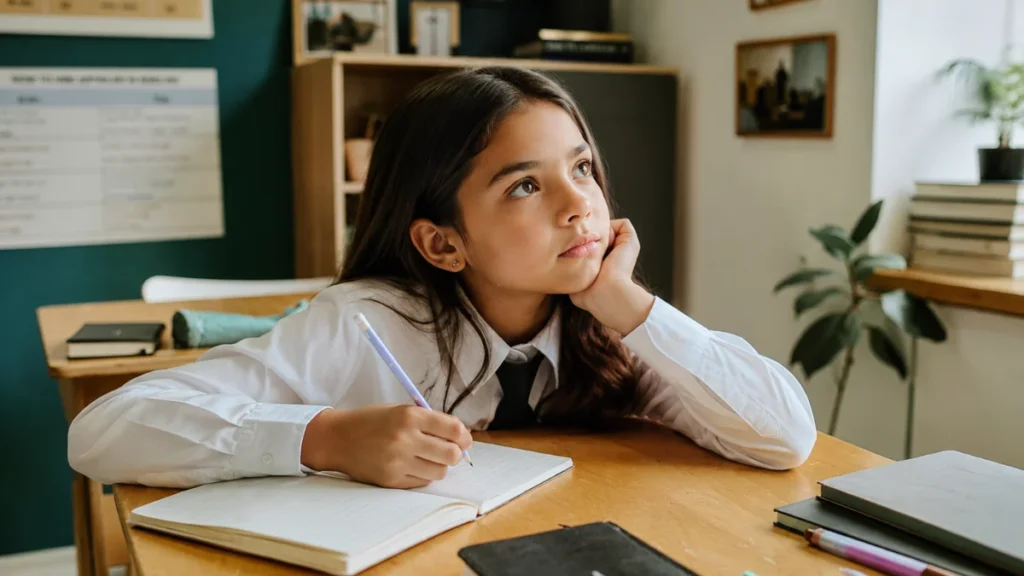
Some parents start worrying when their quiet child avoids answering questions, says very little about school, or seems unsure even when they are doing okay. It can feel confusing when a child is calm on the outside but quietly doubts whether they are smart enough, fast enough, or good enough at learning.
Quiet children sometimes doubt their learning ability because they often carry mistakes, pressure, comparison, and uncertainty inside instead of speaking about them openly. This does not mean they are less capable. It often means their confidence grows more quietly, more slowly, and with more need for emotional safety.
In many real homes, this worry becomes harder to understand because children do not always explain what they feel. A quiet child may look fine, but still feel nervous about being wrong. They may understand more than they show, but still doubt themselves because they compare their quiet learning style with louder, faster, or more confident children.
This article will explain why quiet children sometimes doubt their learning ability, what may be happening beneath the surface, and how parents can understand these quiet confidence struggles without blame, pressure, or fear.
Why Learning Confidence Looks Different in Real Homes
Learning confidence does not grow in perfect conditions. In real homes, parents may be cooking, answering messages, helping siblings, managing noise, or trying to get through the evening after a long day. Children are often tired too. They may come home from school already carrying noise, pressure, correction, friendship stress, and the effort of trying to keep up.
Quiet children may not show this pressure loudly. They may not cry, argue, or complain much. Instead, they may become still, avoid eye contact, erase their work, shrug, or say “I don’t know” even when they partly understand.
This can make their learning doubt hard to notice. A parent may think the child is simply shy, distracted, or not interested, when the child may actually be protecting themselves from feeling embarrassed or wrong.
What Most Parenting Advice Misses
Many parenting tips talk about confidence as if it always looks bold. They may encourage children to speak up, answer quickly, try harder, or believe in themselves. These ideas can help some children, but they do not always fit quiet children who need more time to feel safe before showing what they know.
Some quiet children are not lacking ability. They are carrying more emotional caution. They may notice small mistakes deeply, compare themselves silently, or worry that one wrong answer means they are not smart.
What most advice misses is that confidence cannot always be pushed out of a quiet child. Sometimes it grows when learning feels less watched, less rushed, and less tied to proving something.
Why Quiet Children Often Doubt Themselves Deeply
Quiet children often spend more time observing than speaking. This can make them thoughtful learners, but it can also make them more aware of what others are doing. They may notice who answers first, who gets praised, who finishes quickly, and who seems confident.
When a child is quiet, they may also have fewer chances to hear reassuring feedback. A louder child might ask for help quickly, but a quiet child may sit with confusion longer. Over time, this can turn into quiet self-doubt.
A child may begin to think, “Other children understand faster than me,” even when that is not true. They may think, “I should already know this,” even when learning normally takes time. These thoughts can stay hidden because the child does not want to draw attention to their worry.
What Quiet Children May Feel Internally
Parents usually see the outside behaviour first. They may see silence, hesitation, avoidance, or a child who says very little about school. But inside, the child may be dealing with a much bigger emotional story.
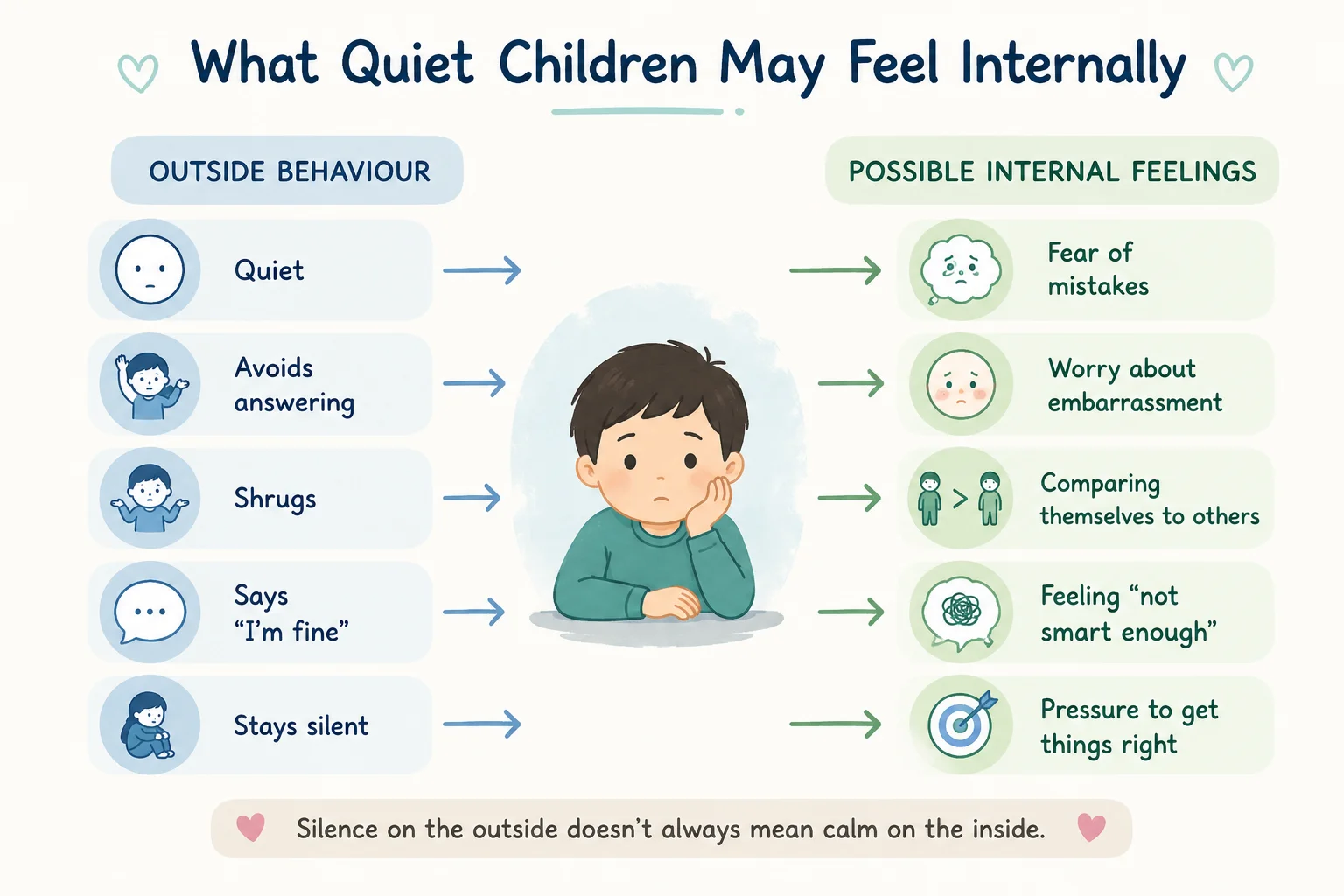
This kind of emotional learning diagram can help parents remember that quiet behaviour is not always simple. Sometimes silence is not refusal. Sometimes it is a child trying to stay emotionally safe while they figure out what they feel.
This is similar to how some children protect themselves by hiding difficult school moments. If that pattern feels familiar, you may also find Why Some Children Hide Their School Work from Parents helpful.
Quiet Learning Behaviour vs Low Learning Ability
One of the biggest worries for parents is whether quietness means a child is struggling academically. Sometimes children do need extra help, but quiet behaviour by itself does not prove low learning ability.
| Quiet Learning Behaviour | Possible Signs of Actual Learning Struggle |
|---|---|
| Thinks carefully before answering | Does not understand instructions even after calm explanation |
| Avoids speaking in front of groups | Struggles to explain ideas in any setting, even when relaxed |
| Feels sensitive after small mistakes | Repeats the same confusion across many tasks and subjects |
| Learns better in quiet spaces | Finds the work confusing even in calm, supportive conditions |
| Observes before participating | Cannot apply learning independently after several supported attempts |
| Needs time before feeling confident | Shows ongoing difficulty with basic concepts for their age or year level |
This table is not meant to diagnose anything. It simply shows why quietness and low ability should not be treated as the same thing. Some children are capable learners who need more emotional safety before their confidence becomes visible.
Why Small Mistakes Can Feel Bigger to Quiet Children
Some quiet children experience mistakes very personally. A small correction may not feel small to them. It may feel like proof that they are not good at learning, even when adults see it as a normal part of school.
This can happen because quiet children often have a strong inner world. They may replay moments in their mind, remember embarrassment longer, or worry about what others think. A wrong answer in class may stay with them long after everyone else has moved on.
When this happens often, a child may start avoiding situations where they might be wrong. They may stop raising their hand, avoid harder tasks, or say “I don’t know” before they have really tried. If your child becomes upset after small errors, How to Help a Child Who Gets Upset After Small Mistakes connects naturally with this topic.
Quiet Confidence Often Grows Slowly
Quiet confidence is often easy to miss because it does not always look dramatic. A child may not suddenly become talkative or eager to answer every question. Instead, progress may appear in small, quiet ways.
A child may erase their work less often. They may ask one small question. They may try again after a mistake. They may stay calmer during homework, attempt a slightly harder task, or share one thought at home that they would not say at school.
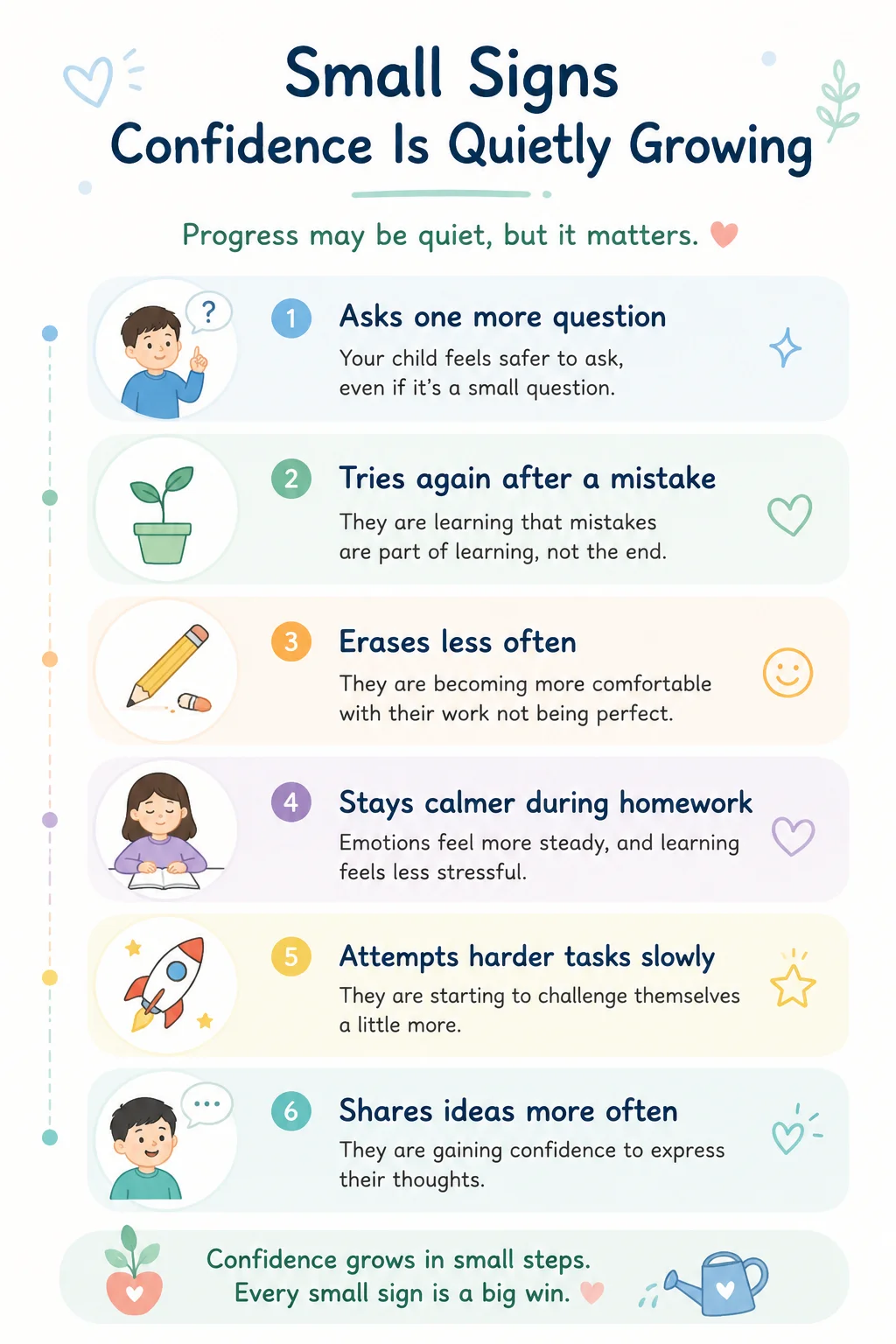
This kind of confidence-building visual can help parents notice progress that may otherwise feel too small to count. For quiet children, small signs often matter more than they seem.
Practical Insights for Busy Families
Parents do not need to create a perfect learning routine to support a quiet child. In many homes, confidence grows through small emotional shifts rather than big systems.
Some children respond better when mistakes are treated calmly, when they are given time to think, and when learning does not feel like a performance. Others feel safer when they can talk about school casually while walking, eating a snack, or sitting somewhere comfortable instead of being questioned directly at the table.
For many quiet children, the goal is not to make them louder. The goal is to help learning feel safe enough that they slowly stop doubting themselves so deeply.
Gentle Home Reminder: Some quiet children open up more when the learning space feels calm, predictable, and not too busy. A simple corner, clear table, or quieter homework spot can sometimes help a child feel less watched and more settled.
If your home feels busy and you want more ideas around environment, How to Create a Calm Study Space in a Busy Home may support this article naturally.
Common Misunderstandings
Quiet children are often misunderstood because their learning emotions are not always easy to see. These misunderstandings are common, especially when parents are worried about school confidence.
Quietness can be mistaken for low intelligence. Slow answering can be mistaken for not knowing. Careful thinking can be mistaken for lack of confidence. Emotional sensitivity can be mistaken for weakness. Avoiding questions can be mistaken for laziness when it may actually be fear of embarrassment.
It can also be easy to compare siblings. One child may answer quickly and loudly, while another needs time, quiet, and reassurance. Different learning personalities do not mean one child is better prepared for success than the other.
Family and Seasonal Context
Quiet learning doubt may become more noticeable during busy school terms, after holidays, near tests, or when children are tired from long days. During these times, a quiet child may carry more emotional pressure than they show.
After-school tiredness can also make confidence look weaker than it really is. A child who seems unsure during homework may not be unable to learn. They may simply be low on emotional energy after holding themselves together all day.
Jolyti Note: I’ve noticed that some quiet children become more confident when learning feels calmer and less rushed. Every child is different, but many seem to grow through small moments where trying feels safe, mistakes feel normal, and progress does not have to be loud to matter.
Frequently Asked Questions
Why do quiet children sometimes doubt their learning ability?
Quiet children sometimes doubt their learning ability because they may process mistakes, pressure, comparison, and embarrassment internally. They may understand more than they show but still feel unsure about whether they are good enough.
Does being quiet mean my child is behind at school?
Not always. Some quiet children are capable learners who need more time, calm, and emotional safety before they show confidence. Quietness alone does not prove a child is behind.
Why does my child know the answer at home but stay quiet at school?
Some children feel safer sharing answers in calm home settings. In a classroom, fear of mistakes, noise, social pressure, or embarrassment can make them hold back even when they understand the work.
Can quiet children become confident learners?
Yes. Many quiet children become confident learners over time. Their confidence may grow slowly through repeated safe learning moments rather than sudden bold behaviour.
Should parents push quiet children to speak up more?
Some encouragement can help, but too much pressure may make quiet children feel more watched. Many children respond better when they feel safe to think, try, and participate gradually.
Final Thoughts
Why quiet children sometimes doubt their learning ability is not always about intelligence or effort. Often, it is about emotional safety, careful thinking, fear of mistakes, and the quiet pressure children carry inside.
A quiet child may be learning, noticing, trying, and growing even when their confidence is not easy to see. Their progress may appear through small signs rather than big changes.
Parents do not need to force confidence to appear quickly. In real homes, calm moments, gentle understanding, and small learning wins can help quiet children slowly believe in themselves again.
Featured image is AI-generated and intended for illustrative purposes only.
Leave a Reply