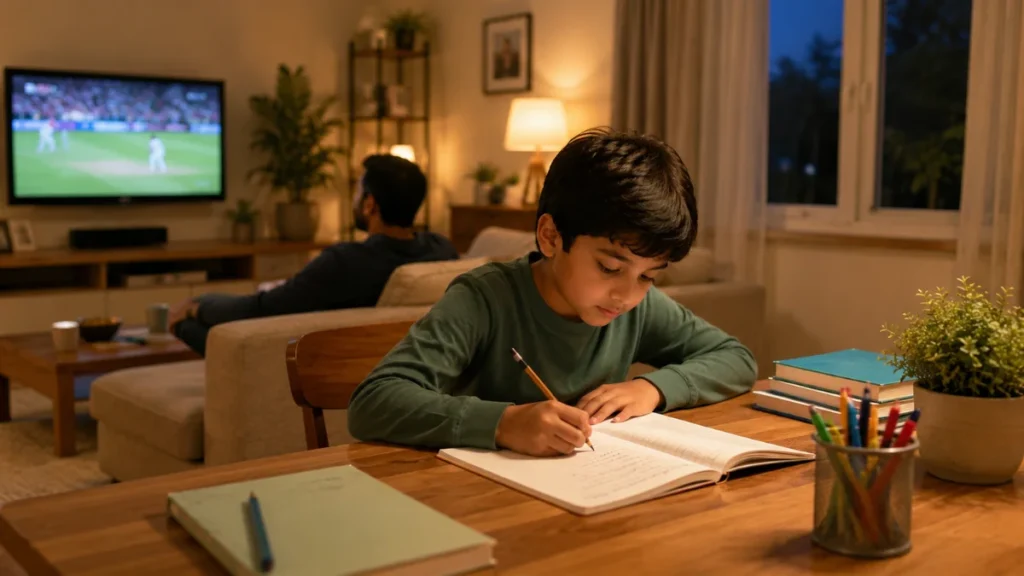
Some parents notice their child seems to focus better while soft music is playing, while the television hums quietly in another room, or while people move around nearby. Other children, however, become distracted by even the smallest sound. This can feel confusing, especially when schools and parenting advice often suggest that quiet environments are always best for learning.
Some children learn better with background noise because certain types of gentle sound can help the brain feel calmer, more alert, less pressured, or less emotionally uncomfortable during learning. Background noise does not help every child, but for some children, complete silence can actually feel too intense, distracting, or emotionally uncomfortable during homework or study time.
Part of the confusion comes from how differently children respond to stimulation, emotions, and pressure. Modern parenting advice can sometimes make families feel like there is only one “correct” learning environment. But real homes are rarely perfectly quiet, perfectly organised, or emotionally calm every afternoon after school.
Many children learn in busy homes with siblings, tired parents, background sounds, changing routines, and emotional ups and downs. This article explores why background noise sometimes helps learning, why some children struggle with total silence, and how confidence and focus can develop differently from child to child.
Real Family Learning Reality Check
In many households, learning does not happen inside a perfectly quiet study room with ideal lighting and unlimited patience. Homework often happens while dinner is cooking, younger siblings are talking nearby, washing machines are running, or parents are trying to finish work after a long day themselves.
Some children naturally filter out background sounds more easily than others. Some even feel calmer when the environment feels emotionally “alive” around them. Complete silence can sometimes make certain children more aware of pressure, mistakes, boredom, or frustration. For these children, a little background noise may help learning feel less emotionally heavy.
This is especially common in homes where children already spend long school days following instructions, staying quiet, controlling emotions, and trying to focus in structured environments. By the time they arrive home, some children no longer respond well to rigid learning expectations.
Different siblings in the same home may also respond very differently. One child may need silence to think clearly, while another feels more comfortable hearing soft movement or gentle sound nearby. Neither response automatically means something is wrong.
What Most Parenting Advice Misses
A lot of parenting advice talks about focus as though all children concentrate the same way. But concentration is often emotional as much as mental. Some children focus best when they feel calm, emotionally safe, and less aware of pressure.
In highly structured homes, strict quiet routines may work well because children already feel emotionally settled and comfortable with that structure. In busy homes, however, forcing complete silence can sometimes make homework feel tense or unnatural.
Certain children may use gentle background sound almost like emotional cushioning. Soft music, distant conversation, rain sounds, or light household movement may help reduce the uncomfortable feeling of being alone with difficult work. This does not mean the child is incapable of learning quietly. It may simply mean their brain relaxes differently during learning.
Why Silence Sometimes Feels Harder for Certain Children
For some children, silence increases self-awareness. They become more conscious of mistakes, slower thinking, or worries about getting answers wrong. In complete silence, even small frustrations can suddenly feel emotionally bigger.
This is sometimes seen in children who are sensitive, thoughtful, perfectionistic, or easily embarrassed by mistakes. Quiet environments may unintentionally increase performance pressure rather than reduce distraction.
Children who already feel nervous about schoolwork may also start overthinking more in silent environments. Their brain becomes focused on “Am I doing this right?” instead of simply engaging with the task itself.
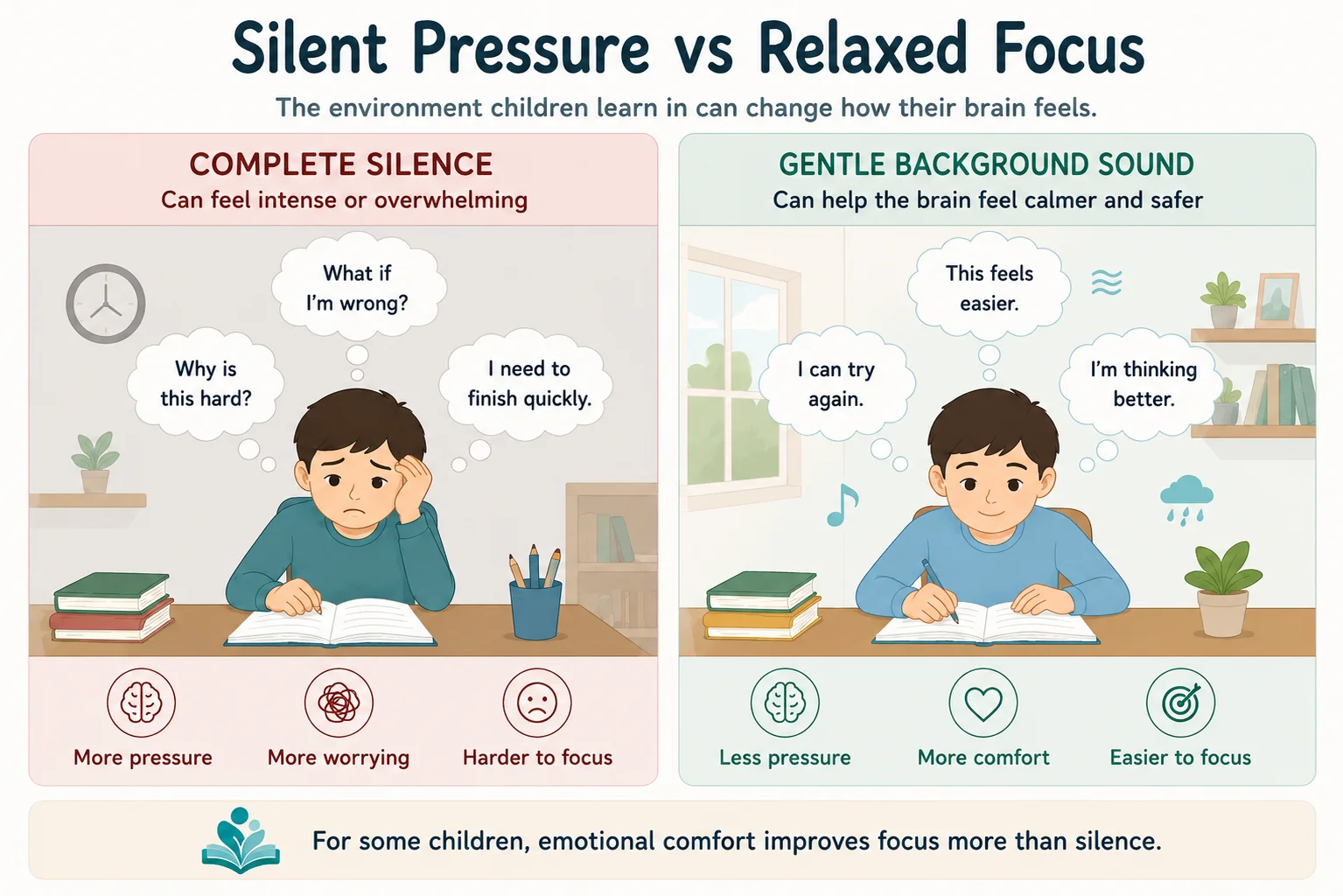
This connects closely with emotional learning confidence. Children who fear mistakes often struggle more when learning feels emotionally intense. Some parents notice improvement when the environment feels softer, calmer, and less performance-focused. If this sounds familiar, you may also find How to Help a Child Who Gets Upset After Small Mistakes helpful.
Some Children Focus Better When the Brain Feels Occupied
Certain children become distracted not because the environment is noisy, but because their brain seeks stimulation when tasks feel repetitive, difficult, or emotionally uncomfortable.
Soft background sound can sometimes occupy the restless part of the brain just enough to help the child stay with the task longer. This may happen with children who daydream easily, become bored quickly, feel emotionally restless after school, or struggle sitting in complete stillness for long periods.
This does not mean loud environments are automatically helpful. Very noisy environments usually reduce concentration for most children. But gentle, predictable background sound sometimes creates a middle ground between overstimulation and uncomfortable silence.
Some children also focus better when they do not feel watched too closely. Constant observation can make learning feel emotionally heavy. A relaxed environment with light background activity may help certain children feel more independent and less pressured.
| Some Children Focus Better With | Other Children Focus Better With |
|---|---|
| Soft background sound | Complete quiet |
| Gentle movement nearby | Very little activity nearby |
| Short learning bursts | Longer uninterrupted sessions |
| A relaxed home atmosphere | A clear and predictable routine |
| Kitchen table learning | A private study space |
Neither learning style is automatically better. Children often respond differently to emotional and sensory environments. The helpful question is not whether background noise is “right” or “wrong,” but whether the child seems calmer, more settled, and more able to begin.
Why Background Noise May Help After School
After-school learning often feels different from classroom learning because children are mentally tired before homework even begins.
Many children spend the school day following instructions, managing emotions socially, staying seated, controlling movement, and trying to meet expectations. By the afternoon, the brain may feel emotionally overloaded.
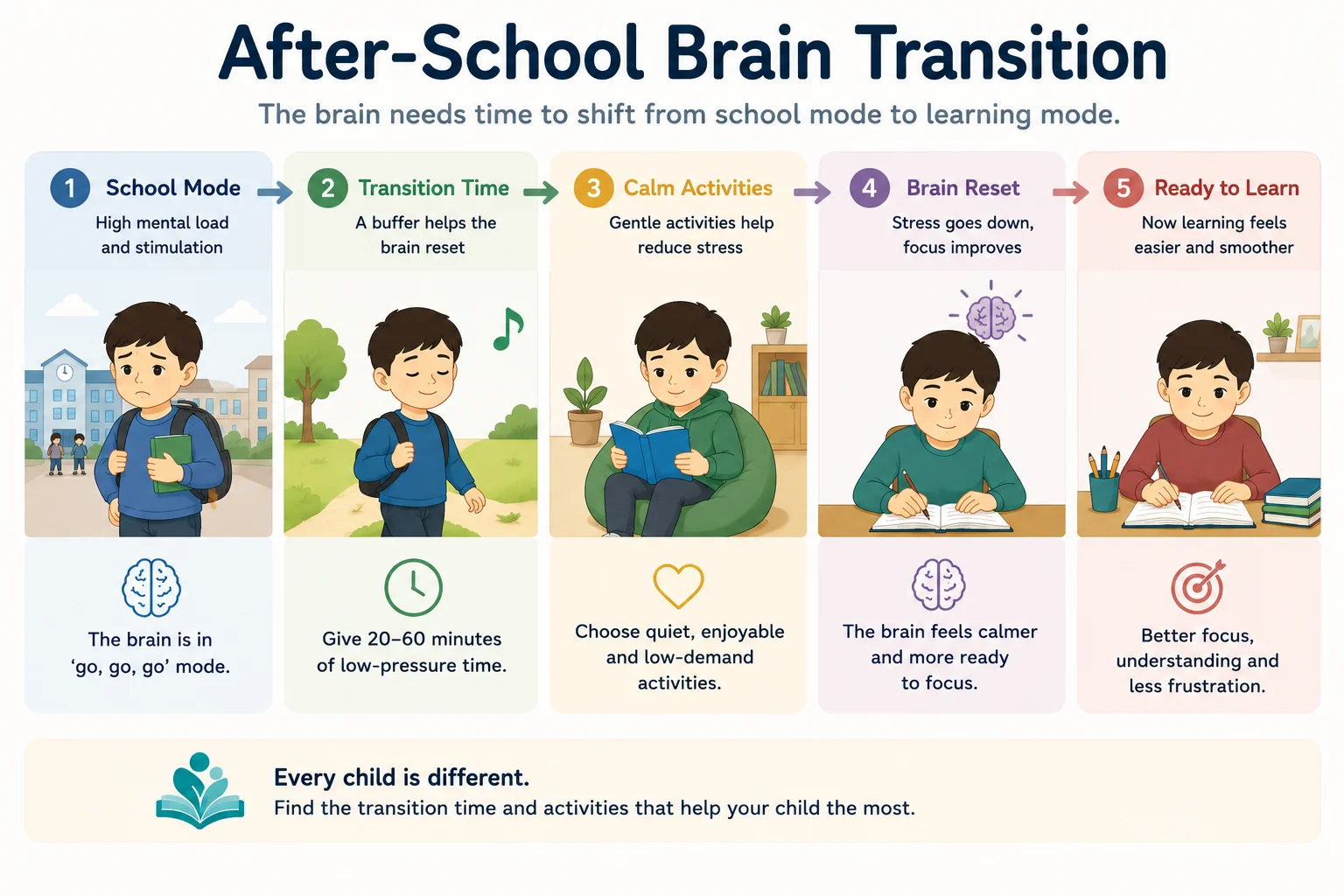
Gentle sound may help certain children transition more naturally between “school mode” and “home mode.” This is one reason some children appear calmer doing homework at a kitchen table with quiet household movement nearby rather than isolated alone in a bedroom.
This also connects with why homework can feel emotionally harder at home than at school. Home often carries different emotional energy, expectations, and distractions. Your related article Why Homework Feels Harder at Home Than at School explores this in more detail.
Calm Noise vs Distracting Noise
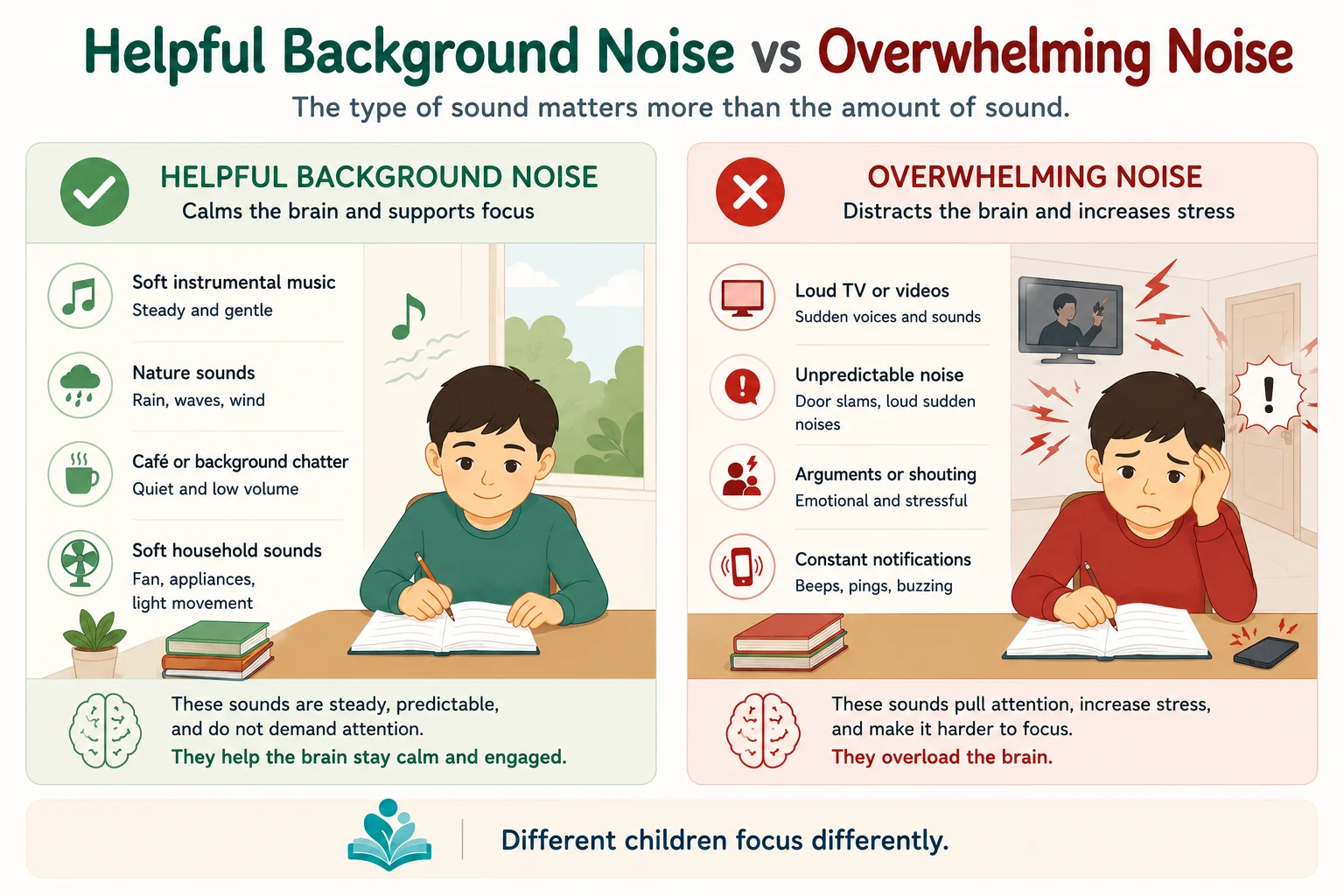
Not all background noise affects children the same way. Calm, predictable sounds often feel very different from chaotic or emotionally intense noise.
Gentle instrumental music, rain sounds, soft household movement, quiet café-style background audio, or a low fan sound may feel calming for some children. These sounds are usually steady and not too demanding on attention.
But sudden interruptions, loud television dialogue, arguments, shouting, or unpredictable device sounds usually make concentration harder. These sounds can pull the child’s attention away from the task or make the learning environment feel emotionally unsettled.
Children may also respond differently depending on the task. Reading difficult material may require more quiet than colouring, maths revision, spelling practice, or simple homework review tasks. Learning environments often work best when they feel emotionally comfortable rather than perfectly controlled.
Some Quiet Children May Secretly Need Less Pressure
Children who appear quiet are not always emotionally calm inside. Some quiet children carry strong internal pressure around school performance, disappointing adults, or making mistakes.
For these children, silence can sometimes intensify emotional pressure because there are fewer distractions from their own thoughts.
Gentle background noise may create a softer emotional atmosphere where learning feels less intimidating. This can sometimes help confidence grow more naturally over time.
This emotional pattern is sometimes connected to self-doubt in quieter children. Your related article Why Quiet Children Sometimes Doubt Their Learning Ability explores this side of learning confidence in a calm and supportive way.
Practical Insights for Real Homes
Every child responds differently to learning environments, but some families notice small improvements when learning feels less emotionally intense.
Some children respond better to soft instrumental music than complete silence. Others feel calmer when there is light household movement nearby instead of an isolated quiet room. Some children also do better when homework is shorter, softer, and less emotionally heavy.
Gentle background sound usually works better than loud entertainment noise. Some children also focus better when parents are nearby but not closely watching every answer. In many homes, learning confidence improves slowly through small moments of feeling safe enough to try.
Common Misunderstandings About Background Noise and Learning
Background noise during learning is often misunderstood because many people assume focus looks the same for every child.
Quietness is not always the same as concentration. Background noise does not automatically mean distraction. Some children become more anxious in complete silence, while others become overwhelmed by too much sound.
Slow homework progress also does not always mean poor learning ability. Sometimes emotional comfort affects concentration more than parents realise. A child who seems restless may not be trying to be difficult. Their brain may simply be searching for the right level of stimulation to stay engaged.
| What Parents May Notice | What May Actually Be Happening |
|---|---|
| The child wants music while studying | Soft sound may help them feel calmer or less pressured |
| The child struggles in complete silence | Silence may make mistakes or worry feel bigger |
| The child studies better near family activity | Being nearby may feel emotionally safer than being alone |
| The child loses focus with loud TV | Unpredictable sound may overload attention |
| The child learns differently from siblings | Different children may need different sensory conditions |
These behaviours can still be challenging in busy homes. But understanding the possible meaning behind them can help parents respond with more calm and less confusion.
Family and Seasonal Context
Learning environments also change throughout the school year. Children often become more emotionally tired near exams, during long school terms, or after busy social periods.
Winter afternoons can sometimes feel emotionally heavier too. Darker evenings, indoor routines, tiredness after school, and reduced outdoor movement may affect concentration differently compared to more active seasons.
Some children become more sensitive to pressure during emotionally busy periods. At these times, softer learning environments may feel especially important. This does not mean a perfect study routine is needed. In many homes, even small changes in sound, pressure, and atmosphere can make learning feel more possible.
Jolyti Note: I’ve noticed some children seem calmer when learning does not feel emotionally silent or overly controlled. In many homes, confidence grows more naturally when children feel relaxed enough to think imperfectly. Different children also respond very differently to sound, pressure, and emotional atmosphere during homework time.
Frequently Asked Questions
Does background music help children study better?
For some children, soft background music can help the brain feel calmer and less pressured. Others find music distracting. It often depends on the child’s personality, emotional state, and the type of task they are doing.
Why does my child focus better in busy places?
Certain children feel emotionally comfortable around gentle activity because the environment feels less intense or isolating. Busy environments may also help restless minds stay more mentally engaged.
Should children always study in silence?
Not always. Some children prefer silence, while others concentrate better with soft background sound. Learning environments usually work best when they match the child’s emotional comfort level.
Can background noise reduce homework stress?
In some homes, gentle sound can make homework feel less emotionally heavy or pressured. Calm environments sometimes help children stay engaged longer without becoming overwhelmed.
Is my child distracted if they like noise while learning?
Not necessarily. Some children genuinely process information better when the environment feels relaxed and emotionally balanced rather than perfectly quiet.
Final Thoughts
Children do not all learn comfortably in the same environments. Some children need quiet to think clearly, while others feel calmer and more focused when gentle sound exists around them.
Learning confidence is often emotional before it becomes academic. When children feel emotionally safer, less pressured, and more relaxed, focus sometimes develops more naturally over time.
Small differences in learning environments do not automatically mean something is wrong. In many families, understanding how a child feels while learning matters just as much as the learning itself.
Featured image is AI-generated and intended for illustrative purposes only.
Leave a Reply