Many parents search for answers after watching homework turn into a completely different experience at home. A child who seems calm or cooperative at school may suddenly become frustrated, distracted, emotional, or exhausted during homework time. For some families, evenings slowly become filled with tension, reminders, unfinished tasks, and feelings of guilt on both sides.
Homework often feels harder at home than at school because home and school place very different emotional demands on children. School usually provides structure, routines, teacher guidance, and a learning-focused environment. Home, however, can feel emotionally fuller, noisier, more distracting, more tiring, and less structured after a long day.
This can feel confusing for parents because children often behave differently in different environments. Some children use most of their emotional energy staying regulated during school hours, especially quiet or sensitive children who try hard to hold it together in class.
The good news is that this situation is far more common than many families realize. Homework struggles at home do not automatically mean laziness, poor parenting, or learning failure. In many homes, children simply need different emotional conditions to feel safe, calm, and mentally available for learning after school hours.
Real Family Learning Reality Check
Real homes are rarely as calm as ideal parenting advice makes them sound. Some parents come home tired from work. Some families have younger siblings needing attention. Some children arrive home overstimulated from classrooms, buses, sports, noise, social pressure, or long school days.
Even homes filled with love can still feel emotionally busy by late afternoon. Dinner may need preparing, messages may need answering, younger children may be noisy, and everyone may be carrying some tiredness from the day.
Many children also experience a strange emotional transition after school that adults sometimes overlook. At school, expectations are already clear. Teachers guide the pace. Other students are working too. The environment quietly signals, “This is learning time.”
At home, those learning signals often disappear. The brain suddenly sees toys, devices, snacks, television sounds, conversations, pets, family movement, and emotional comfort all at once. For some children, switching back into learning mode after emotionally relaxing at home can feel surprisingly difficult.
What Most Parenting Advice Misses
A lot of parenting advice assumes that children behave the same way in every environment. But many children do not.
Some children can focus well in classrooms because classrooms feel emotionally predictable. The structure is already there. They know what is expected. They may even feel safer learning around other children who are doing the same task.
At home, learning can feel more personal. Mistakes may suddenly feel bigger. Emotional reactions may become stronger. Some children also unconsciously associate home with rest, safety, freedom, or emotional release. Their brains may resist shifting back into academic effort after finally reaching their comfort space.
This is one reason homework struggles sometimes surprise parents. A child who looks capable at school may still feel emotionally overwhelmed during homework at home.
Why Home Feels Emotionally Different From School
School environments are designed around learning routines. Even small classroom patterns quietly help children stay mentally engaged. Bells ring. Teachers redirect attention. Desks face forward. Activities happen in predictable order.
Home environments usually work differently. At home, children may hear conversations, smell dinner cooking, notice siblings playing, or think about relaxing activities waiting nearby. Their brains are no longer being carried by a group learning environment.
Some children also carry emotional exhaustion home without showing it clearly. They may spend the entire school day trying to stay focused, follow instructions, manage social situations, hide worry, avoid embarrassment, and keep up academically.
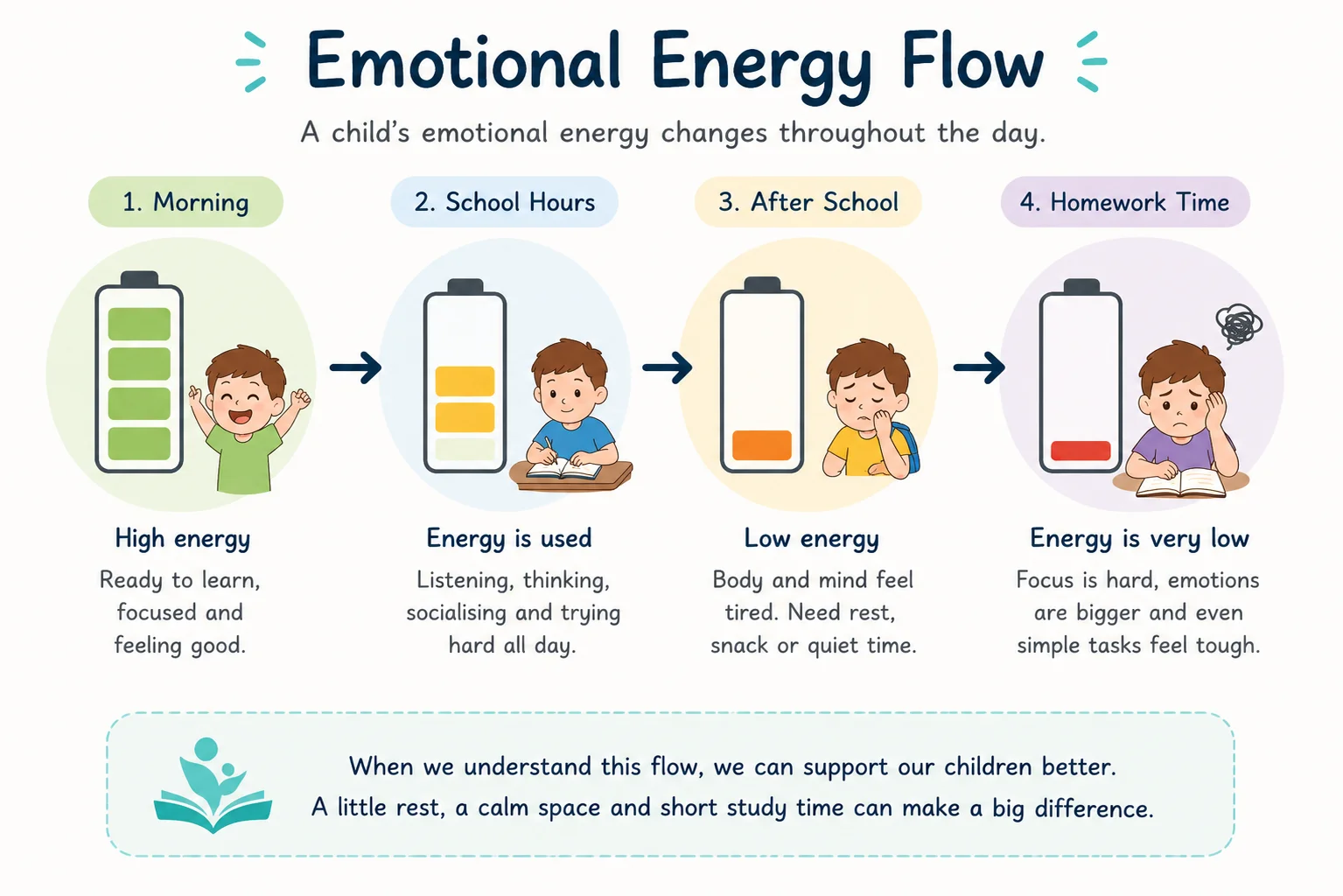
This kind of visual can help parents see that homework resistance is not always about effort alone. Sometimes emotional energy drops before the child has the words to explain it.
School Learning vs Home Learning
Homework feels harder at home than at school partly because the two spaces ask different things from a child. School often carries children through learning with structure, while home asks them to restart learning after they have already mentally relaxed.
| School Feels Like | Home Often Feels Like |
|---|---|
| A structured learning space | A comfort and recovery space |
| Clear teacher guidance | Family emotions and distractions |
| Other children are also working | The child may feel alone with the task |
| Learning happens in a set routine | Learning has to compete with home life |
| Mistakes may feel part of class | Mistakes may feel more personal |
| The day is already in learning mode | The child may need to switch back into learning mode |
This comparison does not mean school is better than home. It simply shows why a child may seem capable in one setting and overwhelmed in another.
Some Children Need More Emotional Recovery Time
Not every child can move directly from school into homework smoothly. Some children mentally recover quickly after school. Others need quiet time before their brains feel ready to focus again.
This does not always mean they are avoiding learning. Sometimes their nervous system simply needs a transition period. Children who are emotionally sensitive, easily overwhelmed, quiet at school, or worried about mistakes may need more time to move from school energy into home learning.
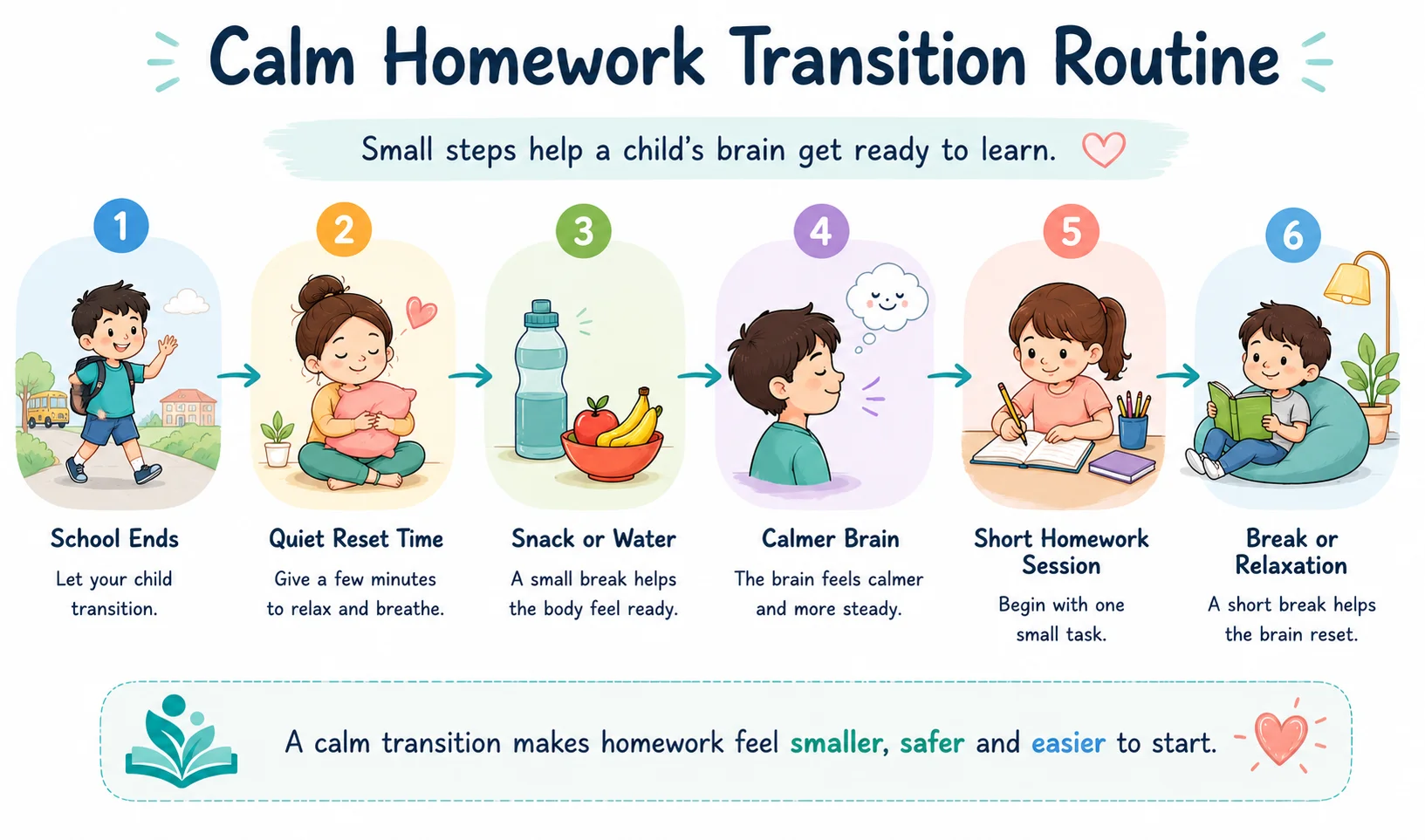
In many homes, homework becomes easier when children first experience calm decompression instead of immediate pressure. This connects closely with shorter learning periods, because some children learn more calmly when mental pressure feels smaller and more manageable. If this sounds familiar, you may also find Why Short Study Sessions Work Better for Some Children helpful.
Home Learning Can Feel More Emotionally Personal
At school, mistakes are often part of a shared classroom experience. At home, mistakes can suddenly feel emotionally exposed.
Some children become more aware of correction when learning beside parents. Others fear disappointing people they love. Even gentle reminders may feel emotionally heavier at home because the child cares deeply about parental approval.
This does not mean parents are doing something wrong. It simply shows that emotional closeness changes how some children experience learning.
Children who already doubt their learning confidence may especially struggle when homework feels tied to identity rather than simple practice. This emotional pattern is sometimes seen in quieter children who internally worry about being “not smart enough” even when adults do not realize it. Your article Why Quiet Children Sometimes Doubt Their Learning Ability explores this emotional side of learning confidence in a calm and reassuring way.
Homework Sometimes Becomes a Symbol of Stress
In some homes, homework slowly stops feeling like homework. Instead, it becomes connected to pressure, tired evenings, correction, conflict, emotional exhaustion, or fear of disappointing adults.
When this emotional connection grows over time, children may begin resisting homework before even starting it. This is why emotional tone matters so much. Children often learn better when homework feels emotionally safer, calmer, and smaller instead of emotionally heavy.
Sometimes even tiny changes in atmosphere can help. A softer transition after school, less rushing, quieter surroundings, or shorter work periods may lower emotional resistance more than strict academic pressure. Your article How to Create a Calm Study Space in a Busy Home naturally supports this idea by showing how calmer learning environments sometimes help children feel less overwhelmed mentally.
Practical Insights for Busy Families
Homework struggles often improve gradually rather than instantly. In many homes, emotional safety matters more than perfect routines.
Some children respond better when the session has a clear beginning and end. Others feel calmer when only one small task is placed in front of them. Some children need movement before homework, while others need quiet after school before they can think clearly.
Small emotional changes can sometimes improve learning confidence more than strict systems. For many children, the goal is not to make homework perfect. The first goal is often to make learning feel safe enough to begin and small enough to finish.
A Gentle Study Timer Idea: Some children feel calmer when homework has a clear beginning and ending point. Smaller timed sessions can help learning feel more manageable instead of endless.
For families who want a simple option, the free StudentTimer website includes calm study sessions with built-in breaks for shorter focus periods.
Common Misunderstandings About Homework Struggles
Homework difficulties are often misunderstood, especially when parents compare home behaviour with school reports. A child may seem fine in class but still feel emotionally worn out once they return home.
Short focus can look like laziness when it may be emotional tiredness. Avoidance can look like defiance when it may be overwhelm. Slow homework can look like lack of ability when it may be fear of mistakes or mental fatigue.
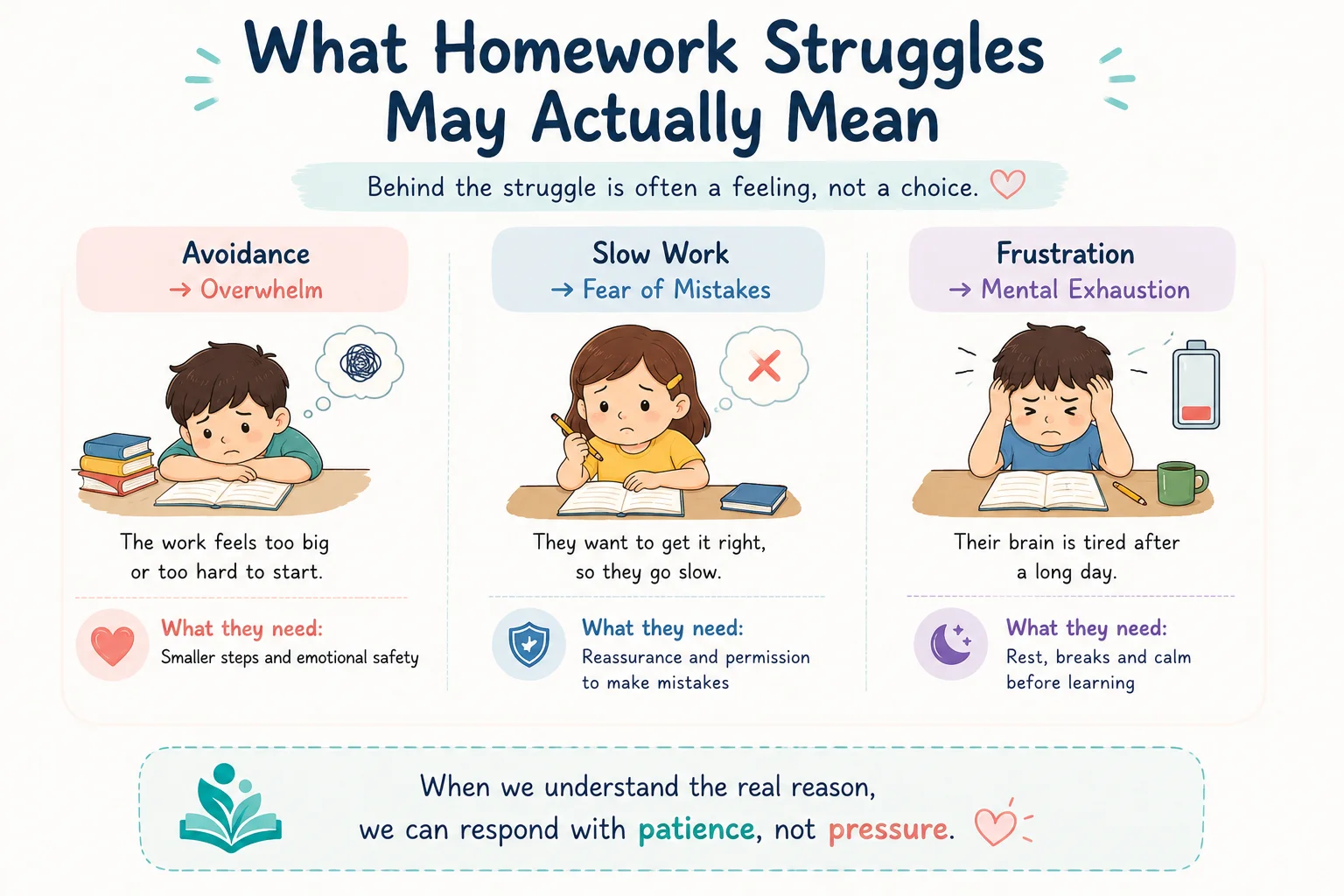
| What Parents May See | What May Actually Be Happening |
|---|---|
| Avoiding homework | The task feels emotionally too big to begin |
| Working very slowly | The child may be worried about mistakes |
| Getting frustrated quickly | Mental energy may already be low after school |
| Being distracted | The home environment may be competing for attention |
| Saying “I don’t know” often | The child may feel stuck or afraid of being wrong |
| Needing repeated reminders | The brain may be struggling to restart learning mode |
These behaviours can still be difficult for families to manage, especially on busy evenings. But seeing the possible meaning behind them can make the situation feel less personal and less confusing.
Family and Seasonal Context
Homework often feels harder during emotionally busy seasons of family life. Toward the end of school terms, many children quietly carry mental fatigue even if they do not openly talk about it.
Busy extracurricular schedules, changing routines, social stress, assessment periods, or darker winter evenings can also affect emotional energy after school. Some children especially struggle during transition periods, such as returning from holidays, adjusting to new teachers, or moving into more demanding schoolwork.
This does not always mean long-term learning problems are developing. Sometimes the child’s emotional system is simply adjusting.
Jolyti Note: I’ve noticed that some children seem emotionally full by the time they arrive home, even when school reports sound positive. In many families, homework struggles are less about intelligence and more about emotional energy, pressure, and transition. Different children also recharge differently after long school days, and sometimes calmer evenings quietly help confidence return over time.
Frequently Asked Questions
Why does homework feel harder at home than at school?
Homework can feel harder at home than at school because home has different emotional signals, distractions, family movement, and less classroom structure. Many children also feel tired after using mental energy all day at school.
Can a child do well at school but still struggle with homework at home?
Yes. Many children use a large amount of emotional energy staying focused, calm, social, or regulated during school hours. By the time they arrive home, they may feel mentally tired even if they appeared capable at school.
Does homework resistance always mean a child dislikes learning?
Not necessarily. Some children enjoy learning but dislike the emotional pressure connected to homework time. The learning itself may not be the real problem.
Why do some children become emotional during homework?
Homework can trigger frustration, fear of mistakes, tiredness, perfectionism, or emotional overload. Children often express these feelings through avoidance, tears, irritability, or distraction.
Can calm environments really affect learning confidence?
For many children, yes. Emotional calmness often helps the brain feel safer, clearer, and more available for learning. This does not need to be perfect. Even small calm changes can help some children begin more easily.
Final Thoughts
Homework feeling harder at home than at school is more common than many parents realize. Children experience different emotional pressures in different environments, and home learning often carries emotional layers that classrooms do not.
This does not mean a child is failing. It does not mean a parent is doing everything wrong either. In many families, learning confidence grows slowly through calmer experiences, emotional safety, smaller moments of success, and feeling understood rather than pressured.
Children do not all learn, recover, focus, or emotionally recharge in the same way. And sometimes understanding that difference is already a meaningful step forward.
Featured image is AI-generated and intended for illustrative purposes only.
Leave a Reply