Introduction
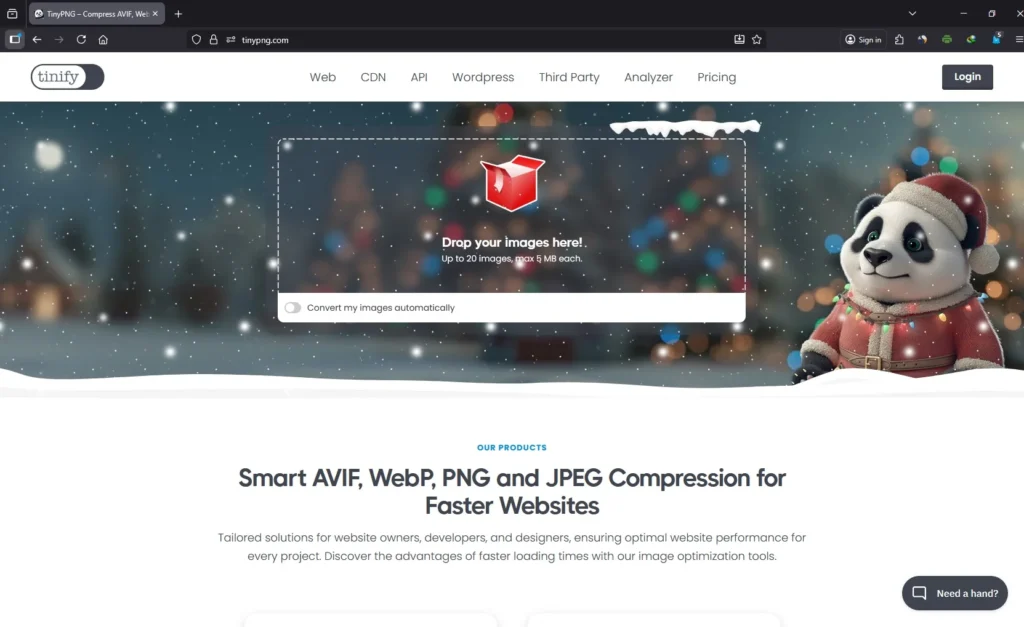
TinyPNG is a one-page utility website that helps users compress PNG and JPG images while preserving visual quality.
What makes TinyPNG especially notable is how a single-purpose tool — image compression — has scaled into a multi-million-visitor business. Rather than expanding into a full image editor or design platform, TinyPNG focuses entirely on doing one job exceptionally well.
As a one-page-style website, TinyPNG demonstrates how clarity, speed, and strong search intent can turn a simple tool into a sustainable SaaS business.
Why This One-Page Website Works
TinyPNG works because it is built around a single, high-intent purpose: reducing image file sizes quickly and reliably.
The homepage delivers immediate value. Users arrive with a problem, upload their images, wait a few seconds, and download optimized files — all without creating an account or navigating multiple pages.
The one-page layout removes friction by keeping the entire experience in one place. There are no distractions competing with the primary action, and the interface is intuitive even for first-time users.
This works better as one focused page because additional steps, tutorials, or navigation would slow down task completion. In this case, speed and simplicity directly improve usefulness.
How This Website Gets Traffic
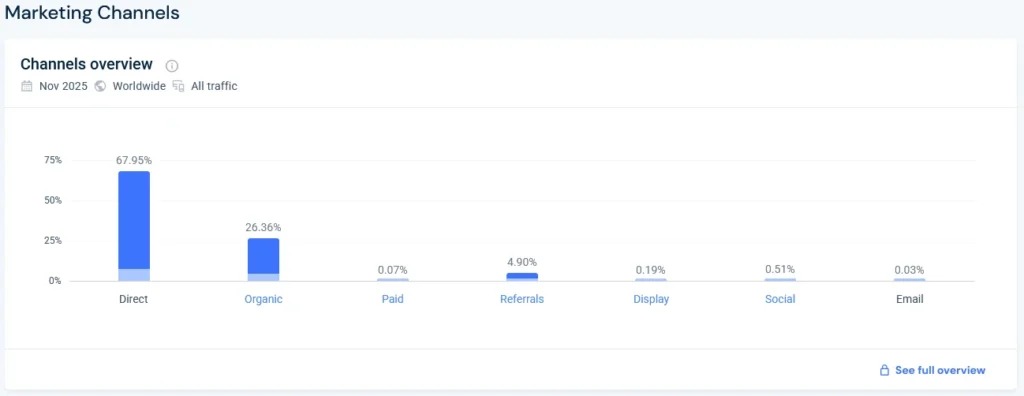
TinyPNG relies heavily on organic search as its main traffic source. Based on SimilarWeb estimates (November 2025), a significant share of visitors arrive through search queries related to image compression and optimization.
Additional traffic sources include direct visits and referrals, indicating strong brand recall and frequent repeat usage.
TinyPNG benefits from ranking for high-intent keywords such as:
- compress PNG
- compress JPG
- reduce image file size
- online image optimizer
Nearly all of this search traffic lands on the same primary tool page, allowing one optimized URL to capture a wide cluster of related queries.
How This Website Makes Money
TinyPNG monetizes primarily through a software-as-a-service model, rather than relying on display advertising.
Its main revenue streams include:
- Usage-based API pricing for developers and businesses
- WordPress plugin integrations connected to the same API
- Paid plans for higher-volume and automated usage
The free online compressor acts as ongoing lead generation. Casual users can compress images at no cost, while professional users eventually upgrade when they need scale, automation, or integration.
This model allows TinyPNG to monetize power users without degrading the free experience.
Signs of Traction and Growth
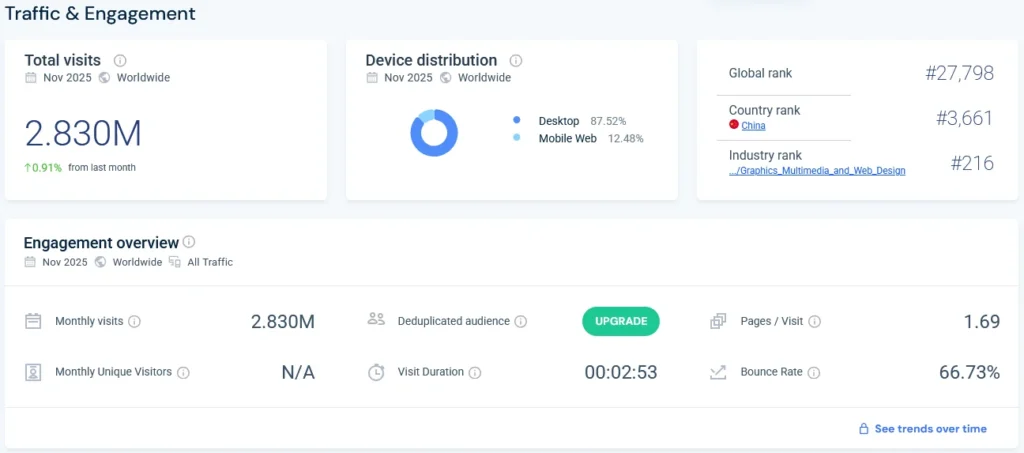
Based on SimilarWeb estimates (November 2025), TinyPNG shows strong and stable usage:
- Monthly visits: ~2.83 million
- Global rank: ~#27,798
- Industry rank (Graphics & Web Design): #216
User engagement metrics indicate meaningful interaction:
- Pages per visit: 1.69
- Average visit duration: 2 minutes 53 seconds
- Bounce rate: 66.73%
With 87.52% of traffic coming from desktop, usage aligns well with design and development workflows where image processing is common.
Why This Works as a One-Page Website
Although TinyPNG offers APIs and integrations, the core product remains a single focused page.
Growth did not come from adding unrelated features or content, but from refining the same interaction and extending it through automation and integrations. Turning this experience into a multi-page flow would add friction without improving outcomes.
The one-page format ensures fast task completion and reinforces TinyPNG’s identity as a quick, reliable utility.
What You Can Learn (or Copy) From This Website
Key lessons from the TinyPNG success story include:
- Focus on one problem with strong search intent
- Deliver results immediately without sign-ups
- Optimize one page for a cluster of related keywords
- Use a free tool as lead generation for paid services
- Monetize power users rather than casual users
This approach allows even small teams to build scalable businesses around simple tools.
If Monetised With Ads, Estimated Revenue (Speculative)
TinyPNG does not rely heavily on display advertising, but its traffic scale allows for estimation.
With approximately 2.83 million monthly visits and 1.69 pages per visit, TinyPNG generates roughly 4.78 million pageviews per month.
Using a conservative RPM range of $4–$12 for SaaS and utility websites:
- Low estimate ($4 RPM): ~$19,000 per month
- Mid estimate ($8 RPM): ~$38,000 per month
- Upper estimate ($12 RPM): ~$57,000 per month
Compared to API and subscription revenue, advertising would likely represent a minor income stream. This explains why TinyPNG prioritizes SaaS monetization over banner ads.
Final Thoughts
TinyPNG proves that a one-page utility website can grow into a serious business when it aligns with persistent demand and high-intent search behavior.
By focusing on one task, removing friction, and layering scalable monetization on top, TinyPNG has built a product that remains relevant year after year.
This success story reinforces a core Jolyti principle: when a simple tool solves a real problem exceptionally well, scale follows naturally.
Jolyti documents real one-page websites that turn simplicity into traffic, users, and revenue.
Leave a Reply