Introduction
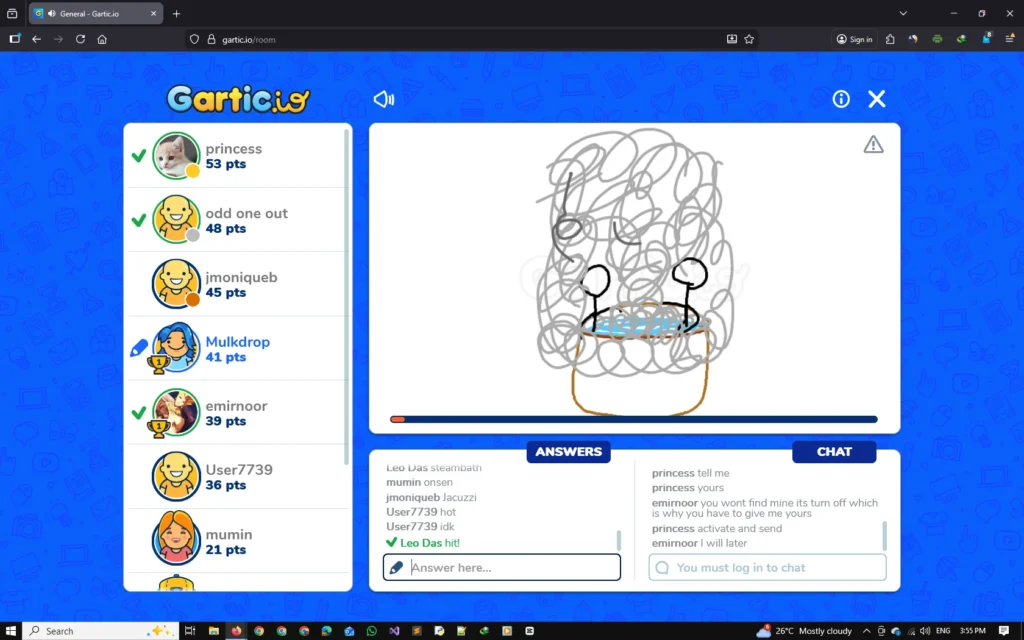
Gartic.io is a browser-based multiplayer drawing and guessing game where players take turns drawing a word while others guess it in real time. The entire experience runs inside a single interactive page.
What makes Gartic.io compelling is how quickly it delivers fun. There is no sign-up requirement, no download, and no explanation-heavy onboarding. Players can create a room, share a link, and start playing within seconds. The game explains itself through play, not instructions.
As a one-page website, Gartic.io demonstrates how social interaction combined with simplicity can drive massive engagement without the need for complex navigation, content hierarchies, or feature pages.
Why This One-Page Website Works
Gartic.io works because its purpose is perfectly aligned with its format. The goal is not to inform or persuade — it is to enable people to play together immediately.
All essential elements live on one screen: the drawing canvas, the guessing chat, the score, and the round progression. Nothing pulls the user away from the core experience. This concentration keeps attention high and reduces cognitive load.
The one-page structure also supports the game’s rhythm. Drawing games rely on momentum. Any delay, page load, or navigation step would interrupt that flow. By keeping everything in one place, Gartic.io preserves the social energy that makes the game addictive.
In this case, a multi-page website would not add clarity — it would only add friction.
How This Website Gets Traffic
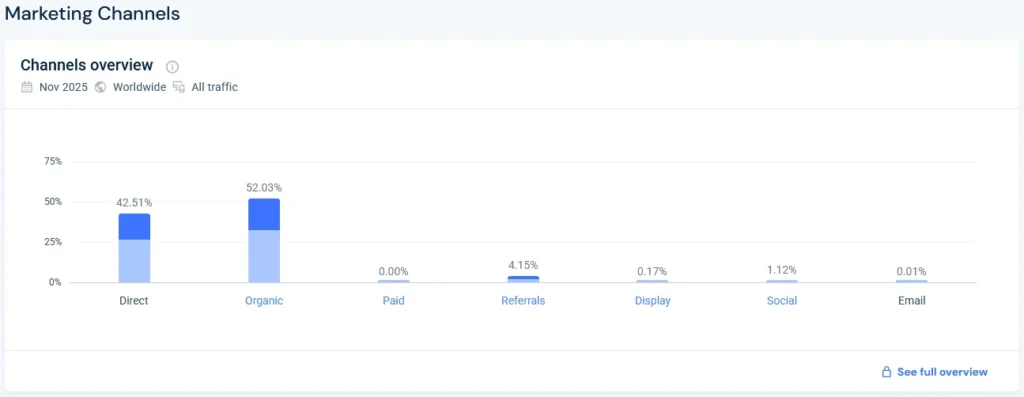
Gartic.io’s traffic is driven primarily by organic search and direct usage, which together account for nearly all visits.
According to SimilarWeb data, approximately 52% of traffic comes from organic search, while around 42% is direct traffic. This indicates that users are either actively searching for the game by name or returning to it repeatedly through bookmarks, saved links, or shared room URLs.
Referral traffic makes up a smaller but meaningful portion at just over 4%, suggesting ongoing mentions and links from external sites, communities, and classroom resources. Paid traffic is effectively nonexistent, reinforcing that growth is not driven by advertising spend.
Social traffic contributes a modest ~1% of total visits, but plays an important qualitative role. Within social sources, Discord is the largest contributor, followed by Facebook, YouTube, and Reddit. This aligns closely with how the game is used: friends inviting friends, streamers sharing sessions, and communities organising group play.
What makes this traffic model sustainable is that the product itself functions as the distribution engine. Every game room generates a shareable link, and every shared link introduces new users. The one-page format removes friction between discovery and play, allowing this loop to repeat continuously without the need for complex marketing funnels.
Signs of Traction and Growth
Several signals suggest that Gartic.io has achieved strong and sustained traction.
The site attracts millions of visits each month, with users spending significant time per session. Group-based gameplay encourages repeat visits, and the brand has become a familiar name in classrooms, online communities, and casual gaming circles.
These indicators point to long-term relevance rather than a short-lived viral spike.
Why This Works as a One-Page Website
Expanding Gartic.io into a traditional multi-page structure would likely dilute its strengths. Room creation would slow down, sharing would become less seamless, and the immediacy of play would be weakened.
The current format sends a clear message: this page exists for one reason only — to let people play together right now. That clarity is a major contributor to the site’s success.
What You Can Learn (or Copy) From This Website
Gartic.io offers practical lessons for anyone building a one-page product:
- Design around a single shared action
- Remove all friction before first use
- Let users invite others instantly
- Keep the interface focused on interaction
- Allow the product to explain itself through use
The key takeaway is that social mechanics can replace complex marketing when the experience is simple and enjoyable.
How This Website Makes Money
Gartic.io monetises primarily through display advertising and optional premium features.
Because users spend extended periods actively engaged on the page, ads can be introduced without disrupting the experience. The monetisation feels additive rather than intrusive, supporting the game instead of blocking access to it.
This approach works well for one-page games because engagement depth matters more than page count. Revenue comes from time spent and repeat visits, not from navigating multiple sections of a site.
If Monetised With Ads, Estimated Revenue (Realistic Estimate)
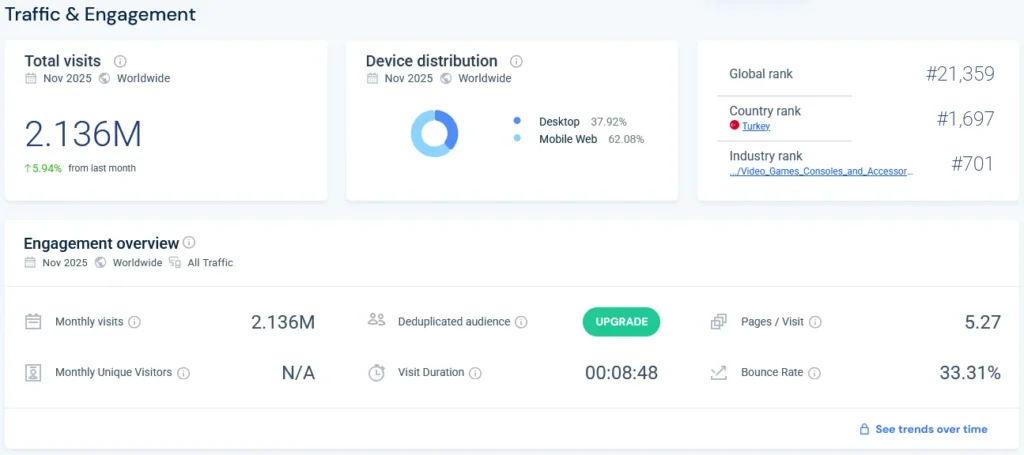
Based on SimilarWeb data, Gartic.io receives approximately 2.1 million visits per month, with users spending an average of 8 minutes and 48 seconds per session and viewing around 5.27 pages per visit equivalent through in-game states.
This level of engagement is ideal for display advertising, especially for formats such as banner ads, rewarded ads, or interstitial placements between rounds.
Assumptions (Conservative)
To keep this estimate realistic, we assume:
- Average ad impressions per visit: 3–5
- Effective RPM (revenue per 1,000 impressions): $2–$6
(typical for global gaming traffic with mixed geographies)
Estimated Monthly Ad Revenue (Speculative)
Using those assumptions:
- Low estimate
2.1M visits × 3 impressions × $2 RPM
→ ~$12,600 per month - Mid-range estimate
2.1M visits × 4 impressions × $4 RPM
→ ~$33,600 per month - Upper conservative estimate
2.1M visits × 5 impressions × $6 RPM
→ ~$63,000 per month
These figures are estimates, not confirmed revenue, but they illustrate how a single one-page game with high engagement can support meaningful income through ads alone.
What makes this especially powerful is that revenue scales with time spent, not page count. Gartic.io doesn’t need more pages — it needs players to stay and play, which it already does exceptionally well.
Final Thoughts
Gartic.io is a strong example of how a one-page website can scale through clarity, speed, and social play.
By focusing entirely on one experience and removing every unnecessary step, the site has built a high-traffic, highly engaging online business without relying on multiple pages or complex structures.
It fits naturally within Jolyti’s mission of documenting focused websites that turn simplicity into real traction.
Jolyti documents real one-page websites that turn simplicity into traction, users, and revenue.
Leave a Reply